1833 United States Five-dollar Gold Half Eagle
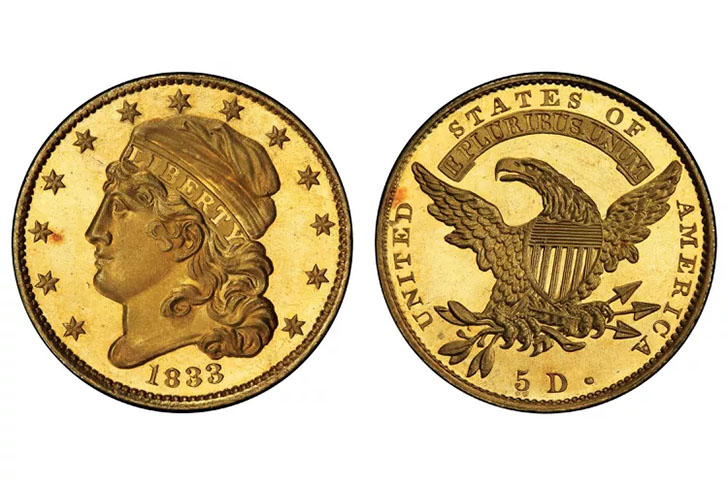
The 1833 United States five-dollar gold half eagle is a rare and valuable coin significant in American history. It was first minted when the gold rush was in full swing, and the U.S. economy expanded rapidly.
The coin is made of 90% pure gold and is considered one of the finest surviving examples of early American coinage. In fact, only a few hundred examples of this coin are known to exist, with many of them being held in private collections. Today, it’s worth about $22K in average condition and can be worth $86K to $144K or more in uncirculated mint condition.
1829 Proof Capped Bust $5 Gold Half Eagle – Large Date
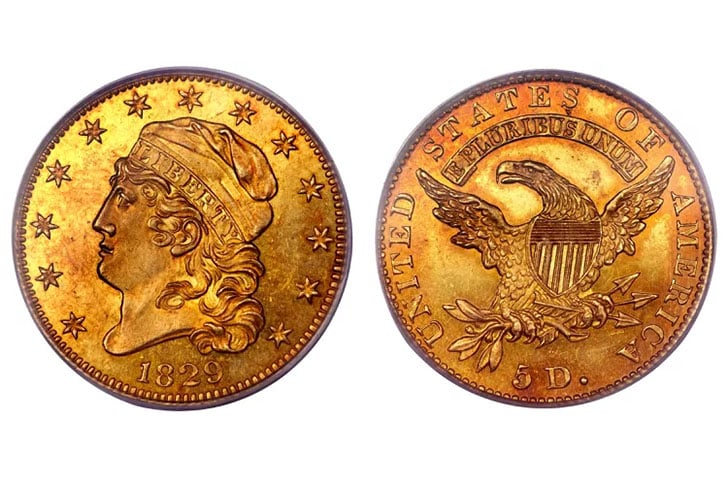
The 1829 Proof Capped Bust $5 Gold Half Eagle Large Date Variety is part of the Capped Bust series of coins produced by the United States Mint from 1807 to 1834. John Reich designed it, and it is a proof coin, which means that it was struck with specially polished dies and blanks to create a highly detailed and mirror-like finish.
Proof coins were not produced for general circulation and were instead made for presentation or special purposes such as diplomatic gifts. The last time one of these coins was sold at auction was in 2012, when it fetched a whopping $1.3 million.
1856-O Liberty Head $20 Gold Double Eagle
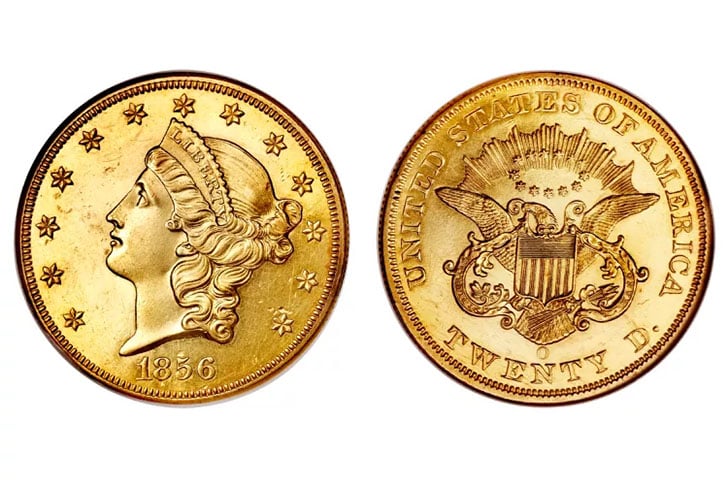
The 1856-O Liberty Head $20 Gold Double Eagle is a rare coin produced at the New Orleans Mint. Designed by James B. Longacre, it features Lady Liberty on the obverse and a heraldic eagle on the reverse. The “O” mint mark above the eagle’s tail feathers distinguishes it.
The Liberty Head design was created by James B. Longacre, the chief engraver at the Philadelphia Mint from 1844 to 1869. This is particularly rare and valuable due to its low mintage of only 2,250 coins. In addition to its rarity, the 1856-O Double Eagle is also prized for its excellent strike and beautiful luster.
1921 Roman Proof Saint-Gaudens $20 Gold Double Eagle
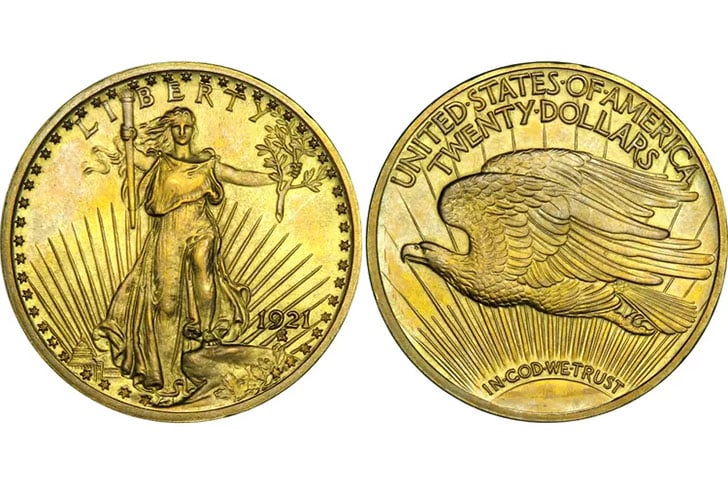
The 1921 Roman Proof Saint-Gaudens $20 Gold Double Eagle is an exquisite coin that was designed by Augustus Saint-Gaudens and features a stunning image of Lady Liberty on the Obverse, holding a torch and an olive branch, with the U.S. Capitol building in the background. The reverse showcases a majestic eagle in flight, with the sun and its rays in the background.
Its limited production and distinctive matte finish set the coin apart, giving it a sharp and detailed appearance. This coin was created for presentation and diplomatic purposes, making it an even more unique and valuable addition to any collection.
1839/8 Proof Liberty Head $10 Gold Eagle – Large Letters
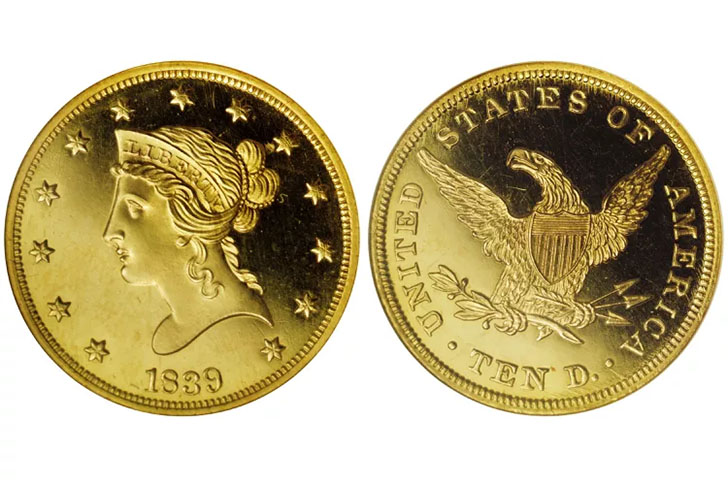
The 1839/8 Proof Liberty Head $10 Gold Eagle – Large Letters is an incredibly rare and highly coveted coin that was minted in Philadelphia. Designed by Christian Gobrecht, this magnificent coin features Lady Liberty on the obverse and a bald eagle on the reverse.
What sets this coin apart from others is the overdate 1839/8, which can be seen on the obverse side. This is a result of the die being created in 1838 but then being reused in the following year, resulting in a partially visible eight underneath the nine. This overdate adds to the coin’s uniqueness and value.
1861 Liberty Head $20 Gold Double Eagle – Paquet Reverse
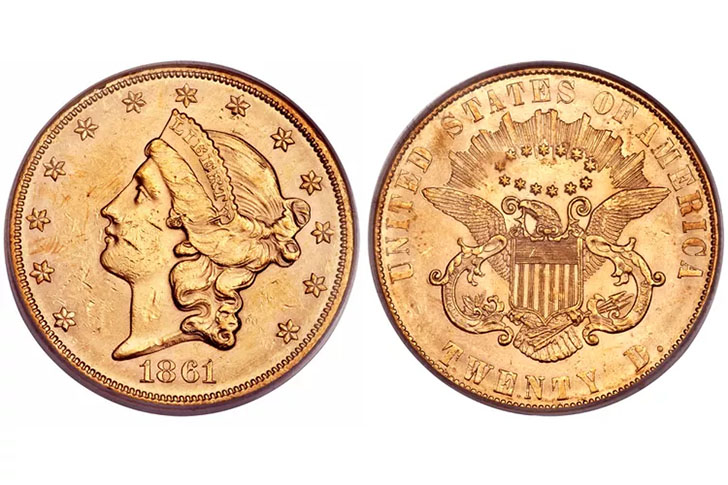
The 1861 Liberty Head $20 Gold Double Eagle – Paquet Reverse is a coin of legendary proportions. It’s a rare numismatic gem with a unique design variant by the underrated and fascinating Mint engraver Anthony C. Paquet. This coin is a true rarity with a small mintage, making it a must-have for serious collectors.
Only two surviving specimens of this remarkable coin exist, and they have graced the most prestigious collections in history over the past 150 years. In 2008, one of these coins sold to a private collector for an astonishing $2.5 million, a testament to its historical significance and desirability.
1920-S Indian $10 Gold Eagle
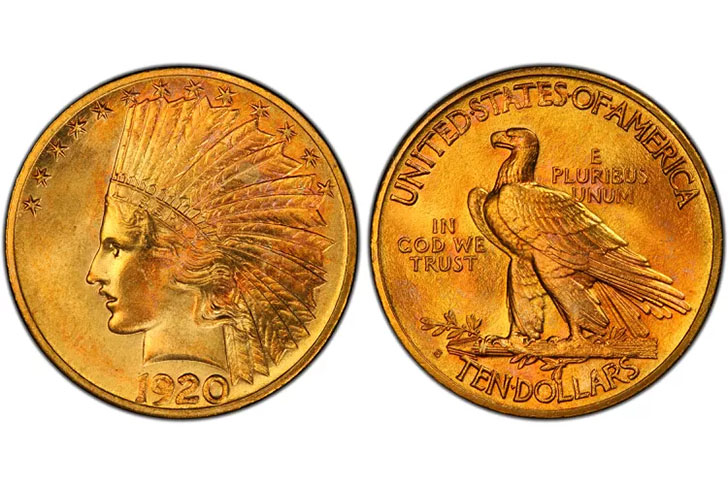
The 1920-S Indian Gold Eagle is a rare and highly coveted coin among collectors, and for a good reason. It’s the third-rarest date overall in the entire series, surpassed only by the ultra-rare 1933 and 1907 Rolled Edge varieties.
Unfortunately, most of these coins were melted during the great gold melts of the ’30s, adding to their scarcity and desirability. While the coin’s rarity is impressive enough, it’s also known for its challenging strike, with most examples exhibiting soft definition in the centers. This affects the hair curls over Liberty’s ear and the leading edge of the eagle’s left wing on the reverse.
1796 Draped Bust $2.50 Gold Quarter Eagle – No Stars
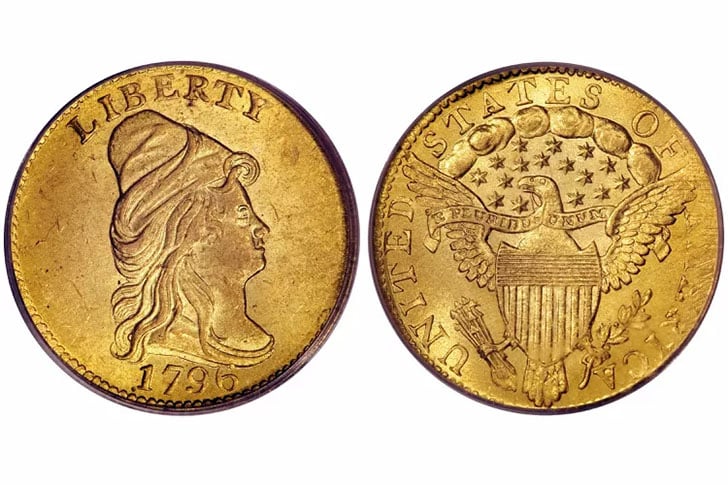
The 1796 Quarter Eagle with No Stars is a distinctive coin that stands out from all subsequent quarter eagles, as it’s the only one without stars on the obverse. Instead, the reverse boasts 16 shining stars above the majestic eagle.
With a minuscule mintage of just 963 pieces, this coin is exceedingly rare and highly sought-after by collectors worldwide. Experts believe that fewer than 100 examples still exist today. And if you come across one in MS-65 grade, you’ve hit the jackpot. This grade is extremely rare for this particular coin and adds even more value to an already valuable piece.
1927-D Saint-Gaudens $20 Gold Double Eagle
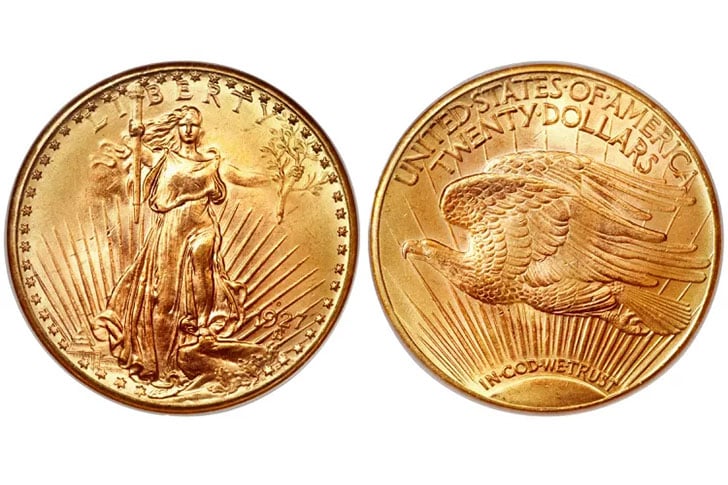
The 1927-D St. Gaudens double eagle is the second-rarest circulation strike Saint-Gaudens double eagle, with only the uncollectible 1933 version surpassing its rarity. This coin is already incredibly rare, with a mintage of just 180,000 pieces. The 1927-D was one of several double eagles that were available from the Treasury Department in 1932 for face value.
This suggests that the coins were not widely distributed for international trade but rather retained in federal vaults. Unfortunately, in 1937, the government melted vast quantities of gold coins, including many of this rare 1927-D St. Gaudens double eagles. Today, fewer than 20 examples of this coin are known to exist.
1907 Satin Proof Indian $10 Gold Eagle – Rolled Edge
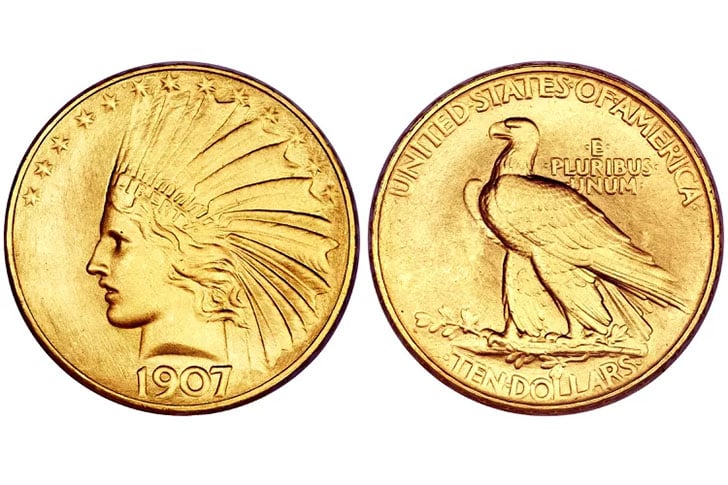
The Indian Head eagle is a stunning piece of American coinage, beloved by collectors worldwide. Minted continuously from 1907 until 1916 and irregularly until 1933, this $10 gold piece boasts a design by the legendary sculptor Augustus Saint-Gaudens. There are two distinct types of $10 Indian gold coins, each with its own unique features–those Without a motto and those featuring the inspiring saying, “In God We Trust.”
But one particular Indian Head eagle stands out—the 1907 Satin Proof with Rolled Edge. This coin is simply breathtaking, with a luminous, satiny finish and heavy die-polishing lines that set it apart from all others.
1808 Capped Bust $2.50 Gold Quarter Eagle
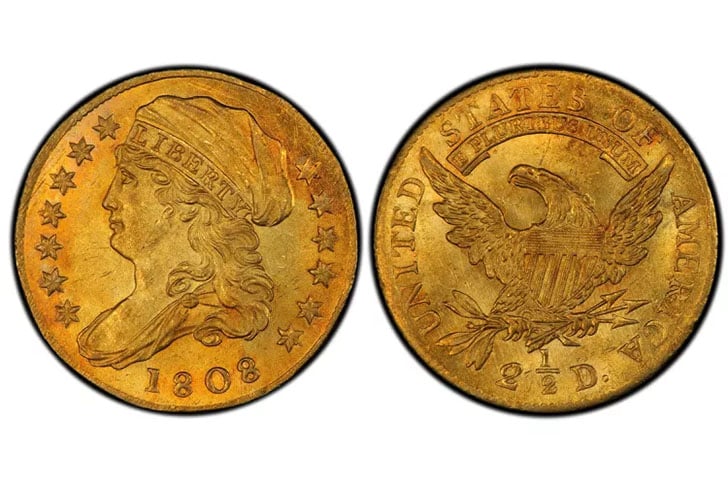
The 1808 Quarter Eagle is a rare and highly coveted coin with a recorded mintage of just 2,710 pieces. What makes it even more special is that it’s a one-year-only type of coin, making it a must-have for any serious collector of United States gold coinage.
According to expert numismatist Walter Breen, only 35 to 40 of these stunning coins are estimated to still exist today. While the coins didn’t see widespread circulation, they still managed to hold up well over time, with most examples found in Very Fine condition or better. This makes them highly sought-after by complete gold coin set collectors and type coin collectors.
1880 Proof $4 Stella Coiled Hair
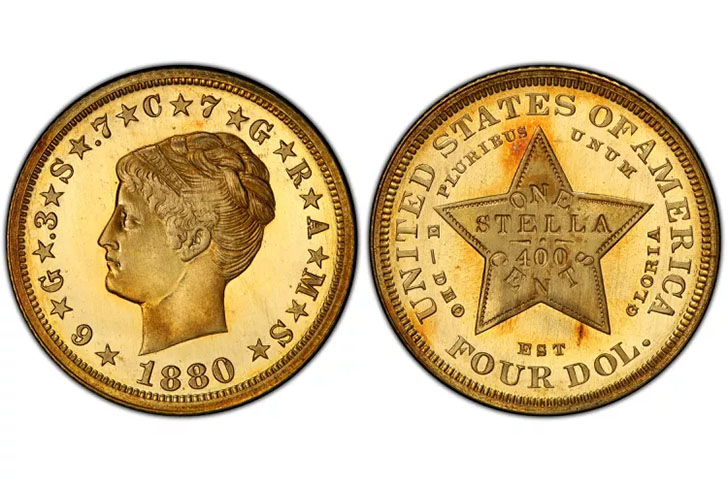
When it comes to United States coins, few are as mysterious and captivating as the 1879 and 1880 $4 gold coins, affectionately known as “Stellas”. These elusive coins are coveted by collectors worldwide, but their high value means that they are only accessible to a select few.
Of all the Stellas, the 1880 Coiled Hair version is the rarest, with only a handful of specimens known to exist. When one of these rare coins goes up for auction, it’s always a headline-making event. In 2013, for example, an example graded NGC PF 67 Cameo sold for an astonishing $2.5 million!
1795 Draped Bust $10 Gold Eagle – 13 Leaves
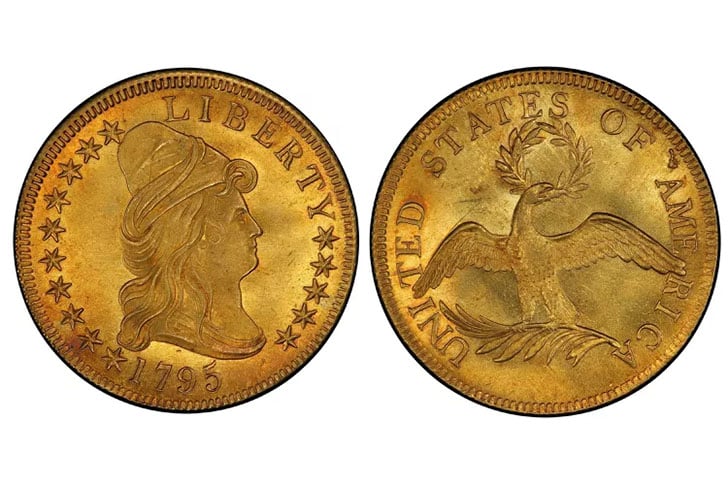
As the first U.S. ten-dollar gold piece, the 1795 $10 holds a special place in the history of American coinage. This coin comes in two varieties, one with 13 leaves on the branch below the eagle and one with nine leaves. While the 13 leaves variety is more common, that’s hardly the right word to describe this rarity. Only a total of 5583 coins were ever struck for both varieties.
Of these, only a few carefully saved and preserved specimens exist today. This is because, back then, ten dollars was a large sum of money, and these coins were not used extensively in circulation.
1907 Proof Saint-Gaudens $20 Gold Double Eagle – Ultra High Relief – Lettered Edge
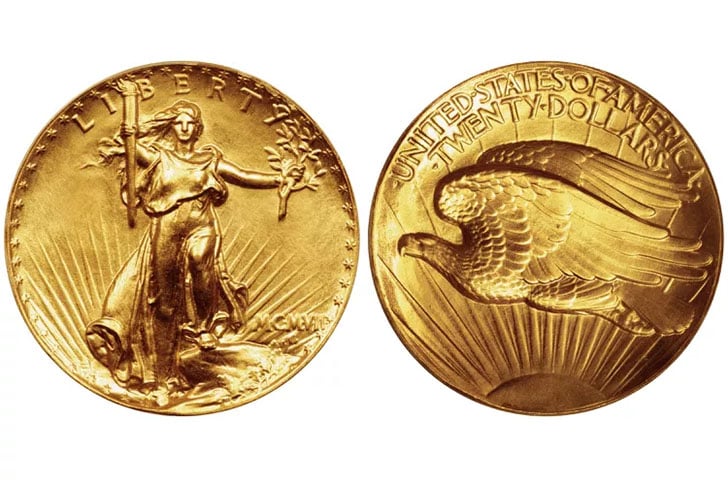
The 1907 $20 Saint Gaudens Gold Double Eagle boasts several major varieties, but none quite compare to the Ultra High Relief type. This rare and highly sought-after variety is considered a technical masterpiece and one of the most beautiful coins ever produced in the world.
Created as a highly artistic design to enhance the 3D effect of the coin’s surface, the Ultra High Relief is a true gem in the world of numismatics. Only 18 of these coins were ever produced in three separate batches. With such rarity, it’s no surprise that the 1907 Ultra High Relief $20 Saint Gaudens Double Eagle is worth millions.
1933 Saint-Gaudens $20 Gold Double Eagle
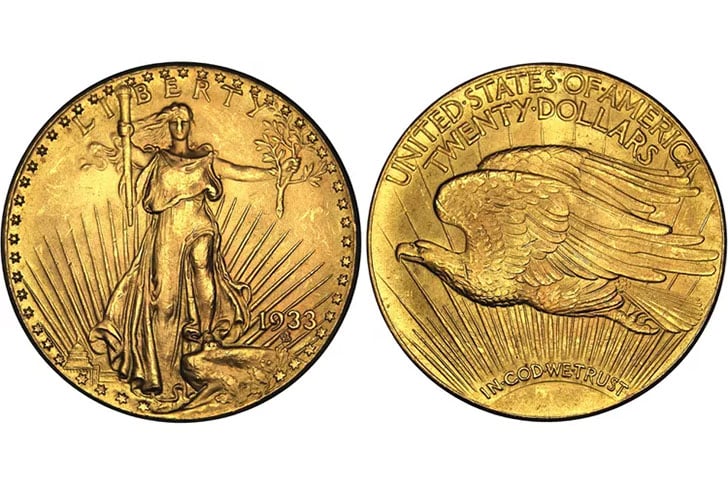
The Saint Gaudens Double Eagle is regarded as America’s most beautiful gold coin. It replaced the long-standing Liberty Head series in 1907 and continued to be minted until the end of circulating gold coinage in 1933.
The 1933 Saint Gaudens Double Eagle is the ultimate rarity in American numismatics. Only one is legal to own in private hands, and it has sold for several million dollars. In fact, in June 2021, this iconic coin sold for a staggering $25 million, making it not only the most valuable gold coin in the world but also the most valuable coin of any kind.
1894-S Barber Dime
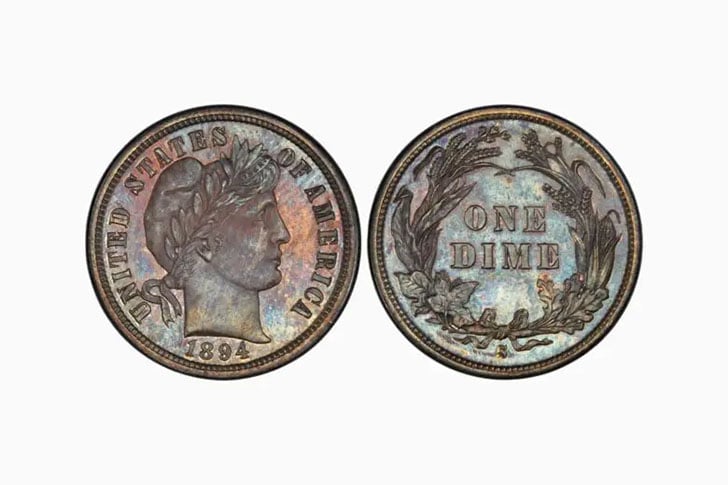
The Barber Dimes of 1892-1916 holds a special place in American numismatic history. Composed of 90% silver and 10% copper, these coins were struck at four different mints, representing the end of an era in American coin art.
But among these dimes, one stands out as the rarest and most coveted of them all: the 1894-S Barber dime. Minted in San Francisco, only 24 of these coins were ever struck.
The scarcity and mystery surrounding these coins have only added to their allure. The truth is, they rarely come up for sale, and when they do, they fetch prices that are out of reach for most collectors.
The 1794 Flowing Hair Silver Dollar
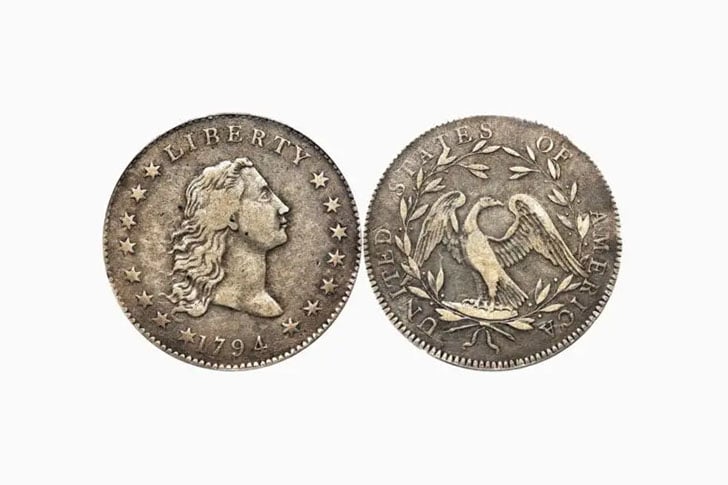
The 1794 Flowing Hair Silver Dollar is a numismatic heavyweight and ranks among the most expensive coins ever sold. This coin features an exquisite depiction of Lady Liberty, with her hair let down on one side and an eagle on the other.
Many believe it is the first silver dollar ever produced by the first U.S. Mint. Documentation shows that only 1,758 silver dollars were struck on a single day in October 1794, and only 140 or so were left. It’s no surprise that the 1794 Flowing Hair Silver Dollar was sold at auction for over $10 million in 2013.
The 1787 Brasher Doubloon
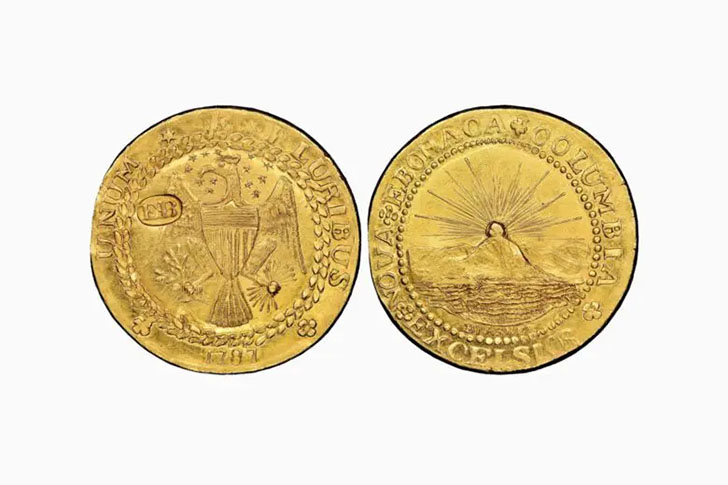
The 1787 Brasher Doubloon is one of the most significant artifacts in American numismatics. Its original value was around $15, but today it’s worth millions. New York silversmith Ephraim Brasher privately struck the highly sought-after coin in 1787, five years before the federal mint opened.
Brasher only struck seven Doubloons total, making this item extremely rare. The mountain range on one side is taken directly from the New York State coat of arms, while the Great Seal of the United States is featured on the other. The national motto, “E Pluribus Unum,” which translates to “out of many, one,” is engraved on the coin.
The 1787 Fugio cent
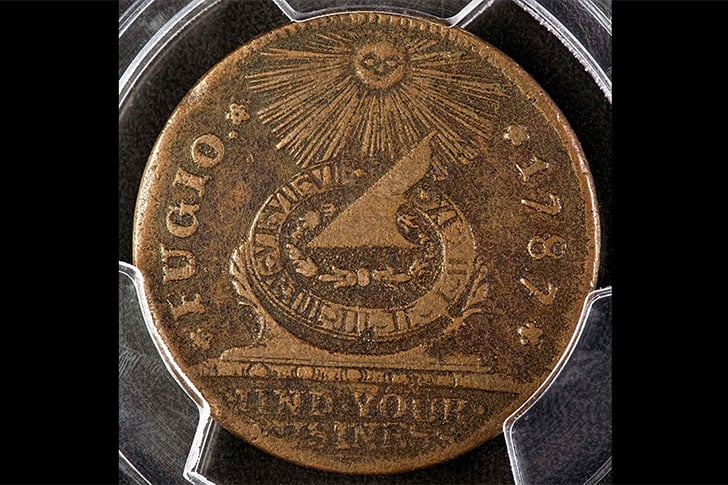
The Fugio cent, sometimes known as the Franklin, Sun Dial, or Ring cent, was the first United States cent struck in 1787. Benjamin Franklin was credited with both the naming and design of the currency.
The obverse of this coin features the sun rising over a sundial with the word “Fugio” and the year “1787” inscribed on either side. The inscription “Mind your business” at the coin’s base is a popularized saying often attributed to Benjamin Franklin. The Professional Coin Grading Service estimates that just 398,577 of these copper coins were ever produced, making them extremely scarce and quite valuable.
The 723 Umayyad Gold Dinar
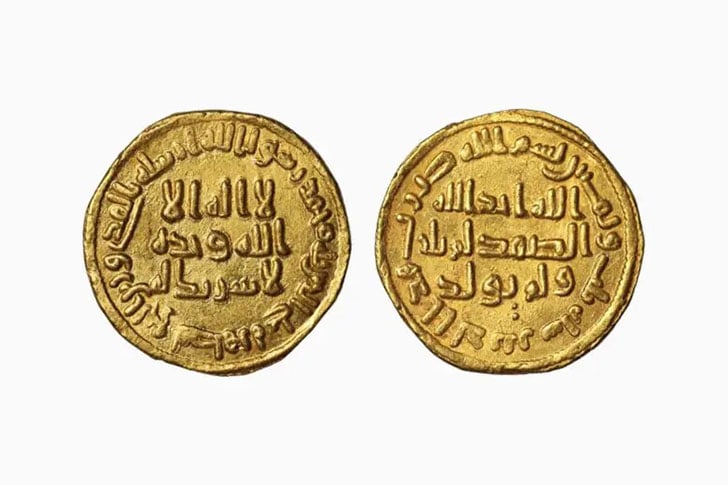
The Umayyad gold dinar dates back to 723 AD and is one of only a few dozen examples still in existence today. Because it is the first Islamic gold coin to identify a specific locality in the Kingdom of Saudi Arabia, it is of great historical significance. The words “Ma’din Amir al-Mu’minin bi’l-Hijaz”—”Mine of the Commander of the Faithful in the Hijaz”—are engraved on it.
Several experts believe the inscription indicates the gold used to strike the currency came from a mine controlled by the Caliph on the northwestern side of Mecca. A specimen of this coin sold for $4.8 million in 2019.
The 1343 Edward III Florin
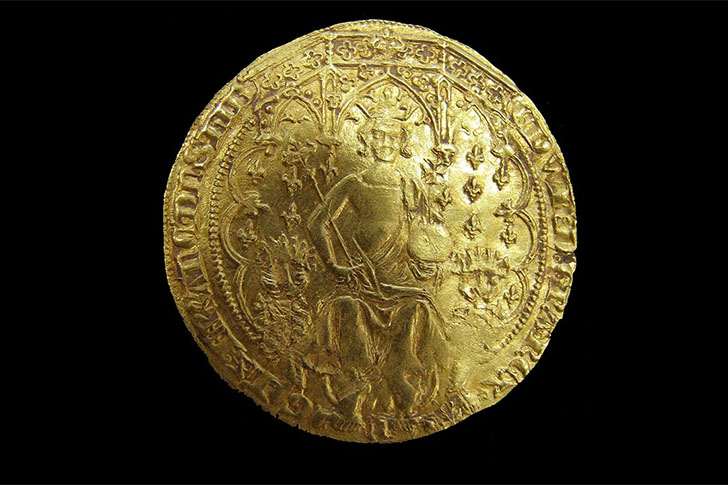
The Edward III florin, first struck in 1343, has consistently ranked among the most valuable coins in circulation. The front has a full-length picture of King Edward III sitting atop a throne while brandishing a sword and scepter; the crowned leopard’s heads are at his feet. On the reverse, a crucifix with quatrefoils is surrounded by cute little leopards.
The Edward III Florin from 1343 is one of only three surviving gold coins. Two examples were discovered in the River Tyne in 1857 and are now on display at the British Museum in London. In 2006, a prospector using a metal detector uncovered the third coin.
The 1943 Lincoln Head Copper Penny
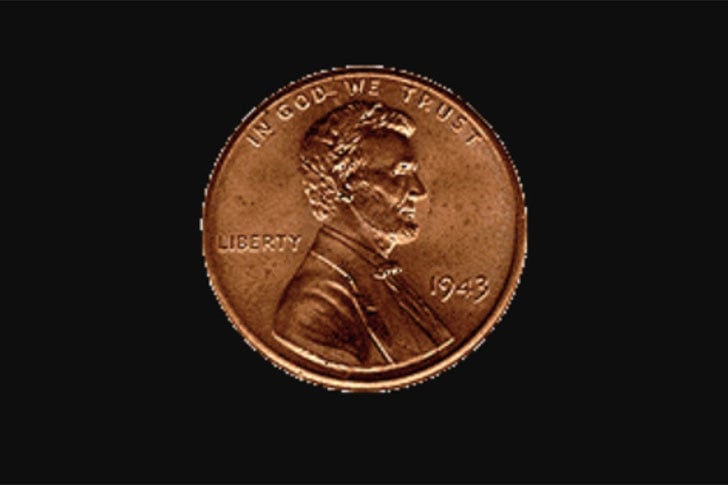
The 1943 Lincoln Head Copper Penny is highly prized and is considered a numismatic masterpiece. Since copper and nickel were vital to the Allies’ war effort, nearly all pennies in circulation at the time were struck in zinc-coated steel.
Even though the mint had switched to steel blanks, it accidentally struck a batch of pennies using copper. There are believed to be about 40 1943 copper-alloy pennies still in circulation. With a magnet, you can tell if a 1943 cent is made of steel or copper. It’s not copper if it sticks to a magnet. If it doesn’t, it still needs to be certified by a professional.
The 2007 $1 Million Canadian Gold Maple Leaf
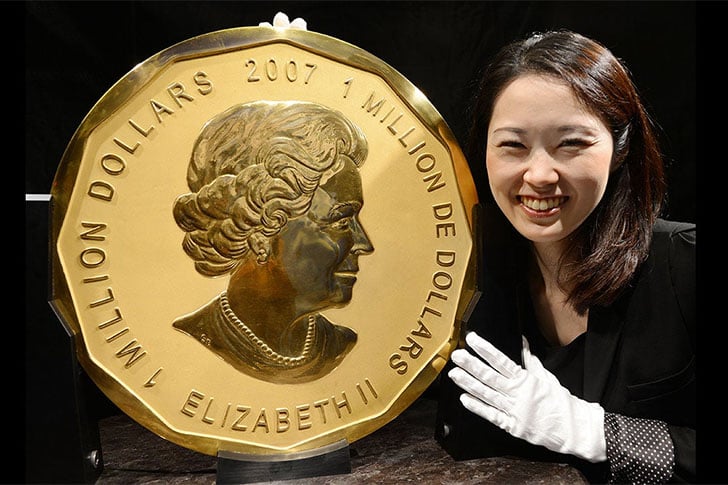
The “Big Maple Leaf” is a 53-centimeter-in-diameter coin that is three centimeters thick and features a portrait of Queen Elizabeth II on one side and maple leaves on the other. Its face value is $1 million, but its weight alone would make it worth around $4 million at current market prices.
The Royal Canadian Mint released it for the first time in May 2007; its 99.999 percent gold content earned it a place in the Guinness Book of World Records. The Bode Museum in Germany had one of the coins stolen in March 2017. The currency was on loan from its mysterious owner.
1913 Liberty Head V Nickel
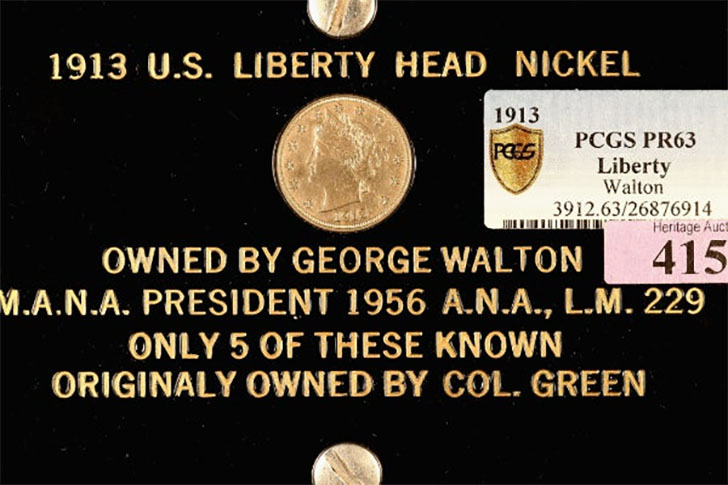
Few coins are more sought after or precious than a 1913 Liberty Head Nickel. The Liberty V Nickel, created by Charles E. Barber, was produced by the United States Mint from 1883 to 1913, with the last year’s production rumored to have yielded only five coins.
The coin, like modern nickels, is made up of more copper than nickel (75%) and comprises just 25% of the latter metal. The Liberty Head Nickel, or “V Nickel” for its huge V on the reverse, was an instantly popular currency. In May 2007, the most valuable 1913 Liberty Nickel changed hands for $5 million.
Morgan Silver Dollars
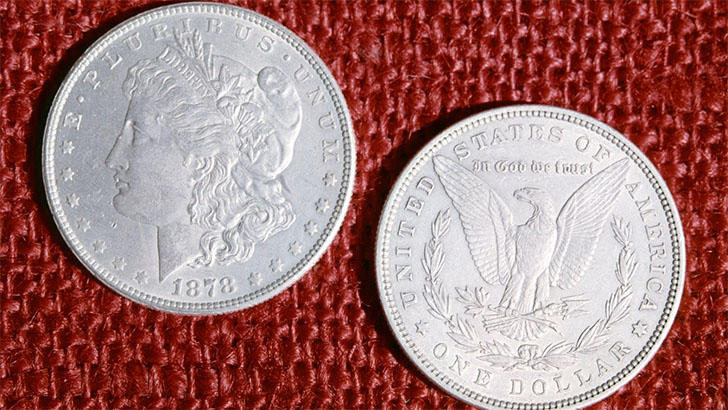
The Morgan Silver Dollar was in circulation for longer than any other type of currency, having been produced for over 40 years. The Morgan Silver Dollar, introduced in 1878, was widely acclaimed as having the best design of any Silver Dollar.
Even after a newer, less popular design was introduced in 1921, the coin’s production lasted until that year. A coin can cost anywhere from $10 to $100 or more, depending on its condition and rarity. In addition, the prices of older Morgan Silver Dollars tend to be higher than those of newer coins. An 1893 Morgan Silver Dollar once sold for $9K.
The Brutus “Eid Mar” Denarius, 42 BC
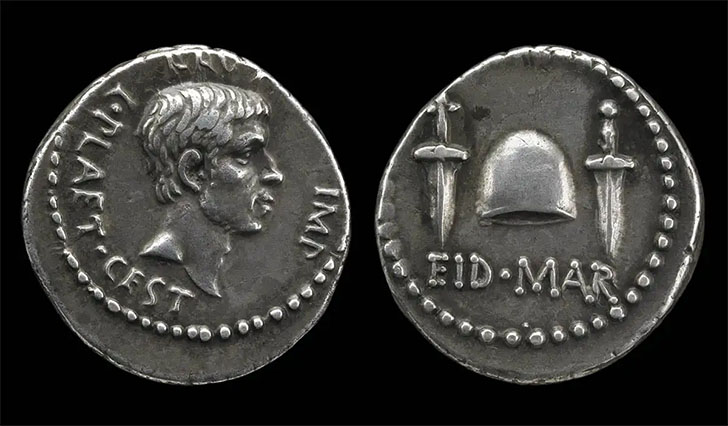
Roman currency dominated Eurasia and northern Africa during the Middle Ages due to its economic strength and long-lasting nature. The EID MAR denarius, minted by Marcus Junius Brutus in 43/42 BC, is one of the most renowned coins of this era.
The coin is significant because it symbolizes a crucial event in Western history, the assassination of Julius Caesar. Brutus minted the EID MAR silver denarius to remind his troops that they were fighting for the Roman Republic. The coin’s reverse portrays two daggers and a liberty cap, an ancient emblem of freedom, with the inscription EID MAR, signifying the Ides of March.
The Athens Decadrachm, 460-430 BC
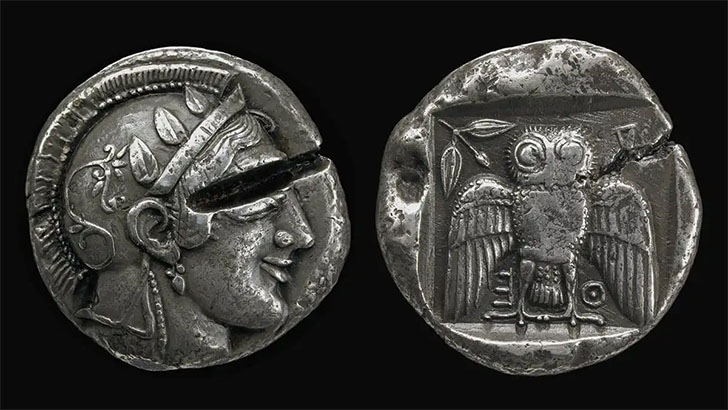
The Athenian decadrachm was minted in Athens sometime after 467 BCE, made of precious and abundant silver. This coin features the Greek goddess Athena’s profile on one side and her symbolic companion, the owl, on the other.
The issuance of this coin was a celebration of the Greek victories in the Persian Wars, making it a symbol of triumph and pride. The last Athenian decadrachms were minted during the rule of Pericles around 430 BCE, making them extremely rare and valuable. Even damaged coins sell for five figures, while nice specimens can bring in six-figure prices. This is certainly a collector’s dream.
The Decadrachms Of Syracuse, 400-390 BC
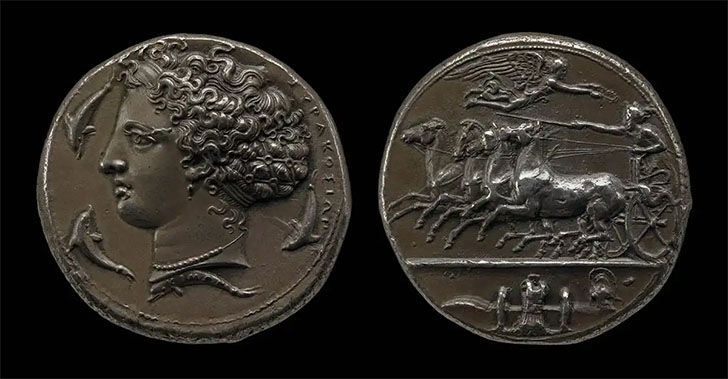
The Decadrachms Of Syracuse was so alluring that they captured the hearts of coin lovers throughout the ages, thanks to the incredible artistry of master designers like Kimon and Euinatos. Their signatures on the coins separated them from those made by workshop apprentices, marking them as true works of art.
The coin depicts the water nymph Arethusa encircled by four playful dolphins on one side. In contrast, the other side showcases a magnificent quadriga, representing the four tyrants of Syracuse, with the goddess Nike flying overhead. As a result, signed decadrachms often fetch a significantly higher price than their unsigned counterparts.
The Akragas Decadrachm, 411 BC
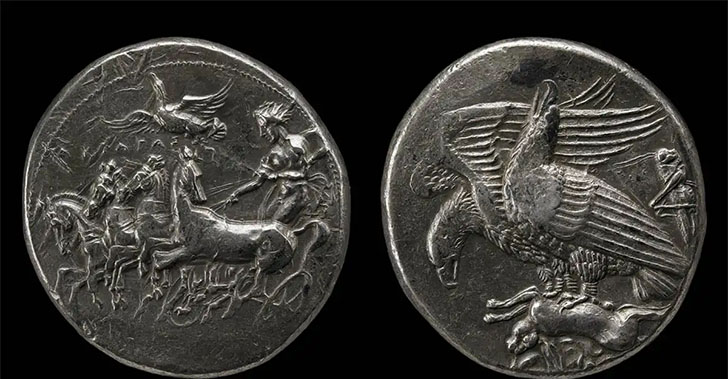
Crafted by masterful hands, The Akragas Decadrachm is a breathtaking masterpiece that symbolizes the remarkable artistry of Greek coin makers. Hailing from the historic city of Akragas, now Agrigento in Sicily, this coin boasts intricate designs that have mesmerized historians and collectors for centuries.
It is believed that the coin was minted in 411 BC to commemorate the winner of an Olympic chariot race. On its obverse, the sun god Helios is seen riding his chariot across the sky, while an eagle represents the sky and a crab symbolizes the sea below. On its reverse, two majestic eagles are depicted standing triumphantly over the body of a hare.
The Naxos Tetradrachm, 460 BC
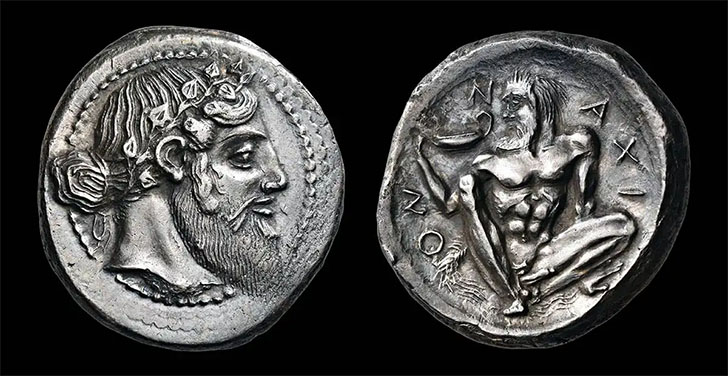
The Naxos Tetradrachm from 460 BC is renowned for its remarkable design and execution. This coin is unique because it was struck from a single die, unlike many others. This coin was minted to celebrate the rebirth of Naxos in 461 BC, and it features a stunning head of the Greek god Dionysus on the obverse, adorned with a wreath made of ivy leaves.
The ancient Greeks revered Dionysus, the god of wine and fertility. On the reverse of the coin, you can admire a depiction of the bearded man Silenos, believed to be the tutor and companion of Dionysus.
The Gold Stater Of Croesus, 550 BC
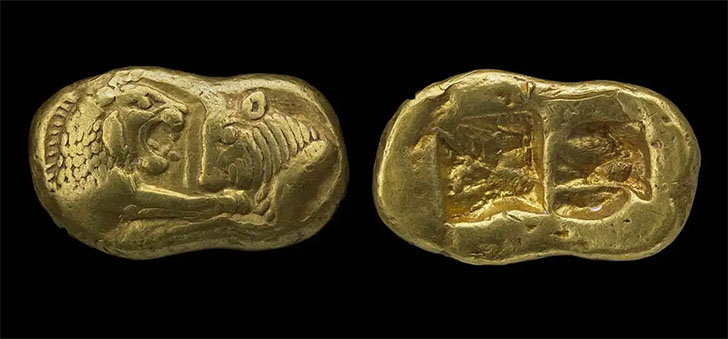
The Gold Stater of Croesus, minted in 550 BC, is a masterpiece of ancient coinage that has captured the attention of historians and collectors alike for centuries. Named after King Croesus, the ruler of Lydia in modern-day Turkey, this coin was one of the first to be struck using pure gold, setting a new standard in the ancient world.
The coin’s obverse features a portrait of the lion and bull, symbols of strength and power, while the reverse depicts a simple yet elegant design of two rectangular punches. The coin was minted from electrum, a natural gold and silver alloy found in abundance in Lydia.
The Titus Colosseum Sestertius, 81-82 AD
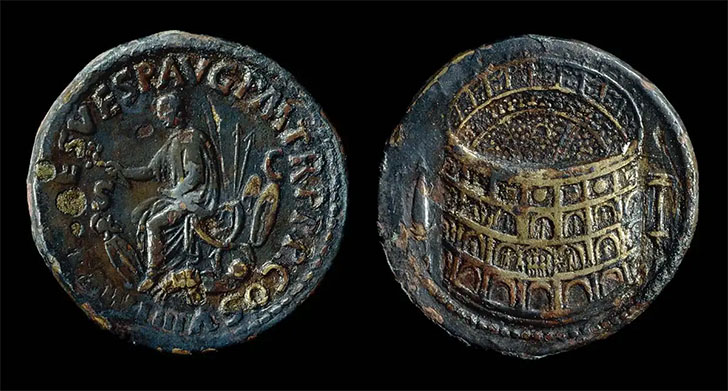
This stunning piece of currency celebrates the inauguration of the Flavian Amphitheatre, better known as the Colosseum, by Emperor Titus. The coin’s obverse features a striking portrait of Titus, with his name and title inscribed around the edges. On the reverse, a detailed depiction of the Colosseum in all its glory can be seen, complete with intricate architectural details that bring this ancient wonder to life.
As one of the largest and most impressive structures of the ancient world, the Colosseum was a symbol of Roman power and ingenuity. According to history, only ten examples of this coin are known to exist.
The Portrait Denarius Of Cleopatra And Mark Antony, 32 BC
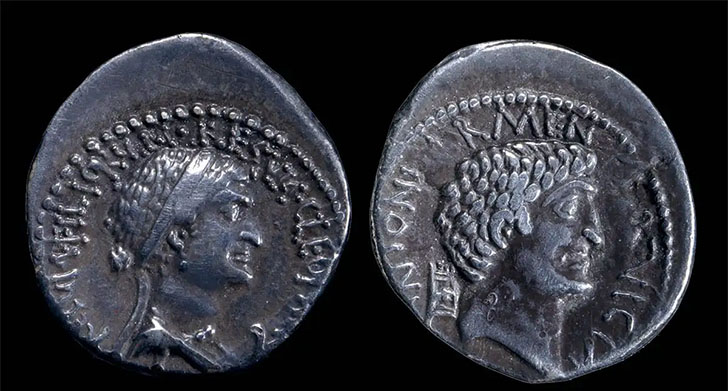
This exquisite piece of currency immortalizes the famous couple, who are among the most legendary figures of ancient history. The coin’s obverse features a beautiful portrait of Cleopatra, the last pharaoh of Egypt, while the reverse depicts her lover and ally, the Roman general Mark Antony. The intricate details and lifelike depictions on this coin make it a true work of art, capturing the power and beauty of the famous couple.
As two of the most influential figures of their time, Cleopatra and Mark Antony were known for their political prowess, military might, and passionate love affair. This coin is a rare glimpse into their world.
The Nero Port Of Ostia Sestertius, 64 AD
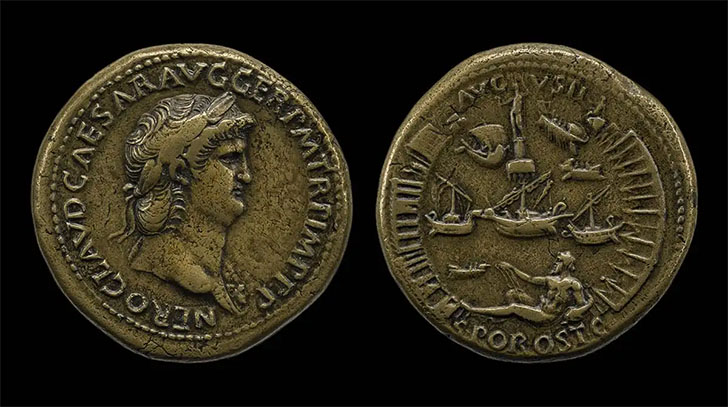
This beautiful piece of currency celebrates the completion of a grand harbor at Ostia, which was a crucial gateway for the city of Rome and its vast empire.
The coin’s obverse features a stunning portrait of Nero, with his name and title inscribed around the edges. On the reverse, a detailed depiction of the newly constructed port of Ostia can be seen, complete with ships and cranes that give a sense of the bustling activity that took place there. As a major hub of commerce and trade, Ostia played a vital role in the economic and military might of ancient Rome.
The Final Ancient Coin: Portrait Denarius Of Julius Caesar, 44 BC
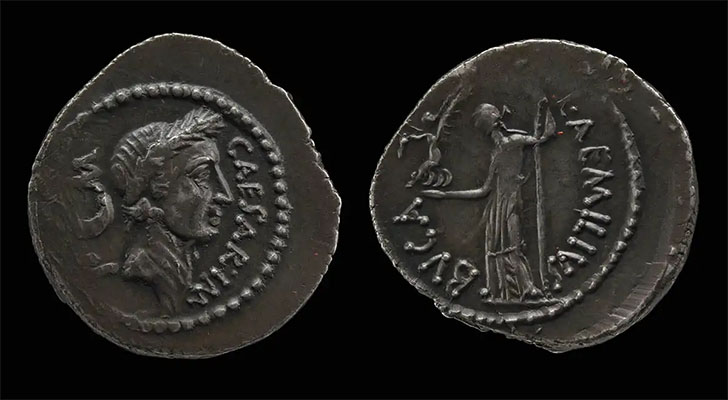
As a general, politician, and writer, Julius Caesar was one of the most influential figures of the ancient world. His military campaigns and political reforms changed the course of history, and his legacy continues to fascinate scholars and enthusiasts alike.
This stunning coin immortalizes one of the most famous figures in human history, capturing his likeness and legacy for all time. The coin’s obverse features a lifelike portrait of Julius Caesar, with his name and title inscribed around the edges. As the final ancient coin, this represents the culmination of thousands of years of history and serves as a testament to the enduring legacy of the Roman Empire.
Sacagawea Cheerios Dollar
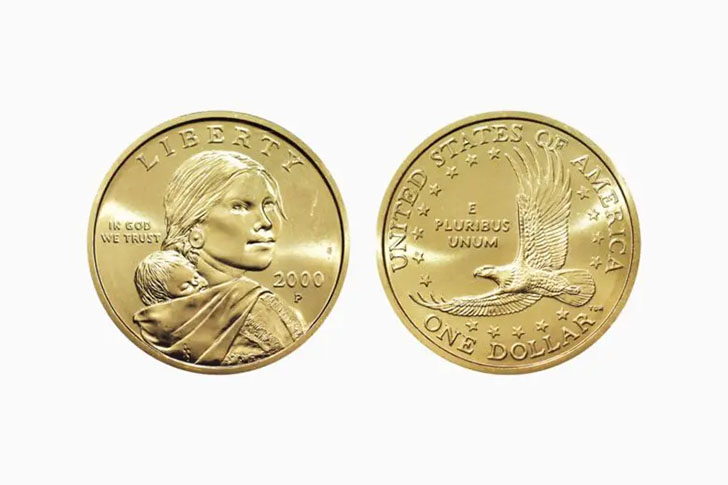
The Sacagawea Cheerios Dollar is a special edition coin created in 2000 by the United States Mint in collaboration with the cereal company Cheerios. The coin’s design features a striking portrait of Sacagawea with her baby son strapped to her back. The reverse of the coin features an eagle in flight.
The Sacagawea Cheerios Dollar is a valuable collectible and a symbol of the important contributions made by women and Native Americans in the history of the United States. As a limited edition coin, it is highly prized by collectors and will surely be a treasured addition to any collection.