
How Often to Change Brake Pads and Rotors to Keep Your Car Safe
A brake system is crucial when it comes to maintaining your vehicle’s safety. Every driver should be familiar with the question, “How often to change brake pads?” Brake pads and rotors are vital to your car’s ability to stop efficiently, ensuring you can react quickly in unexpected situations. Ignoring the condition of these parts can lead to decreased stopping power, longer braking distances, and an increased risk of accidents.
Understanding Brake Pads and Rotors
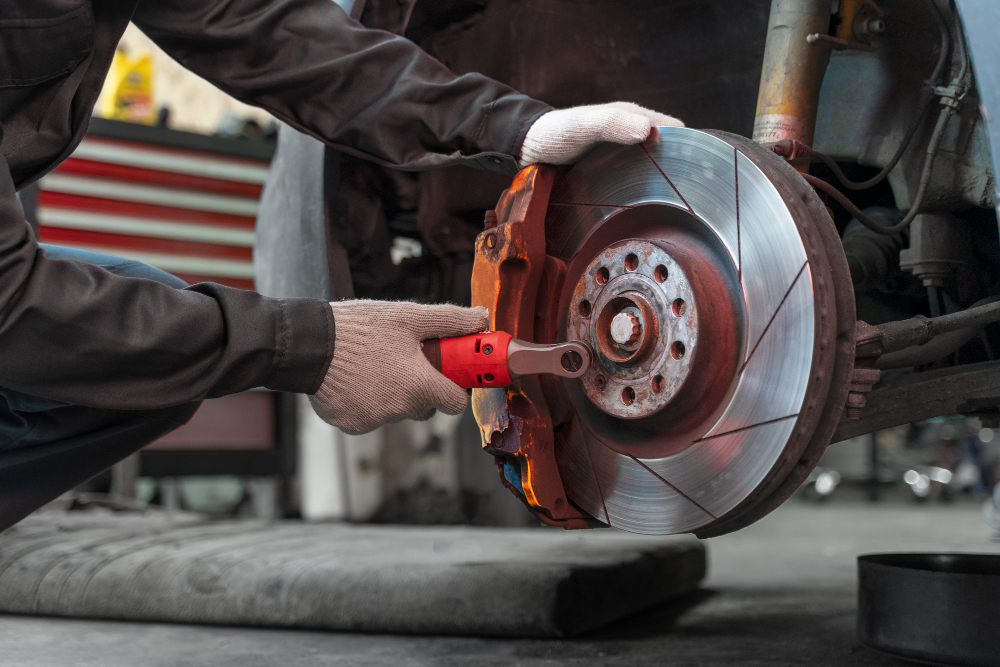
Before diving into how often these components should be replaced, it’s essential to understand what brake pads and rotors do. Brake pads are small yet critical components that press against the rotors (the large metal discs inside your wheels) to create the friction necessary to slow down your car. Over time, this friction wears down both the brake pads and the rotors, necessitating their replacement.
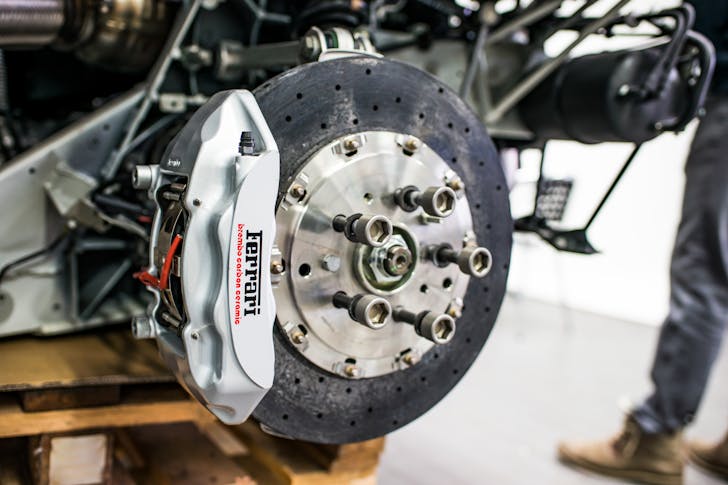
Lex Ger | Pexels | Brake pads are small yet critical components that press against the rotors to create the friction necessary to slow down your car.
Rotors are designed to withstand significant wear and tear, but they are not invincible. As you drive, the constant pressure and heat generated during braking cause them to thin and develop grooves. Brake pads, made from a combination of materials like metal shavings, rubber, and resin, wear out even faster due to the intense friction they endure with each stop.
How Often to Change Brake Pads
Brake pads generally need replacement every 10,000 to 20,000 miles, depending on your driving habits and the type of vehicle you own. If you frequently drive in heavy traffic or on winding roads, you may find that your brake pads wear out closer to the 10,000-mile mark. Conversely, highway driving with minimal braking can extend the life of your brake pads.
It’s not just the mileage that dictates when you should change your brake pads. Listen to your car. High-pitched screeching or squealing noises when braking often indicate that your brake pads are worn out and need replacing. A small metal shim typically causes this sound, called an indicator, that’s built into the brake pad. When the pad wears down, the indicator makes contact with the rotor, creating that distinctive noise as a warning sign.
Another sign to watch for is a vibrating or pulsating brake pedal, which can suggest that your brake pads are unevenly worn or that your rotors are warped. In either case, it’s time to get your brakes checked out.
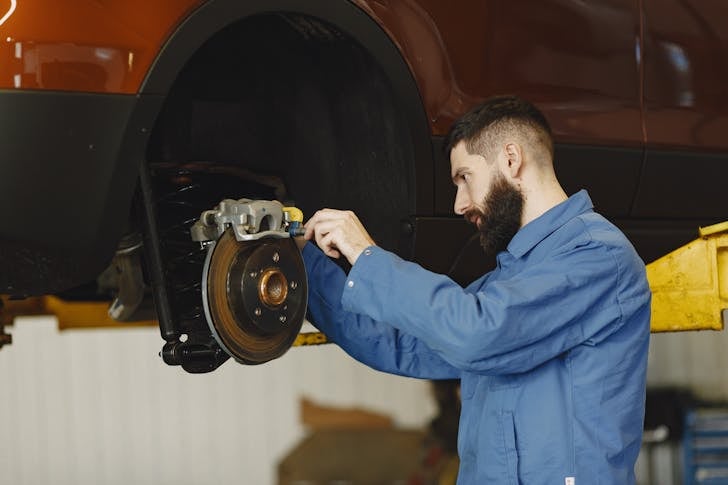
Gustavo Fring | Pexels | Brake pads need replacement every 10,000 to 20,000 miles, depending on your driving habits and the type of vehicle you own.
How Often to Change Rotors
While brake pads wear out more quickly, rotors generally have a longer lifespan. Most rotors should be replaced every 50,000 to 70,000 miles. However, if you frequently drive in conditions that are hard on your brakes—like towing heavy loads, driving in mountainous areas, or making lots of stop-and-go trips—you may need to replace your rotors sooner.
Worn-out rotors can cause various issues, including increased stopping distances, a spongy brake pedal, and even brake failure in extreme cases. If you feel vibrations in the steering wheel when you apply the brakes, it could indicate that your rotors are warped and need to be replaced.
Signs Your Brake Pads and Rotors Need Replacement
Even if you’re diligent about tracking your mileage, your brake system might still need attention sooner than expected. Here are some signs that it’s time to replace your brake pads and rotors:
- Intermittent Screeching: This high-pitched noise when braking indicates that your brake pads are worn and need replacement.
- Vibrating Steering Wheel: If your steering wheel vibrates when you apply the brakes, it could mean your rotors are uneven, or your brake pads are wearing unevenly.
- Grinding Noises: If you hear a grinding sound when you brake, it’s a sign that your brake pads have worn down completely, and the metal of the caliper is now making contact with the rotor. This situation is dangerous and should be addressed immediately.
Why Regular Replacement is Essential
Regularly replacing your brake pads and rotors is crucial not just for your safety but also for the overall health of your vehicle. Worn brake pads can damage your rotors, leading to more expensive repairs. Furthermore, driving with worn brake pads and rotors reduces your car’s braking efficiency, increasing the distance needed to stop and raising the risk of accidents.
Maintaining your brake system can improve your driving experience and safety. New brake pads and rotors provide smoother and quieter braking, making your daily drives more comfortable and reducing wear on other components of your vehicle’s braking system.
More inAdvice
-
 Credit Acceptance Pays $710 Million to Settle Predatory Auto Lending Claims
One of America’s largest subprime auto lenders has agreed to a massive settlement over allegations that it put financially vulnerable...
October 1, 2026 -
 EV vs. Hybrid vs. Gas | Which Car Works Best for a Road Trip?
A long road trip can reveal differences that city driving often hides. Charging time, fuel stops, highway range, energy prices,...
September 27, 2026 -
 Diesel Prices Exceed Historic $6 a Gallon as Iran War Intensifies
Diesel prices are soaring in the U.S. The national average reached $6.2694 per gallon on September 15, 2026, according to...
September 25, 2026 -
 Adding Your Teen to Your Car Insurance? Costs and Ways to Save
A newly licensed teen can bring excitement to a household, but the first auto insurance bill may bring a surprise....
September 19, 2026 -
 Here’s How Much Spending Money Your College Student Should Get
The tuition is paid, the dorm room is booked, the meal plan is set, and the car is packed. Your...
September 18, 2026 -
 How Much Money Should You Keep in an Emergency Fund?
With everyday expenses remaining high across the U.S. in 2026, an emergency fund can provide a needed buffer when an...
September 13, 2026 -
 How Staying With the Same Car Costs You More in Insurance
Loyalty usually sounds like something a company should reward. Stay with the same business for years, pay your bills on...
September 11, 2026 -
 State Farm Is Sending Out $5 Billion in Dividends. Here’s Who Qualifies
After several years of rising auto insurance costs, some State Farm customers are now getting money back. State Farm has...
September 6, 2026 -
 Nissan’s Big Bet on Aggressive Discounts Is Fueling Sales As Competitors Pull Back
Nissan is spending more money to get buyers into its cars, and the strategy is producing results. While several major...
September 3, 2026 -
 Hyundai Gives Its Wild Baja Santa Fe Render the Green Light
The Hyundai Santa Fe is designed as a practical family SUV, but a new digital rendering gives it a very...
August 30, 2026 -
 Andy Green and JCB Set New Hydrogen Speed Record of 406 MPH
Hydrogen power just had a very fast day in Utah. British land speed legend Andy Green drove the JCB Hydromax...
August 27, 2026 -
 Ford Reveals “Fathom,” Its New Electric Truck With a $29,945 Price Tag
Ford is preparing a new electric pickup called the “Fathom,” with a planned starting price of $29,945 after destination. The...
August 22, 2026 -
 The Median Net Worth for Americans at Age 40 is Roughly $135k, Survey Shows
Turning 40 can make money feel more serious. Retirement no longer seems impossibly far away, housing costs may be substantial,...
August 20, 2026 -
 Michigan Woman Loses $1,000 in Ghost Tapping Payment Scam
Contactless payments have made shopping faster than ever, but scammers are finding new ways to misuse the same technology. A...
August 15, 2026
You must be logged in to post a comment Login