
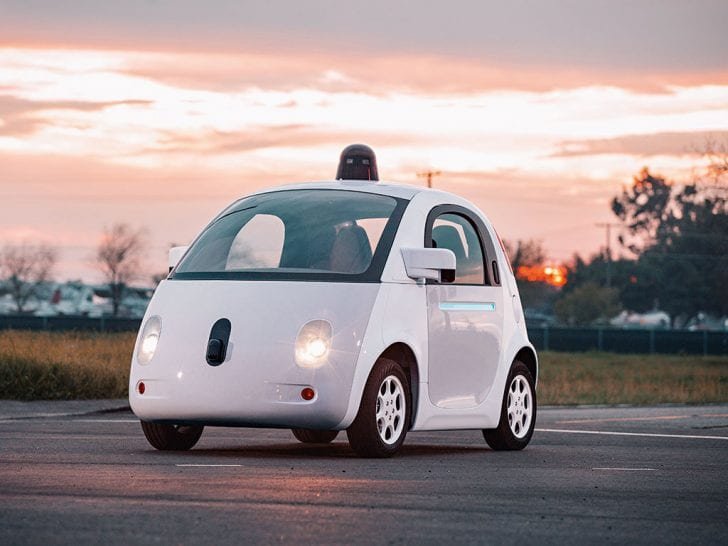
The Self-Driving Cars: The First Steps to New Regulations
The future in which we will not have to steer our vehicles seems to be just around the corner. However, a new question seems to impose itself: how will those new cars be legally regulated?
Any movement in this direction is a big one. It means that the legislators are taking this technological advancement seriously and that they are thinking about this issue ahead of time—before it becomes a problem.
As the renowned Tesla magnate Elon Musk stated, in the future, he believes that every car is going to be autonomous, without the need of a person behind its wheel. He compared automobiles to elevators, as they once needed an operator as well. Later, elevators just became programmed to operate just by pressing a button.
And that is why this is really big news for the automobile industry.
 What actually happened is only a proposal
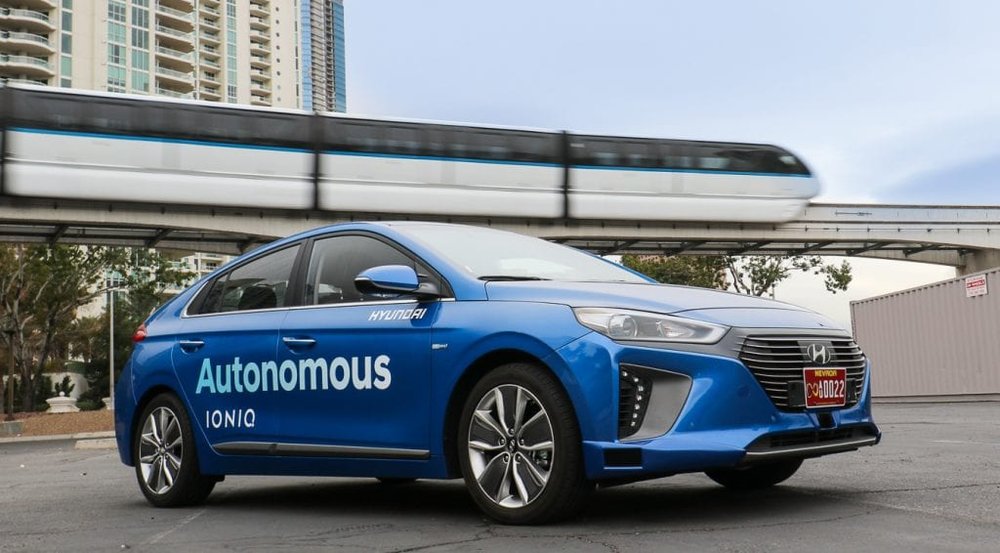 A subcommittee of the Congressional Energy and Commerce Committee has finally passed a proposal that will allow the federal government to regulate self-driving cars. Proposals such as this usually have far-reaching effects and should be carefully monitored.
On Wednesday, June 19th, a U.S. House panel decided to approve a proposal that will allow car makers to finally place their units without trying to meet any of the previously existing safety standards for self-driving cars. It also forbids any state to impose special rules for autonomous vehicles. In fact, they are allowing carmakers to deploy 100,000 autonomous vehicles.
Unfortunately, it will not be until September that the full U.S. House of Representatives will take the bill up as it is currently in recess for the summer.
Why is it such a big deal?
This will be the first ever significant piece of legislation that is aimed at making autonomous vehicles a reality. To be clear, they will still need to go through safety assessments, but no premarket approval will be required. This means that any automaker will still have to show that his self-driving car does function as it is supposed to and that every failsafe feature is working as intended.
Gregory Walden, a representative for Oregon’s 2nd congressional district and a member of the Republican Party, has used this as an opportunity to share his story involving a semi-autonomous vehicle. Namely, he was recently riding in his Subaru Outback, and he let cruise control to guide his car and suddenly, as he said, “a big black bird” suddenly landed in front of the vehicle. And the car managed to break in time on its own. While this is nothing but a minor incident, he used it to make a point. And the point is that the car reacted faster than he ever could. This helped him realize that advancing this technology can prevent thousands of unnecessary deaths from traffic incidents.
Still, do we really need such a car?
There is a good reason to try and find new ways to manage car safety as the number of road deaths in the USA is on a steady rise. We would expect that each year, with better cars and safety technologies, the number should be decreasing. However, in a short period from 2014 to 2016, the number of road deaths rose by almost 8% or up to 35,200 people in 2015. This makes it clear that it is time to start revolutionizing the way we look at vehicle safety and try something new. So, autonomous vehicles might just be the thing we need.
What about the current regulations?
Current federal rules for motor vehicle safety ban any sale of vehicles that do not have human controls. Also, they must meet literally 75 different standards. A lot of those standards are based on the premise that a driver with a license will still have control of the vehicle. This proposition means that, while the U.S. regulators would still have to go through safety assessment reports and keep the streets safe, these standards would become a thing of the past.
States, however, could still decide on rules in regards to registration, liability, safety inspections, licensing and insurance. But the performance standards of autonomous cars would still be set for them by the federal government.
What about changing the problematic regulations?
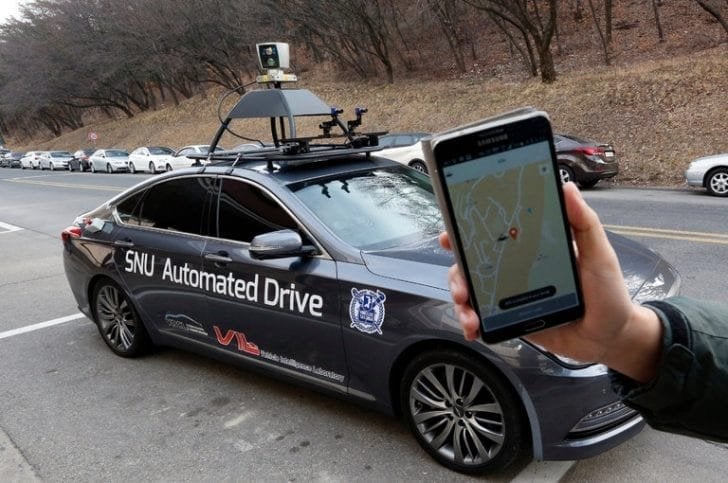 Republicans would like to pass a bill that would allow the likes of Uber and Google to test drive their autonomous vehicles around the country to replace the current system. In the current state of things, any state can have differing, if not the outright opposite, rules on how driverless cars will be allowed to operate.
Another proposal has been made that would allow the manufacturers to have their information about their vehicles secret and impossible for reporters to obtain. While it does make sense that they want to protect their technology, it has met some resistance as there are people who do not want to place their trust entirely into the hands of NHTSA.
In the end, these are still great news for anyone who wants to see the car industry revolutionized. While there are concerns about safety with these cars, we are confident that tests and rules will be implemented to make them a much safer alternative than what anyone might expect, and that we will soon be able to see thousands of these new, safer vehicles on our streets.
More inDriving
-
 Credit Acceptance Pays $710 Million to Settle Predatory Auto Lending Claims
One of America’s largest subprime auto lenders has agreed to a massive settlement over allegations that it put financially vulnerable...
October 1, 2026 -
 EV vs. Hybrid vs. Gas | Which Car Works Best for a Road Trip?
A long road trip can reveal differences that city driving often hides. Charging time, fuel stops, highway range, energy prices,...
September 27, 2026 -
 Diesel Prices Exceed Historic $6 a Gallon as Iran War Intensifies
Diesel prices are soaring in the U.S. The national average reached $6.2694 per gallon on September 15, 2026, according to...
September 25, 2026 -
 Adding Your Teen to Your Car Insurance? Costs and Ways to Save
A newly licensed teen can bring excitement to a household, but the first auto insurance bill may bring a surprise....
September 19, 2026 -
 Here’s How Much Spending Money Your College Student Should Get
The tuition is paid, the dorm room is booked, the meal plan is set, and the car is packed. Your...
September 18, 2026 -
 How Much Money Should You Keep in an Emergency Fund?
With everyday expenses remaining high across the U.S. in 2026, an emergency fund can provide a needed buffer when an...
September 13, 2026 -
 How Staying With the Same Car Costs You More in Insurance
Loyalty usually sounds like something a company should reward. Stay with the same business for years, pay your bills on...
September 11, 2026 -
 State Farm Is Sending Out $5 Billion in Dividends. Here’s Who Qualifies
After several years of rising auto insurance costs, some State Farm customers are now getting money back. State Farm has...
September 6, 2026 -
 Nissan’s Big Bet on Aggressive Discounts Is Fueling Sales As Competitors Pull Back
Nissan is spending more money to get buyers into its cars, and the strategy is producing results. While several major...
September 3, 2026 -
 Hyundai Gives Its Wild Baja Santa Fe Render the Green Light
The Hyundai Santa Fe is designed as a practical family SUV, but a new digital rendering gives it a very...
August 30, 2026 -
 Andy Green and JCB Set New Hydrogen Speed Record of 406 MPH
Hydrogen power just had a very fast day in Utah. British land speed legend Andy Green drove the JCB Hydromax...
August 27, 2026 -
 Ford Reveals “Fathom,” Its New Electric Truck With a $29,945 Price Tag
Ford is preparing a new electric pickup called the “Fathom,” with a planned starting price of $29,945 after destination. The...
August 22, 2026 -
 The Median Net Worth for Americans at Age 40 is Roughly $135k, Survey Shows
Turning 40 can make money feel more serious. Retirement no longer seems impossibly far away, housing costs may be substantial,...
August 20, 2026 -
 Michigan Woman Loses $1,000 in Ghost Tapping Payment Scam
Contactless payments have made shopping faster than ever, but scammers are finding new ways to misuse the same technology. A...
August 15, 2026
You must be logged in to post a comment Login