

U.S. Reduces Tariffs on Japanese Cars to 15% Under Trump’s Deal
In a move reshaping U.S.-Japan trade relations, former President Donald Trump confirmed a new agreement that slashes tariffs on Japanese car imports to 15%. The announcement, made on social media, followed months of mounting pressure and negotiation.
Previously, the administration threatened a steep 25% tariff on Japanese vehicles if a deal wasn’t reached before August 1. Instead, this agreement not only eased that threat but also brought new developments for both American and Japanese automakers.
Key Terms of the Deal
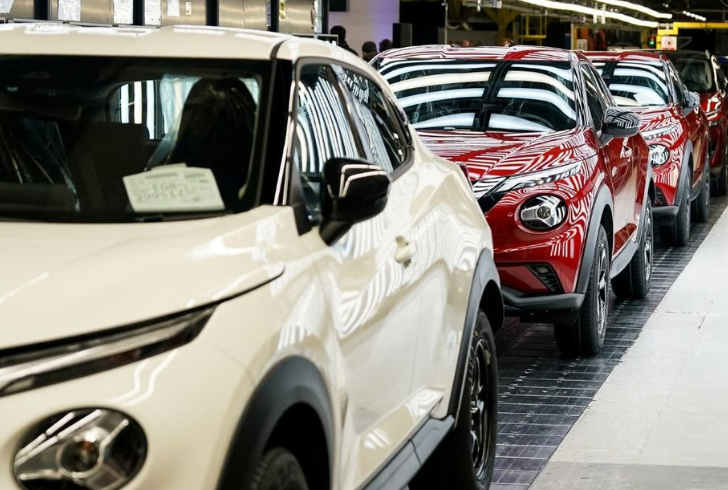
Instagram | newsofbahrain_ | Trump confirmed 15% tariffs on Japanese cars after negotiations.
The trade pact includes several headline-making points:
1. Japanese car exports to the U.S. now face a 15% tariff, reduced from the proposed 25%.
2. Japan will open its ports to more American vehicles, including trucks.
3. The deal includes additional agricultural exports from the U.S., such as rice.
4. Japan will invest $550 billion into the United States as part of the agreement.
These provisions mark a significant shift in how the two nations manage automotive trade. The U.S. auto industry, already strained by global tariffs, saw this as a critical update.
How the Tariff Breakdown Works
Although the 15% tariff seems straightforward, it actually includes layered components. According to Japan’s NHK broadcaster, the administration agreed to reduce the auto-specific tariff from 25% to 12.5%. Combined with the existing 2.5% import duty, the final rate now stands at 15%. That still represents a major drop from what could’ve been a damaging 25% charge.
According to The New York Times, Shigeru Ishiba, Japan’s Prime Minister at the time, acknowledged the update and awaited further clarification from diplomats based in Washington.
Impact on Japanese Automakers and Market Response
Japan’s automotive sector quickly responded to the announcement. The trade deal comes as a relief, particularly given the country’s heavy reliance on vehicle exports to the U.S. Major Japanese auto brands experienced an immediate surge in investor confidence:
Toyota shares rose by 14%
Nissan climbed by 8%
Honda jumped 11%
Analysts pointed out that reduced tariffs mean stronger competitiveness for Japanese models in the American market. Vehicles that previously faced higher import duties can now sell at lower prices or bring greater profit margins.
Concerns From U.S. Industry Leaders
Instagram | @revistapluspy | American car makers are frustrated, as the Japan deal disadvantages their North American vehicles.
While the deal appears favorable for Japanese automakers, it has stirred unease among American car companies. The American Automotive Policy Council—representing Ford, General Motors, and Stellantis—argues that the agreement tilts the playing field against North American manufacturers.
Their concern centers on the fact that many Japanese imports contain only a small fraction of U.S.-made components, yet they will now be subject to a lower tariff than cars assembled in North America with a far higher share of domestic parts. Council President Matt Blunt called it a direct blow to American industry, saying such deals “undercut American workers and businesses.”
Union leaders and trade advocates share this view, seeing it as yet another example of policy that rewards foreign assembly over homegrown production.
A New Chapter in U.S.-Japan Automotive Trade
For consumers, reduced tariffs could mean Japanese cars hitting U.S. showrooms at more competitive prices—possibly making models like the Toyota Corolla Hybrid or Honda CR-V even more appealing to budget-conscious buyers. Yet this affordability comes with a flip side: American automakers may be pushed to trim costs, rethink supply chains, or double down on unique selling points such as advanced EV technology, luxury features, or niche performance models.
In the bigger picture, the agreement is part of a broader U.S.-Japan effort to cement economic ties in the face of shifting global trade dynamics, where tariffs are as much a diplomatic tool as they are an economic one. Trump’s administration repeatedly leaned on tariffs as negotiation tools — this deal proves that pressure can yield strategic outcomes when used deliberately.
Lower tariffs often open doors. With this agreement, Japan gains room to grow in the American market, while U.S. manufacturers must now rethink their strategy. Trade talks like these remind global players that economic influence doesn’t only come from products—it also comes from policy.
More inAuto News
-
 Credit Acceptance Pays $710 Million to Settle Predatory Auto Lending Claims
One of America’s largest subprime auto lenders has agreed to a massive settlement over allegations that it put financially vulnerable...
October 1, 2026 -
 EV vs. Hybrid vs. Gas | Which Car Works Best for a Road Trip?
A long road trip can reveal differences that city driving often hides. Charging time, fuel stops, highway range, energy prices,...
September 27, 2026 -
 Diesel Prices Exceed Historic $6 a Gallon as Iran War Intensifies
Diesel prices are soaring in the U.S. The national average reached $6.2694 per gallon on September 15, 2026, according to...
September 25, 2026 -
 Adding Your Teen to Your Car Insurance? Costs and Ways to Save
A newly licensed teen can bring excitement to a household, but the first auto insurance bill may bring a surprise....
September 19, 2026 -
 Here’s How Much Spending Money Your College Student Should Get
The tuition is paid, the dorm room is booked, the meal plan is set, and the car is packed. Your...
September 18, 2026 -
 How Much Money Should You Keep in an Emergency Fund?
With everyday expenses remaining high across the U.S. in 2026, an emergency fund can provide a needed buffer when an...
September 13, 2026 -
 How Staying With the Same Car Costs You More in Insurance
Loyalty usually sounds like something a company should reward. Stay with the same business for years, pay your bills on...
September 11, 2026 -
 State Farm Is Sending Out $5 Billion in Dividends. Here’s Who Qualifies
After several years of rising auto insurance costs, some State Farm customers are now getting money back. State Farm has...
September 6, 2026 -
 Nissan’s Big Bet on Aggressive Discounts Is Fueling Sales As Competitors Pull Back
Nissan is spending more money to get buyers into its cars, and the strategy is producing results. While several major...
September 3, 2026 -
 Hyundai Gives Its Wild Baja Santa Fe Render the Green Light
The Hyundai Santa Fe is designed as a practical family SUV, but a new digital rendering gives it a very...
August 30, 2026 -
 Andy Green and JCB Set New Hydrogen Speed Record of 406 MPH
Hydrogen power just had a very fast day in Utah. British land speed legend Andy Green drove the JCB Hydromax...
August 27, 2026 -
 Ford Reveals “Fathom,” Its New Electric Truck With a $29,945 Price Tag
Ford is preparing a new electric pickup called the “Fathom,” with a planned starting price of $29,945 after destination. The...
August 22, 2026 -
 The Median Net Worth for Americans at Age 40 is Roughly $135k, Survey Shows
Turning 40 can make money feel more serious. Retirement no longer seems impossibly far away, housing costs may be substantial,...
August 20, 2026 -
 Michigan Woman Loses $1,000 in Ghost Tapping Payment Scam
Contactless payments have made shopping faster than ever, but scammers are finding new ways to misuse the same technology. A...
August 15, 2026
You must be logged in to post a comment Login