
Vinnie Colaiuta – Frank Zappa

The American drummer Vinnie Colaiuta started playing the drums at the age of 7, and he did it with unmatched passion and natural ability. A fan of the great Buddy Rich, Colaiuta realized there was more to drumming than the ’60’s jazz triplet swing when he heard a record of the late jazz-fusion drummer Tony Williams.
As a Berklee College of Music student, Colaiuta engaged with the genre, earning himself the reputation for being a modern and finely-styled drummer. An extremely successful session musician, Colaiuta, played the drums for some of the biggest names in the game, with the most notable being the eccentric musical genius Frank Zappa.
John French – Captain Beefheart’s Magic Band
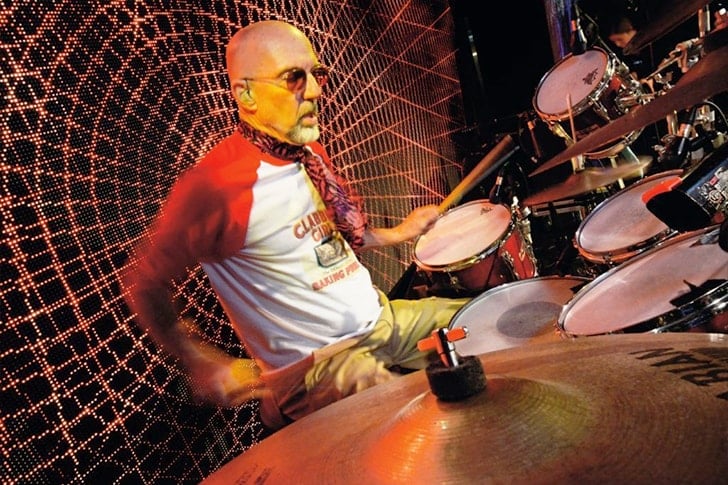
Nicknamed “Drumbo” by his good friend and bandleader Captain Beefheart, the ever-talented John French was able to do something most musicians would deem impossible: keep a steady beat under the crazy tunes of Captain Beefheart’s Magic Band, with whom he collaborated for over two decades.
He also served as the musical director for Trout Mask Replica, undoubtedly Captain Beefheart’s most celebrated masterpiece. In 1980, he stopped playing with Beefheart after being handed a list of 40 songs to learn in just 3 months! But French’s poly-expressive beats and unmatched musical vision will forever earn him a place among the greatest rock drummer in history.
Dave Garibaldi – Tower of Power
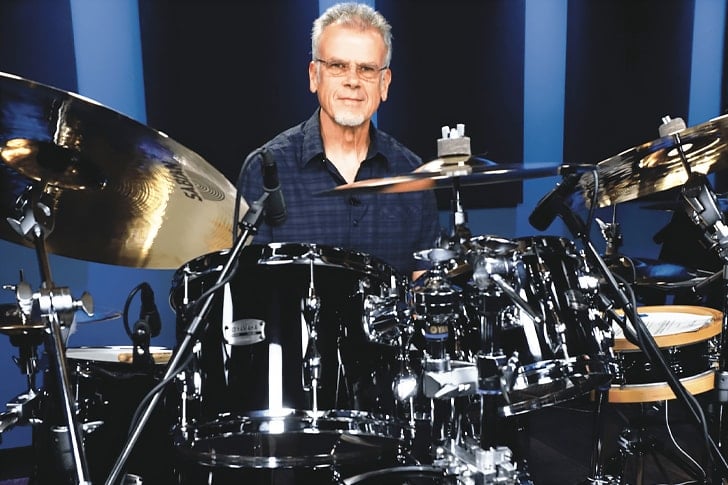
As a young man, American drummer Dave Garibaldi was extremely impressed by the funky rhythms of James Brown’s legendary band. After seeing the King of Soul play live, Garibaldi decided to explore the funk genre himself and ended up becoming one of its greatest symbols.
The inspiration to many rock drummers, like Red Hot Chili Pepper’s Chad Smith, Garibaldi excels at a genre where the drums are often stranded between two opposite worlds. On one hand, you’re supposed to keep a steady 8-bar beat without overdoing it. And on the other, you need to have an extremely creative and loose approach to swing to make it interesting.
Billy Cobham – Mahavishnu Orchestra
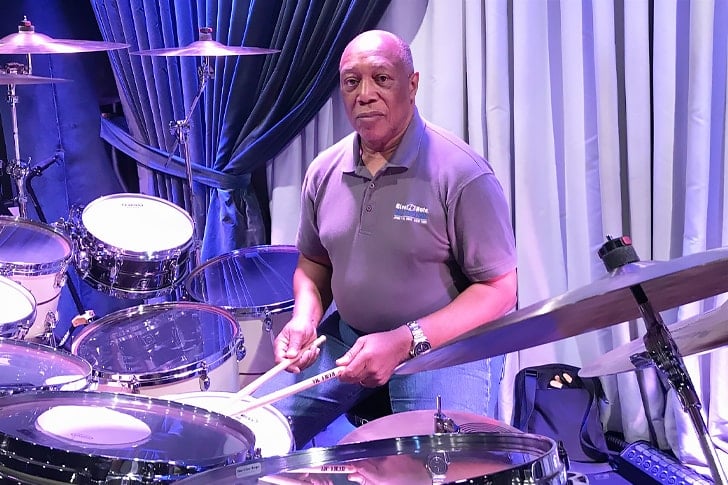
To say Billy Cobham is jazz fusion’s greatest drummer is no understatement. This particular jazz style is filled with legendary beatmakers, but only a selected few get as much respect as the man in the picture. The idol of many celebrated rock musicians, such as King Crimson’s Bill Bufford, Cobham was popularized for playing in John McLaughlin’s Mahavishnu Orchestra, one of the most popular jazz fusion acts of all time.
But before joining Mahavishnu, Cobham helped Miles Davis make the groundbreaking records that would help define the genre. A Panama-born musician, Cobham has also collaborated with the likes of Jack Bruce, Mark-Almond, and George Duke.
Jerry Allison – Buddy Holly
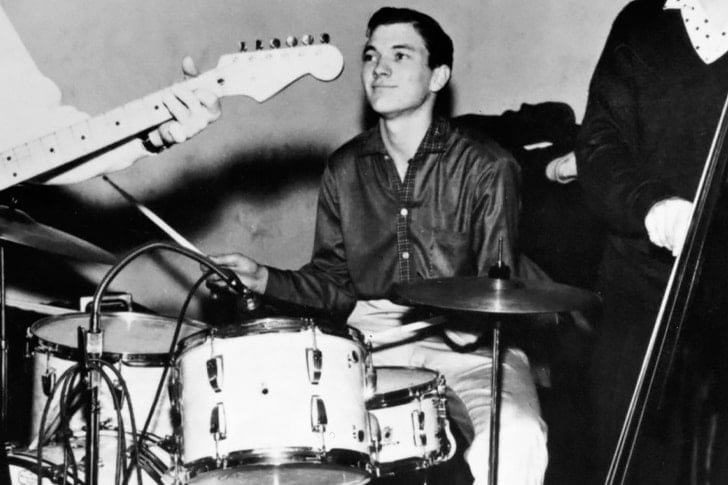
When we think of early rock & roll icons, we rarely think of the drummers. But that’s strange. After all, rock & roll’s popular impact is closely related to the steady and catchy 4/4 beat that made the genre stand-out from the rest. But since history has a way of correcting the past, more and more people are now familiar with Jerry Allison, the groundbreaking drummer who gave the beat to Buddy Holly’s most famous songs.
Up until now, Holly got most of the praise for writing hits as modern and contagious as “Peggy Sue” and “That’ll Be The Day.” But can you really imagine these tunes without Allison’s simple-but-effective approach to drums?
Phil Collins – Genesis
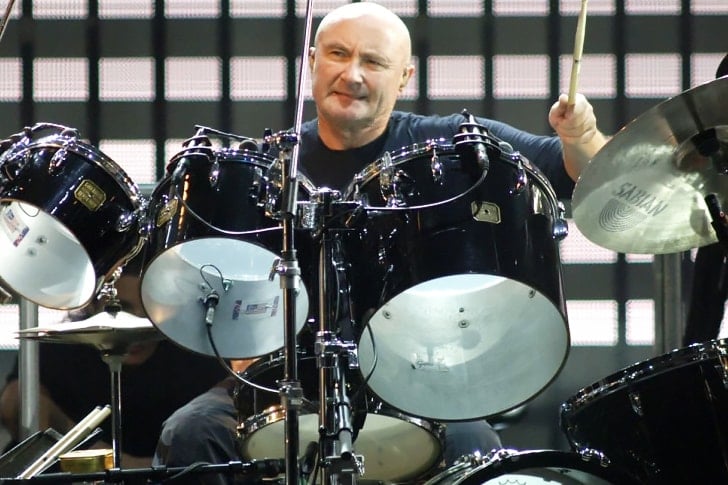
The English drummer Phil Collins is such a legendary and versatile musician we think it won’t be long before we all have to call him Sir Phil. More than just a drummer, Collins is a talented singer and record producer. But it’s no wonder: after all, he was “musically raised” by Genesis, the ’70s supergroup that also introduced us to the musical genius of Peter Gabriel.
Collins’s drumming skills will never be in question, but his radical studio approach to drums during the ’80s is arguably more influential than his playing style. Collins’s groundbreaking use of gated reverb in the song “In The Air Tonight” forever changed how drums are produced.
Cozy Powell – Black Sabbath
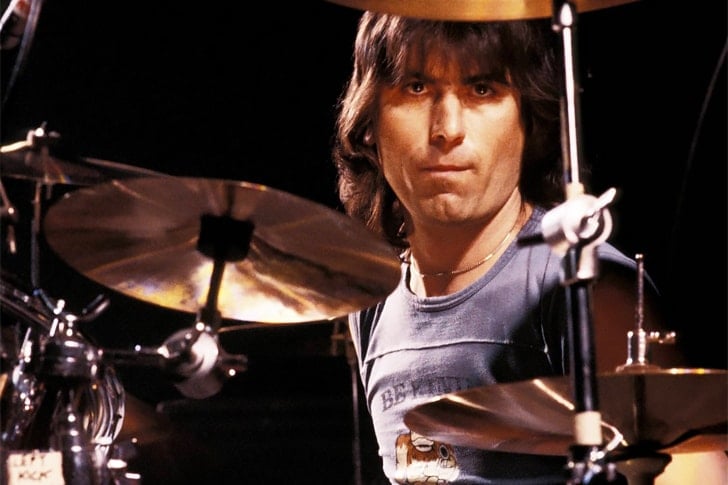
A Cirencester lad, Colin Trevor Flooks always had one great passion: the drums. Inspired by the jazz drummer Cozy Cole, he rebranded himself as Cozy Powell to pursue one of the most legendary drumming careers. He played for Black Sabbath for over a decade, until his tragic death in 1998, caused by a Bristol car accident.
But Cozy’s career started way before he was given a spell in Black Sabbath. Before the late ’80s, he hung around with musicians like Jimmy Page and John Bonham and played in classical rock acts such as The Jeff Beck Group, Rainbow, and The Ace Kefford Stand.
Carter Beauford – Dave Matthews Band
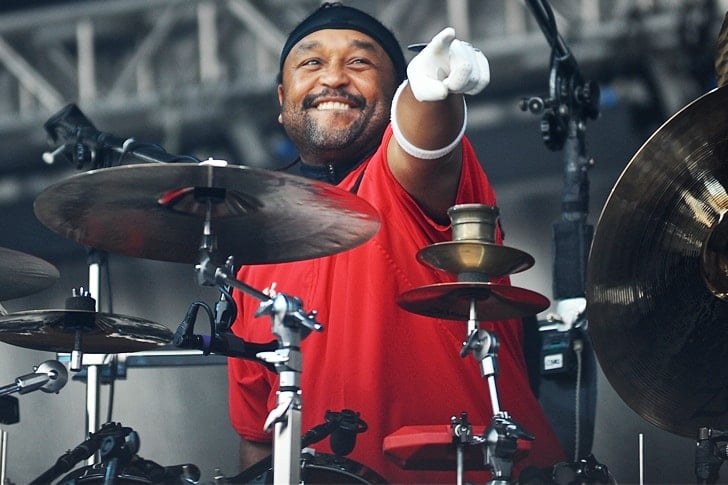
Like many other great drummers, the talented Carter Beauford spent his formative years trying to emulate the legendary Buddy Rich. But in doing so, he ended up developing a unique ambidextrous style that eventually got him the job of playing the drums for the Dave Matthews Band.
While most drummers cross their hands to play the hi-hat, Beauford popularized the open-handed drumming style, hitting the hi-hat with his left hand. Reportedly, he developed this style by practicing a lot in front of a mirror as a child. Besides Dave Matthews Band, Beauford has collaborated with the likes of Carlos Santana, Tim Reynolds, and Victor Wooten.
Jack DeJohnette – Miles Davis
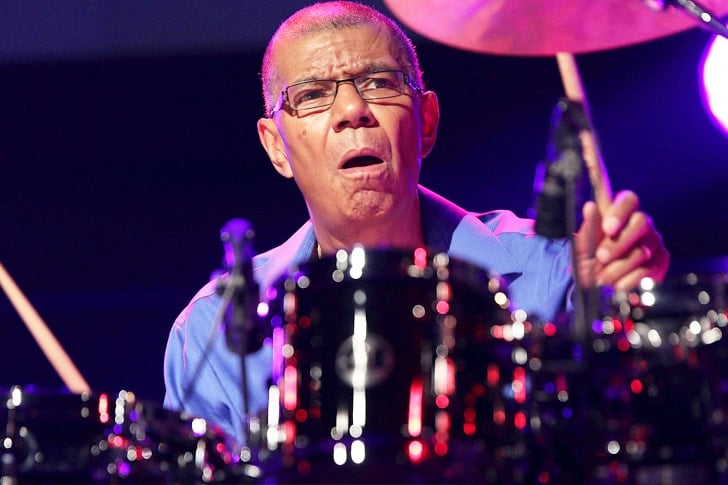
Playing with Miles Davis was a fundamental experience for the iconic American jazz drummer Jack DeJohnette. But it’s hardly the full story of his musical career, which is almost as influential as the one of his late trumpeter mentor.
Comparing any jazz musician to the one-and-only Miles Davis is never fair, but we truly believe DeJohnette is up there with the very biggest names in jazz. In his 7-decades career, the influential drummer played with the likes of Freddie Hubbard, Keith Jarrett, Bill Evans, Alice Coltrane, and Herbie Hancock! Can you really think of a more distinct and influential group of jazz musicians?
Tiki Fulwood – Parliament-Funkadelic
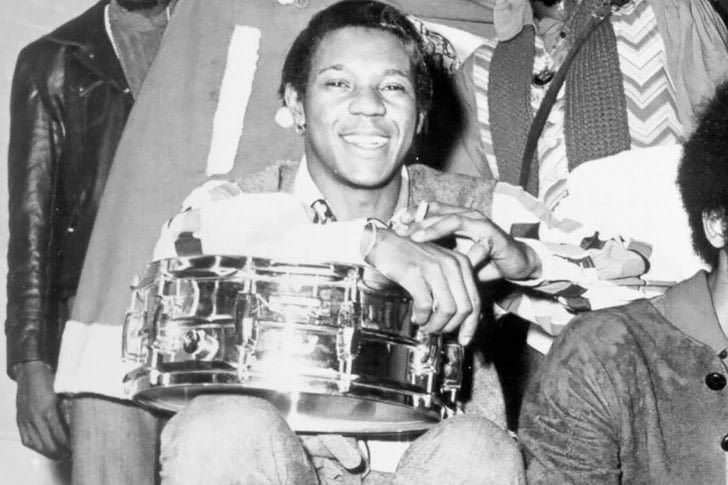
The fact that Ramon Fulwood, aka Tiki Fulwood, played the drums for both Parliament and Funkadelic is no coincidence. The two bands made for an influential musical collective. They were responsible for popularizing a new type of funk that drew influence from the staple rock genre of the ’60s: the LSD-inspired craze of the psychedelic rock.
The Parliament-Funkadelic was a unique brand of music, dubbed P-Funk (‘P’ for Parliament and ‘Funk’ for Funkadelic). Even though George Clinton was the great mentor of the music movement, the unmistakable Tiki Fulwood was playing the drums.
Jim Keltner – The Beatles
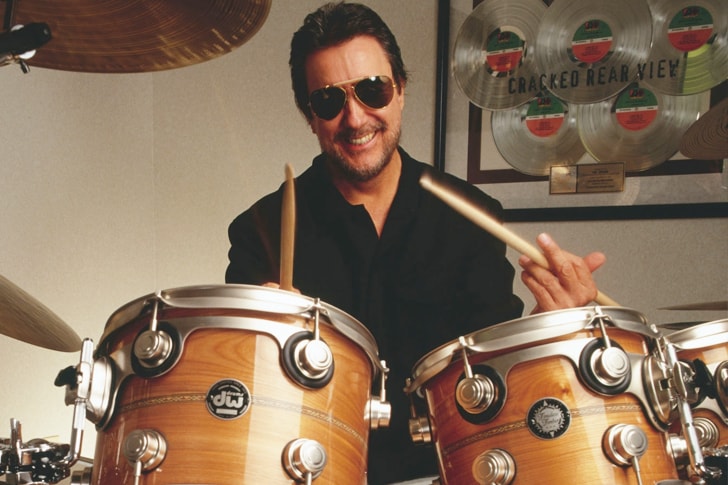
Bob Dylan called him “the leading session drummer in America,” and it’s tough to argue with that. After all, Jim Knelter’s career is so spectacular it’s even hard to grasp. The talented drummer from Tulsa, Oklahoma, has arguably the best curriculum in the drumming world.
He collaborated with The Beatles, Eric Clapton, Bob Dylan, Neil Diamond, Oasis, Joni Mitchell, Fiona Apple, the Bee Gees, Pink Floyd, and the list goes on. There’s no doubt that when you’re one of the world’s top musicians, and you feel like your songs are missing a beat, Jim Knelter is the man to call!
Jeff Porcaro – Toto
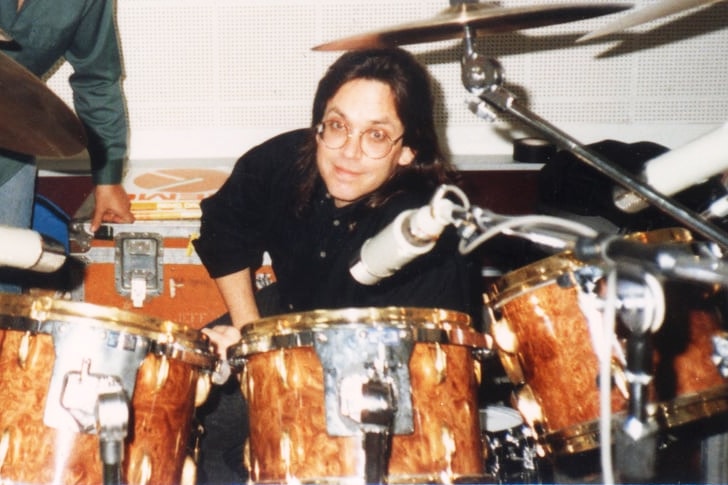
Jeff Porcaro was a drum-obsessed session musician who most notably played for Toto. But his influence goes way beyond that. Even though Porcaro’s life was sadly cut short when he was only 38 years old, he appeared in countless rock records, working thousands of hours as a session musician from 1971 to 1992.
According to the website AllMusic, the pop/rock drumming sound of the ’80s was, in great part, the characteristic drumming style of Porcaro. His simple but effective approach to pop music made it to many late 20th century hits, including Michael Jackson’s Beat It.
Steve Smith – Journey
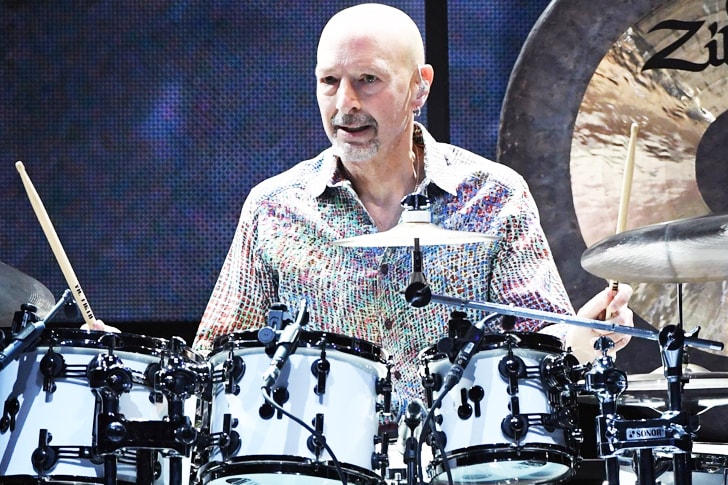
The American drummer Steve Smith studied at the Berklee College of Music when he was a young man, but his prowess to play the drums is not something you can learn in a classroom—it’s something you’re born with! Voted Modern Drummer’s magazine number 1 drummer for five consecutive years, Smith released over ten original records but is still mainly famous for playing the beat for the American rock band Journey.
Smith also works as the bandleader of the jazz act Vital Information, and as a session musician. He collaborated with many major music stars in the studio, including Mariah Carey, Bryan Adams, Bill Evans, and Hiromi Uehara.
Fred Below – Little Walter
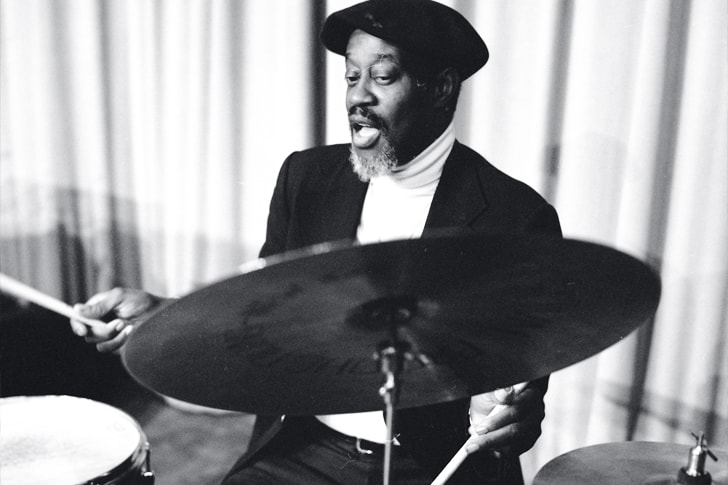
The Blues is the foundational genre of rock, a truly American art style that was made popular by artists like Muddy Waters, Howlin’ Wolf, and Little Walter. The latter was often accompanied by Fred Below, arguably the most famous drummer in the Chicago Blues history, credited for introducing the backbeat to the genre.
Blues is mainly characterized by the use of the Blues scale and the Blue note (typically the alteration between a quartertone and a semitone), but the drums also play an important part. The late Below remains the main figure credited with taking the rhythms of the Blues to its next level.
Mickey Hart & Bill Kreutzmann – Grateful Dead
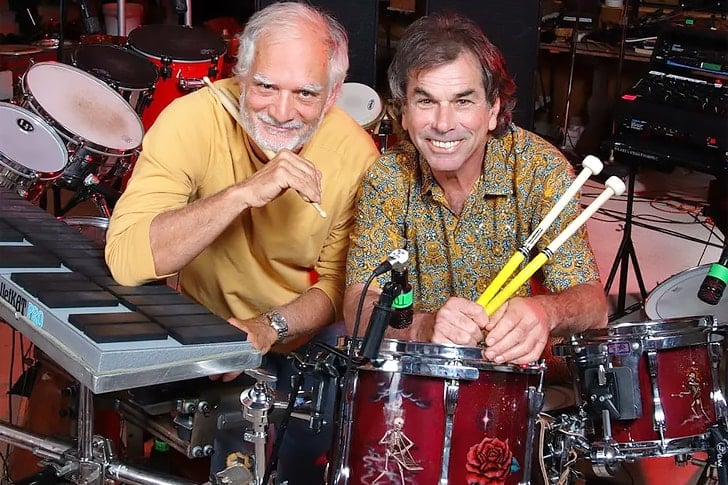
Not all bands have two drummers, but the Grateful Dead collective was never about following the norm. Dubbed the “rhythm devils,” the percussion masterminds of Mickey Hart and Bill Kreutzmann still make for what’s arguably the most famous duo in the history of rock drums.
Often acting as a live jam band, the Grateful Dead required something special from their drummers. And the Hart-Kreutzmann combo proved to be a fan-favorite force of nature. The two drummers enjoyed separate careers outside of the Dead, but it’s together they produced some of the best work of their careers.
Tony Allen – Fela Kuti
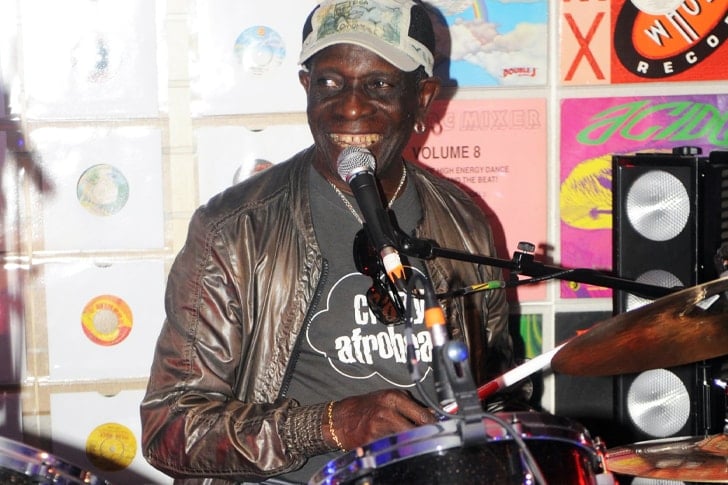
Afrobeat remains one of the most internationally famous genres of African music. And at the very start of the Afrobeat movement was this guy: Fela Kuti’s drummer and musical director Tony Allen. While Allen’s name doesn’t immediately ring a bell, it’s fair to say that, without him, there would be no Afrobeat. In fact, that’s something Kuti himself pointed out.
The idea that Allen was fundamental to the creation of Afrobeat becomes even more clear when we analyze what makes the genre so special. The distinctive feature of Afrobeat is its approach to rhythm, which compiles influences as distant as the Nigerian mambo, the West-African highlife, and American jazz.
James Gadson – Bill Withers
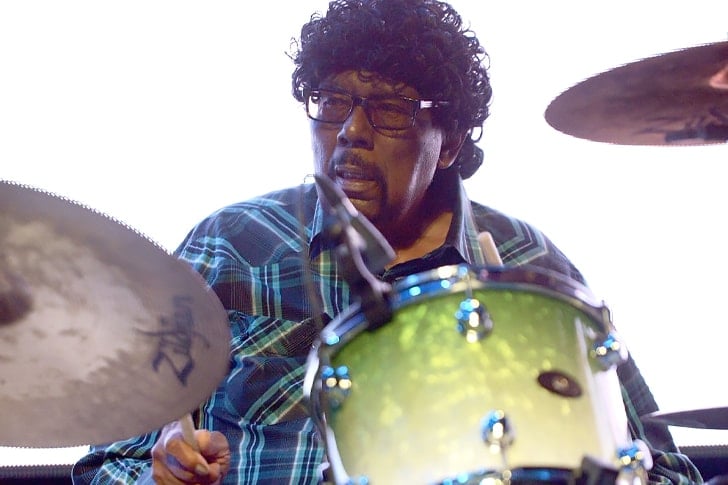
A legendary name in the L. A. music scene, American drummer James Gadson will always be remembered for his connection to the late Bill Withers. But it’s fair to say Gadson’s influence extends to the entire R&B scene.
Long before the electronic beat replaced the drums as R&B’s main driving force, Gadson paved the way and defined what R&B drums should sound like. His 6-decades spanning career has included countless collaborations, with the likes of Marvin Gaye, Charlotte Gainsbourg, Beck, Barbra Streisand, Aretha Franklin, and Smokey Robinson being the most notable.
Roger Hawkins – Muscle Shoals Rhythm Section
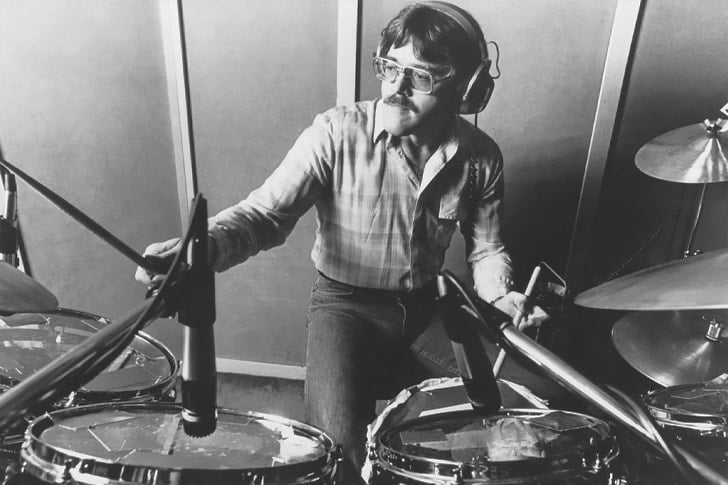
The name Muscle Shoals Rhythm Section probably doesn’t ring a bell. But don’t worry: we’re pretty sure you’ve heard them before, even though you probably didn’t know it. The band was a legendary studio session group featured in over 70 gold and hit platinum records, collaborating with musicians such as Aretha Franklin, Etta James, or Paul Simon.
Setting the beat in one of the best studio session groups ever known was Roger Hawkins, an impressive Indiana drummer that collaborated heavily with the producer Jerry Wexler and played the drums in Percy Sledge’s iconic tune, When a Man Loves a Woman.
Clifton James – Bo Diddley

Born on October 2, 1936, the late American drummer Clifton James was forced to work hard to learn how to play the drums, perfecting his rhythmic patterns with the help of common objects like tin cans and chairs. But when he was embraced by the rock & roll icon Bo Diddley, his self-taught gut style of playing was vital to provide Diddley’s tunes with the catchy beat they so desperately needed.
Between 1955 and 1970, James was heavily involved with Chess Records, one of the most influential record companies in the history of rock & roll/R&B. There, he played the drums for the likes of Muddy Waters, Howlin’ Wolf, and Buddy Guy.
Carlton Barrett – Bob Marley
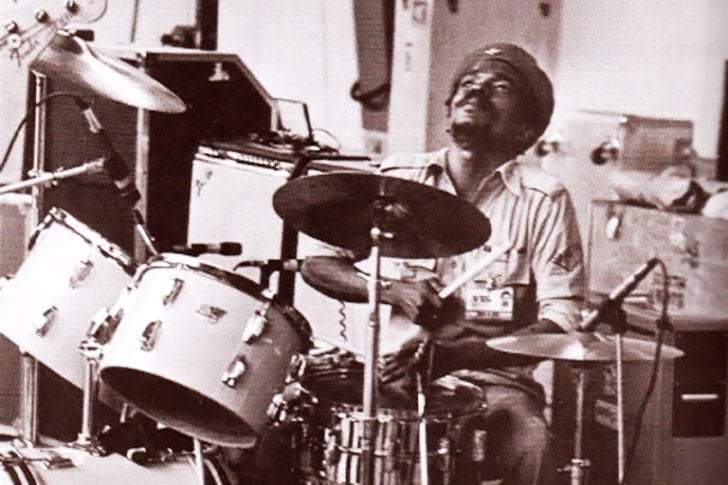
Ask any musician out there about what’s the most distinctive feature of reggae music. They will say it’s not the political lyrics, repetitive chord pattern, or Jamaican-flag-themed hat. In fact, it’s the beat. Reggae makes extensive use of the upbeat, effectively switching the bar’s accent from the ‘1’ to the ‘and’.
Technicalities aside, this is what you need to know: the Jamaican drumming legend Carlton Barrett was the undisputed master of the reggae beat. He started by playing with the dub music legend Lee “Scratch” Perry before joining The Wailers, the iconic band that backed-up the one-and-only Bob Marley.
Carmine Appice – Rod Stewart
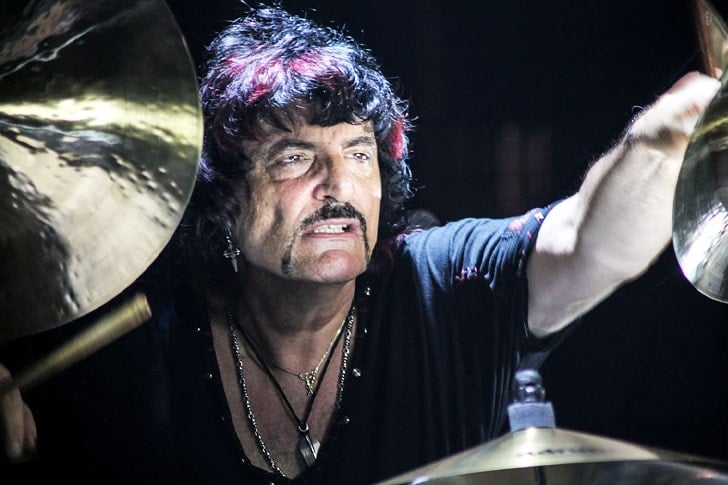
It wouldn’t be fair to call Carmine Appice anything less than a drumming mastermind. For one, he wrote two vastly influential books on the subject, with the latest being called “The Ultimate Realistic Rock Drum Method.” Additionally, he’s played with countless top acts, lending his skills to the likes of Rod Stewart, Vanilla Fudge, or Cactus.
His younger brother is Vinny Appice, the drummer of bands like Dio and Heaven & Hell, proving that the talent for driving the beat truly runs in the family. Active since 1966, Appice is still one of the world’s top-requested and most influential rock drummers.
Danny Carey – Tool
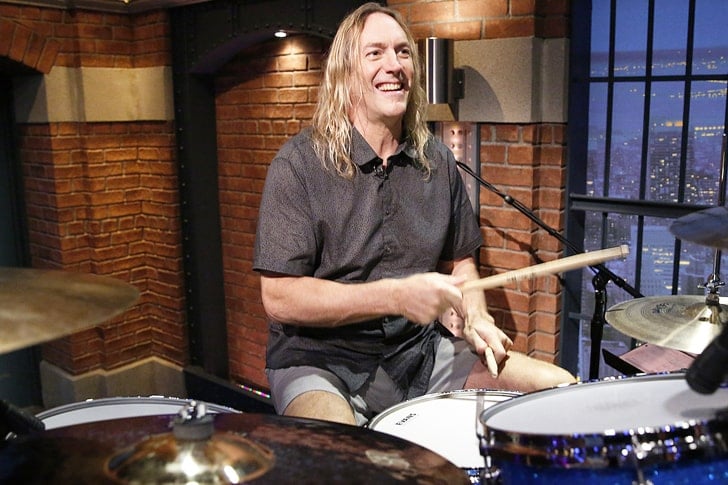
Not all drummers need to count while playing. Some just do it naturally, driven by the sheer impulse of the beat. But we don’t think that’s an option for Danny Carey, Tool’s drummer. A definite virtuoso, Carey crafts a beat with the same attention to detail and love for complexity a mathematician uses to create an equation.
An idol among rock nerds who love advanced musical concepts, Carey is best known for his frequent use of odd meters, polyrhythms, and other cool-sounding music techniques. Still, he has this unique ability to turn an odd 7/8 beat into something that sounds as catchy and fluid as your radio-ready 4/4 song.
Earl Palmer – Little Richard
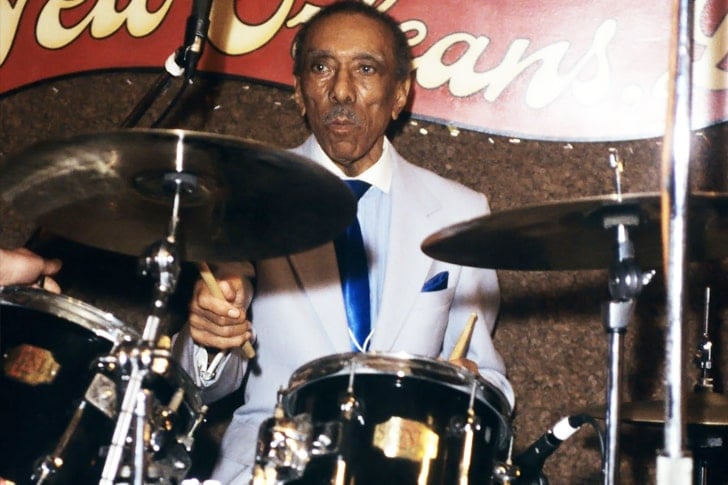
Playing the beat for an icon like Little Richard is only intimidating if you’re not Earl Palmer. Born in the booming jazz Mecca of New Orleans, Palmer was in the right place from the start. But what really landed him a place in Little Richard’s band was his ability with the sticks.
A big name of the early rock & roll days, Palmer worked extensively with the pianist/singer-songwriter Fats Domino. He was also a part of the hit-making studio session collective Wrecking Crew. His career as a session musician was also incredible: in the ’70s and ’80s, he played in the records of artists such as Tom Waits, Tim Buckley, and Elvis Costello.
Steve Gadd – Paul Simon
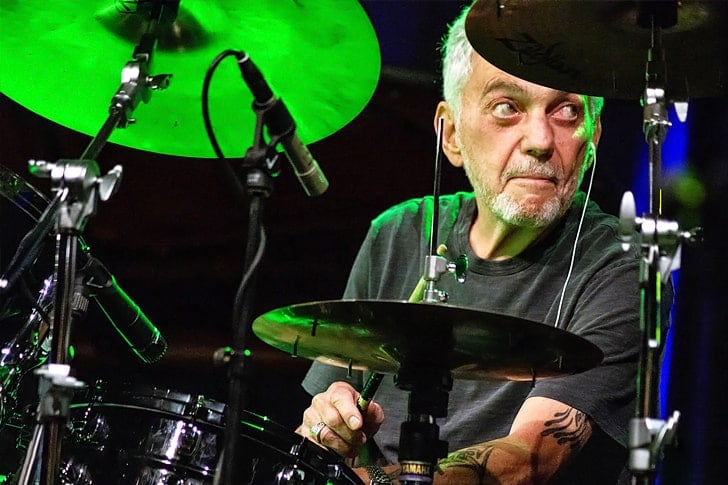
Steve Gadd knows his instrument like the back of his hand. Unlike many of the top drummers on our list, he never played for just one band or musician. But to this day, he’s best known for his collaboration with Paul Simon and for his syncopated contribution to the track, 50 Ways to Leave Your Lover.
Gadd’s career has been a real who’s who of popular American music. Active since 1968, the New York drumming sensation was featured in many iconic records from artists such as Joe Cocker, Chick Corea, Michel Petrucciani, and Eric Clapton. In 1984, he was inducted into the Modern Drummer Hall of Fame.
Elvin Jones – John Coltrane
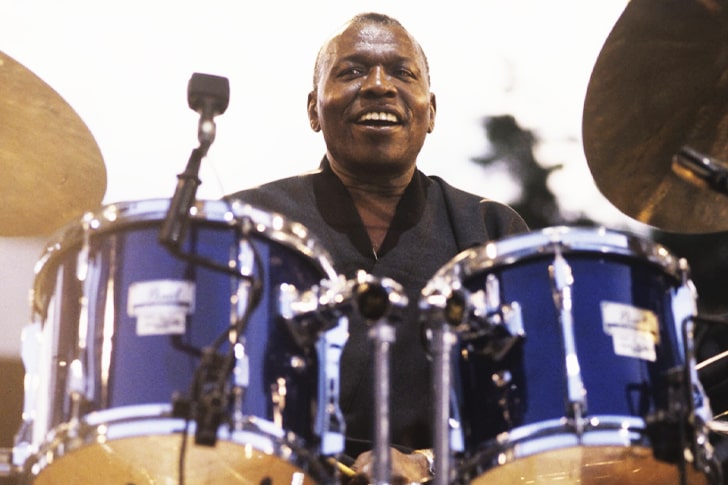
Every jazz fan knows and idolizes Elvin Jones. It’s no wonder: the drummer from Pontiac, Michigan, had a career that reads like the history of the post ‘50’s bebop and modal jazz movement. He was part of the iconic John Coltrane quartet that also featured McCoy Tyner on the piano and Jimmy Garrison on the bass.
But Jones collaborations extend way past the man who gave us A Love Supreme. He also played with the legendary Miles David and Charles Mingus, who make, alongside Coltrane, for the Holy Trinity of the ’60s and ‘70s jazz! He died of heart failure in 2004, leaving behind one of drumming’s most respectable legacies.
Levon Helm – The Band
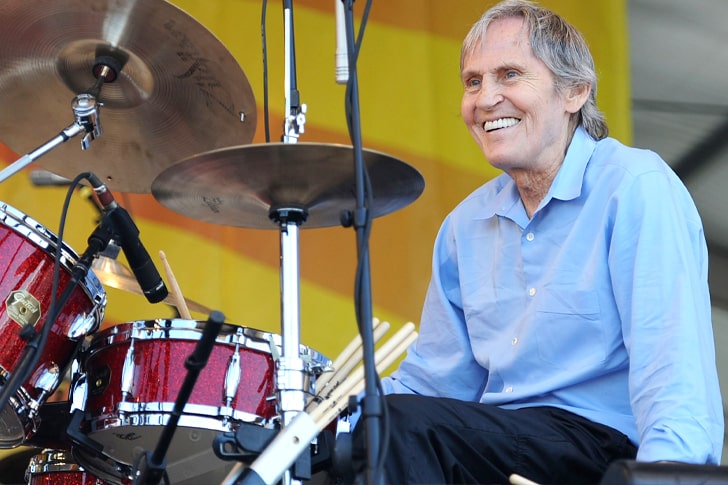
Drummer/singer Levon Helm was never one to like complicated names. That’s probably why he decided to call his rock group The Band. But if you listen carefully to his playing style, you may notice Helm’s actually an extremely inventive, original, and unique musician.
While The Band’s success in the ‘70s made for Helm’s career peak, his contribution to music extends way past the Canadian rock group. He also released many successful solo records in the Folk/Americana style and collaborated with artists of the like of Bob Dylan, Ronnie Hawkins, and Ringo Starr.
Bernard Purdie – Nina Simone
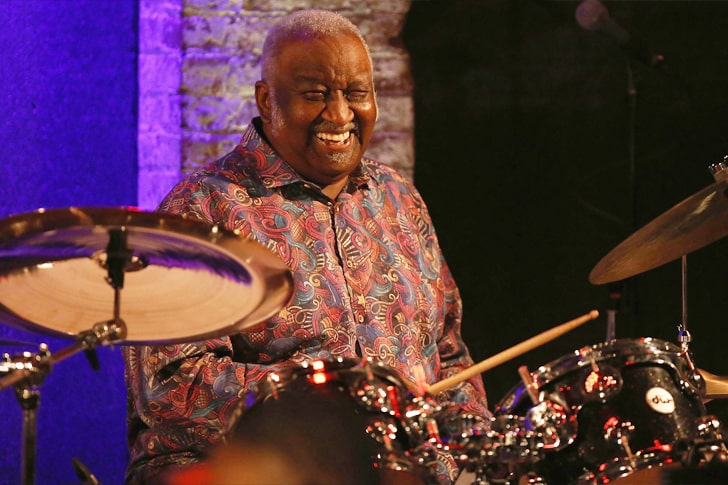
The human metronome that’s Bernard Purdie collaborated with countless big names over the years, including the soulful singer Nina Simone and the guitar virtuoso Jeff Beck. But his drumming style and precision are so influential it’s fair to say Purdie is a musical sensation on his own.
In fact, he did release many successful records as a bandleader, including 1968’s Soul Drums. But the ultimate legacy of his career is perhaps the Purdie Shuffle: a type of 6/8 drum pattern that relies heavily on triplets, and that takes a very precise musician to pull off convincingly.
Tony Williams – Miles Davis
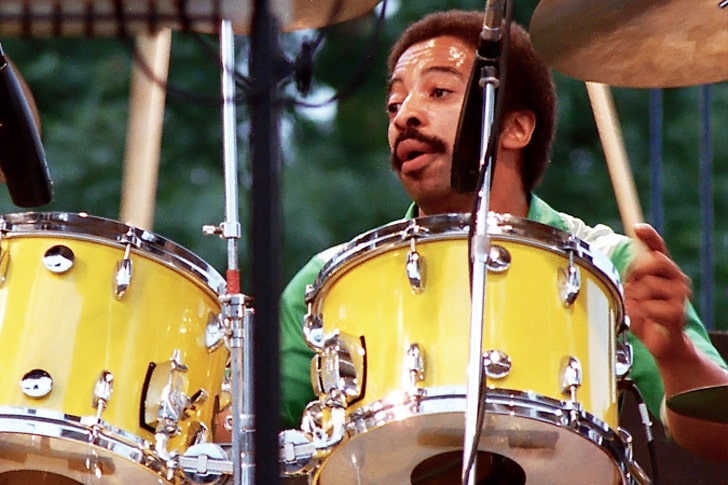
The legendary drummer Tony Williams wasn’t even 18 years old when he first played live with Miles Davis. And if you know anything about Miles, you probably know how much of a titanic challenge that is. It took a special musician to accompany the “prince of darkness,” and Williams was just it!
His contribution to the history of jazz is priceless. He played in many iconic records, including the 1964 Eric Dolphy masterpiece, Out to Lunch! He also enjoyed a fantastic career as a bandleader, releasing tenths of original records between 1964 and 2018. He’s listed by many top drummers, including some featured on this list, as one of their main musical influences.
Ziggy Modeliste – The Meters
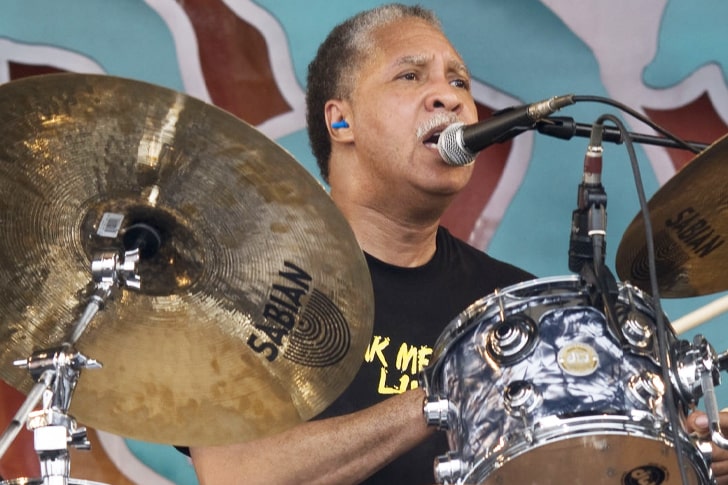
Before Joseph “Ziggy” Modeliste, the second-line style of drumming was mainly exclusive of the New Orleans street parades. But Modeliste was the man who took the patterns of the second-line tradition and presented them to the world in a groovy and radio-ready package.
Mainly known for his decades-long association with his band The Meters, Modeliste is credited as a funk music innovator, New Orleans legend, and metronome-like drummer. Over the years, he’s played with many top musicians of the R&B and funk genres, including the esoteric Dr. John, the singer Lee Dorsey, and the unmistakable Keith Richards.
Terry Bozzio – Frank Zappa
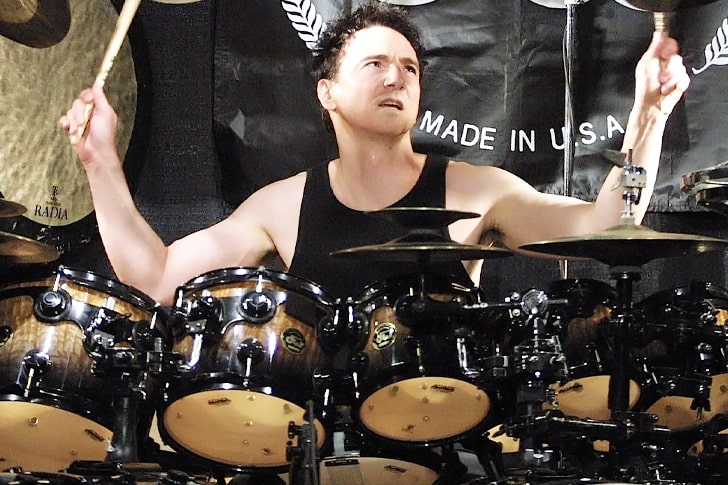
Is your world-class band missing that one special ingredient? That’s when you know you have to give Terry Bozzio a call. Popularized by his technique-heavy style of playing and for having collaborated with the musical genius of Frank Zappa, the San Francisco musician was and still is one of the best drummers around.
A former member of the Missing Persons new-wave rock band, Bozzio has been busy doing what he does best: playing the drums live in front of heavily-packed stadiums. Over the years, he’s made it to the line-up of rock acts as influential as Faith No More, Korn, Fantômas, and Jeff Beck.
Bill Bruford – Yes
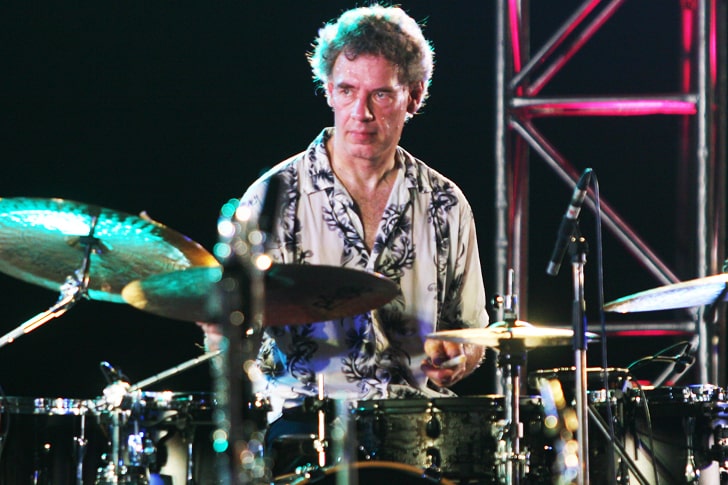
If you’re a fan of progressive rock, there’s a good chance Bill Bruford is your favorite drummer in the entire world. A founding member of Yes, Bruford later made it to the line-ups of King Crimson and Genesis. In the prog-rock scene, that’s as good of a career as you can get! But Bruford didn’t stop there.
He also released solo records and played with other highly-influential groups, such as U.K., National Health, and the crazy Canterbury-scene legends Gong. After spending years changing the prog-rock history forever, Bruford retired from the stages in 2009 and completed a Ph.D. in Music in 2016.
Buddy Rich – Buddy Rich
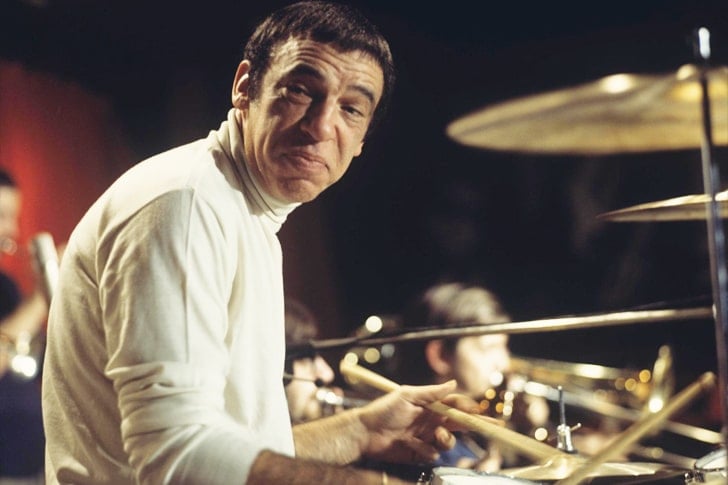
There’s a history of the drums before and after Buddy Rich. That’s how influential the man was! Rich was perhaps the world’s first famous drummer and the first artist to take the drums to the center stage of a live musical performance.
Rich inspired countless young boys and girls to pick-up the drums as their favorite instrument, and his breathtaking live solos are still impressive to watch today. As a performer, Rich was fond of the spectacular, and he took his instrument to a whole new level, showing to the world just how entertaining and versatile pure rhythm could be.
D.J. Fontana – Elvis Presley
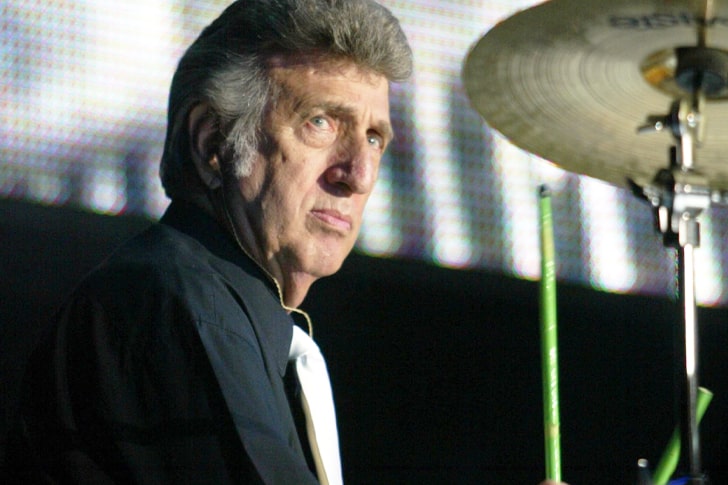
Sharing the stage with the King of Rock was not an easy job. Elvis was such a special performer he could overshadow the Sun itself with his silk-like voice and daring dance moves. And that’s probably why most people have never heard of the talent of Dominic Joseph “D. J.” Fontana.
Like most of Elvis’s collaborators, Fontana spent a lifetime in the background, but he’s finally getting the credit he’s always deserved. He played in most of The King’s hits for a period of 14 years. Throughout his life, the late drummer from Shreveport, Louisiana, is said to have played on over 460 RCA sessions alongside Elvis.
Benny Benjamin – The Funk Brothers
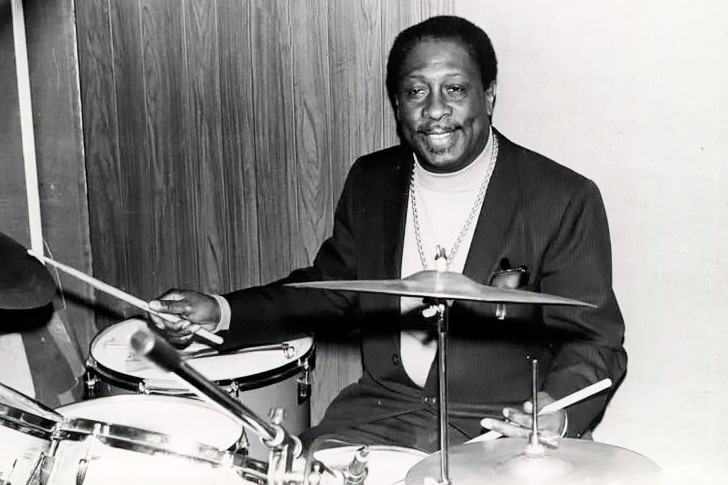
The Funk Brothers seldom left the studio, but they’re still one of the world’s most influential bands. Working for the revolutionary Motown Records, a label that took inspiration from Ford’s assembling line to create a hit-making musical factory, the Brothers were the band that crafted the instrumentals of most of Motown’s iconic tunes.
Playing the drums in The Funk Brothers was Benny Benjamin, a musician known for his readiness, steady pulse, and tempo-keeping ability. His rhythms are the compassing secret behind Motown hits as legendary as My Girl, Shop Around, and Money (That’s What I Want).
Stewart Copeland – The Police
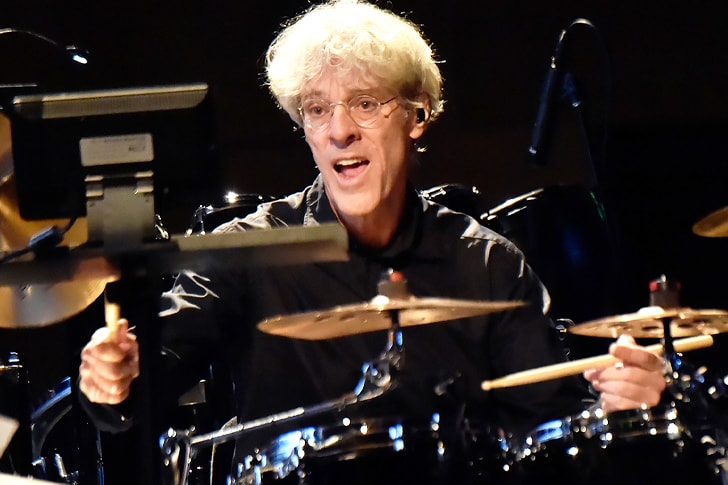
The son of a CIA officer and an archaeologist, Stewart Copeland, started playing the drums by the time he was 12. Later, he briefly worked as a road manager for the band Curved Air before joining a promising new British rock trio called The Police.
Alongside Sting and Andy Summers, Copeland met the ideal band partners, and The Police went on to become one of the world’s most popular bands. His partnership with Sting, who played the bass for The Police, is still deemed one of the best rhythmic sections in pop-rock music’s recent history. Nowadays, Copeland keeps busy by composing original soundtracks to videogames such as Spyro.
Al Jackson Jr. – Booker T. & The M.G.’s
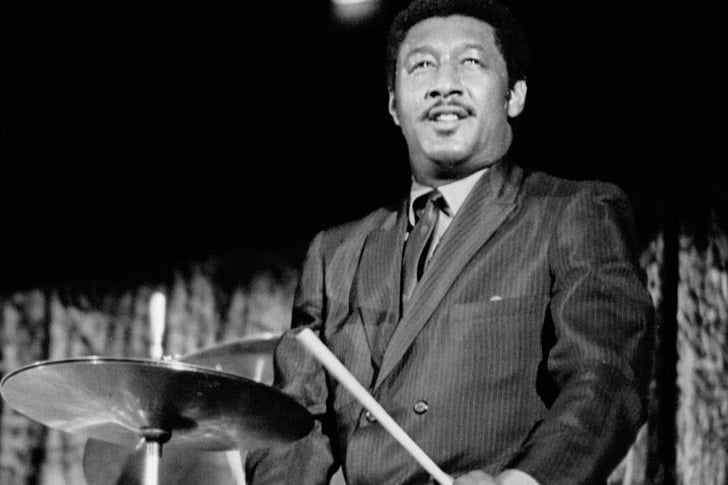
They called him the human timekeeper, and the name couldn’t suit him better. A prolific session musician, drummer Al Jackson Jr. is perhaps best known as a member of Booker T. & The M.G.’s, an R&B/funk group that helped shape the Memphis soul style of music.
Jackson played the drums for the likes of Wilson Pickett, Al Green, and Otis Redding. But on October 1, 1975, his life was sadly cut short. A robbery that went wrong resulted in his shocking murder, depriving the world of one of its most promising drummers. He was only 39 years old.
Mitch Mitchell – The Jimi Hendrix Experience
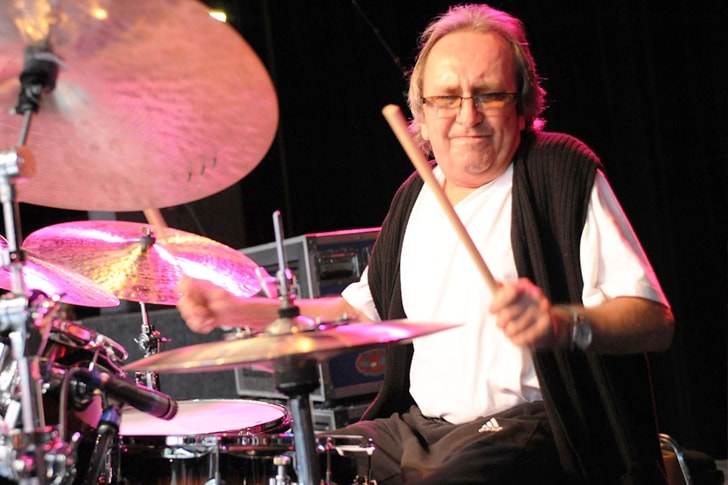
Many music fans agree that Jimi Hendrix was the best guitar player in rock music history. And while the topic is controversial, there’s no doubt it takes a very talented drummer to successfully keep track of Hendrix’s crazy, instinctive, and characteristic guitar riffs.
Fortunately, Hendrix was in good company. Keeping the beat for the legendary guitarist was the late Mitch Mitchell. Himself a great rock & roll character, Mitchell inspired many accomplished drummers, such as Queen’s Roger Tayler and The Police’s Stewart Copeland, due to his psychedelic/blues-blend style of playing. Curiously enough, he was also a ’60s child actor before becoming a musician.
Gene Krupa – Gene Krupa
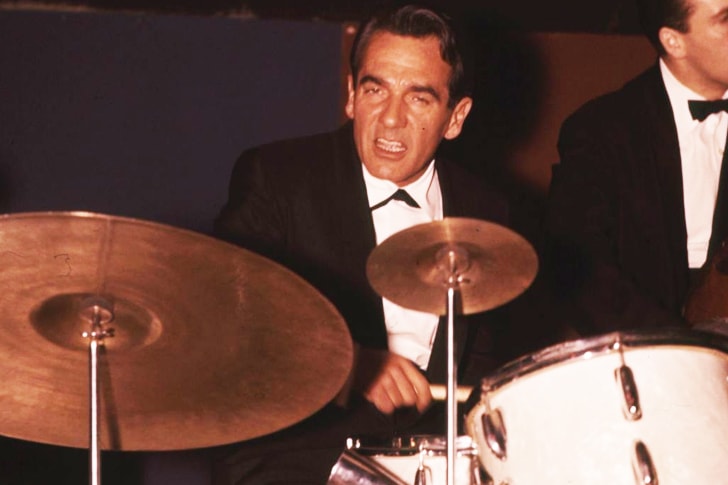
Like Buddy Rich, Gene Krupa was the top performer responsible for putting the drums center-stage. Even though he wasn’t as technically gifted as the latter, he was just as influential, and he’s still credited for being the man who defined the standard nature of the band’s drum kit.
Once described as the first rock drummer, Krupa started playing live in the ‘20s and excelled at the pre-jazz genres of swing and Dixieland. He was also one of the first people to popularize the drum solo and one of the first drummers to be brave enough to take the spotlight and command the show.
Dave Grohl – Nirvana
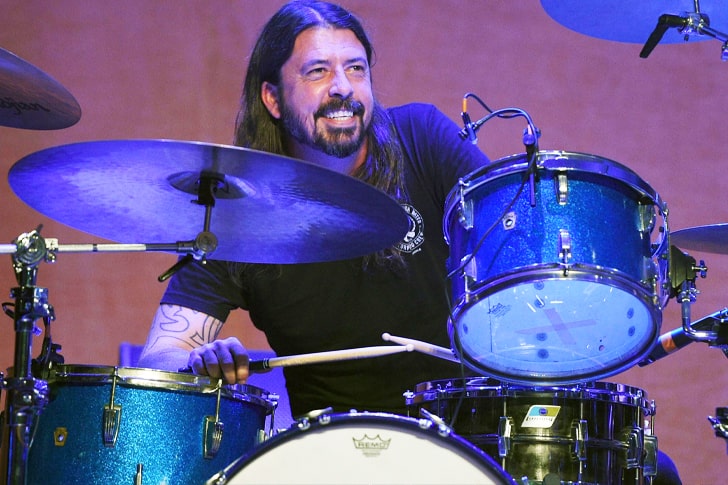
Dave Grohl is a study case. Throughout his entire career, he always looked like a guy who was just having fun on the stage while playing the drums. But his natural likeability and unique drumming style turned him into arguably the world’s most famous drummer at the moment.
Known for playing simple and loud, Grohl’s biggest feat is probably best expressed by his hugely successful career. Like Midas, he turns everything he touches into gold: from Nirvana to Foo Fighters, his repertoire always resonates with the audience, and his bands always make for vastly popular commercial hits.
Bill Ward – Black Sabbath
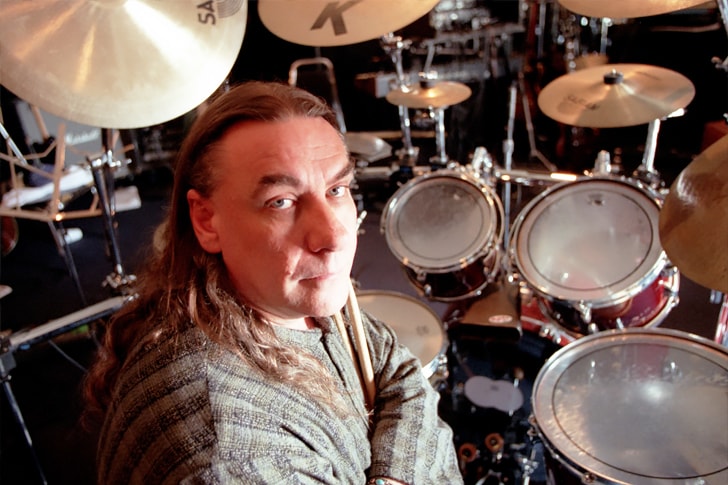
The legendary rock act Black Sabbath is like a force of nature. Instead of mindlessly boasting their technical ability, the Black Sabbath musicians stood out from the rest due to their simple but innovative approach to rock. And this is particularly clear if you carefully listen to Bill Ward’s uncomplicated but characteristic drumming style.
Being a top drummer is not about playing as many complicated beats as you possibly can—it’s about knowing how and when to feed a great song with the right rhythm. And if there’s a man who knew how to put a beat to a classic, it’s Ward!
Dave Lombardo – Slayer
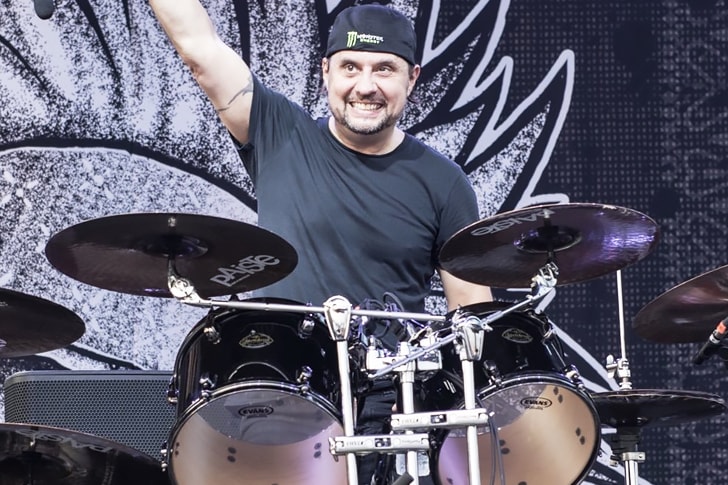
Ask any metalhead over 30 about their favorite drummer, and the answer will probably be Dave Lombardo. Like most metal drummers out there, Lombardo is very fast with the sticks. But his drumming skills go way beyond his ability to play steadily at 210 beats per minute.
The thing that really makes Lombardo stand out from the rest is his natural ability to feed a great song with the best drumming rhythm it could ever have. If it wasn’t for his raging but elegant beats, we truly doubt Slayer would have made the same kind of impact in the world of rock and metal music.
Ian Paice – Deep Purple
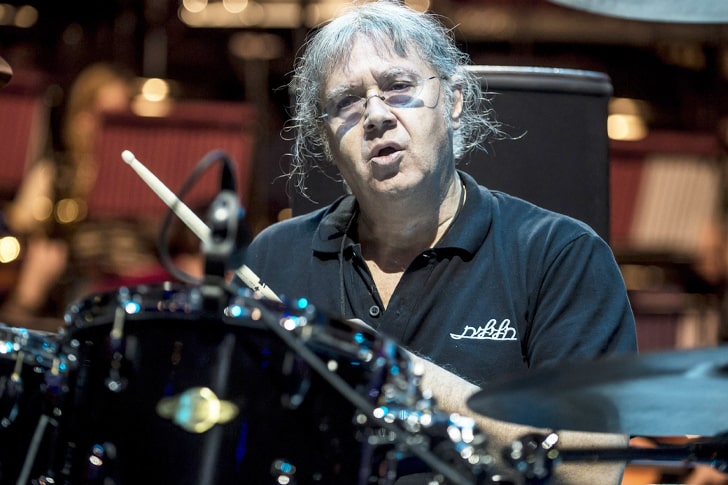
If you go back to your old music collection and listen to some of the earliest records of Deep Purple, you may be surprised by how raw, crude, and powerful the revolutionary rock group sounded. And that a big part of their punch-in-the-face, riff-driven songs owe a lot to Deep Purple’s last remaining original member, the one-and-only Ian Paice.
A Nottingham lad who admired the styles of both Buddy Rich and Ringo Starr, Paice has perfected his smooth style and one-handed rolls over the years to become one of rock’s ultimate living drummers. With Deep Purple still touring the world, you cannot miss a chance to see Paice playing live.
Ringo Starr – The Beatles
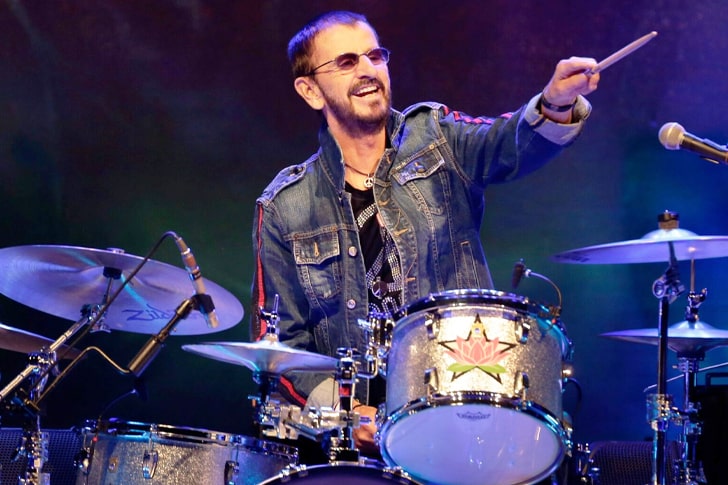
People love to hate on Ringo Starr, often discarded as the least talented of The Beatles. But if it weren’t for Starr’s uniquely intuitive approach to drums, the iconic Fab Four’s records wouldn’t be half as entertaining. If you like highly-technical drum solos, Starr is not the man for you.
But if you enjoy drummers who know how to drive the song with a beat that fits right in, you have to show some respect for the legendary man in the picture. We all know just how good The Beatles were, but we need to start crediting Starr for what he is: a revolutionary rock drummer unlike any other.
Travis Barker – Blink-182
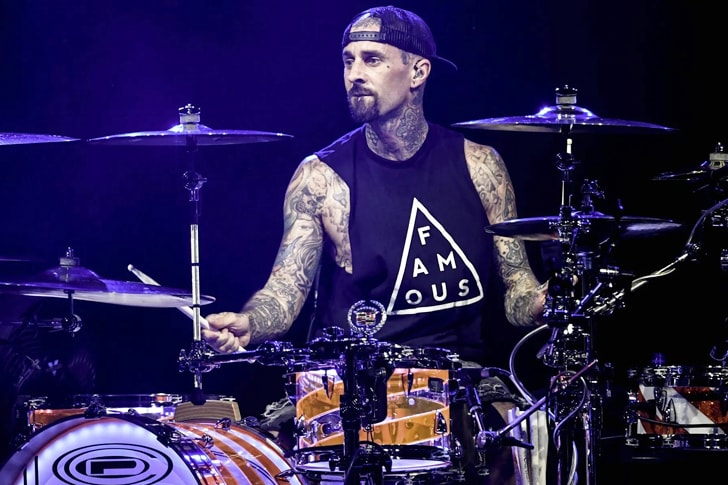
Punk is a type of music that takes pride in being simple, raw, and straight-to-the-point. But even though being a punk drummer seems like an easy enough job, there’s no doubt Blink-182’s superstar Travis Barker deserves a place on this list. Without his blasting catchy beats, Blink-182’s contagious songs just wouldn’t sound the same.
Even though he’s a bonafide punk-rock musician, Barker is as versatile as any other top drummer on our list, and his style of playing had a huge impact on multiple hip hop artists. Besides playing the drums, Barker is also an accomplished record producer who’s worked with contemporary artists such as Machine Gun Kelly, $uicideboy$, and XXXTentacion.
Charlie Watts – The Rolling Stones
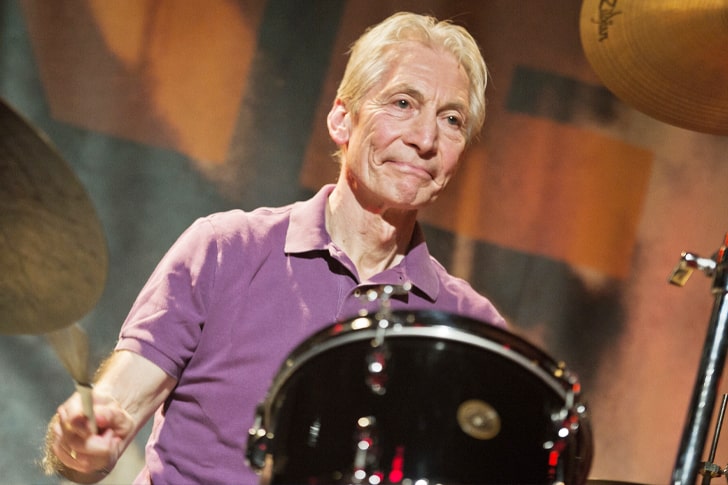
In the early days of The Rolling Stones, the well-established drummer Charlie Watts was sort of the adult in the room. He was the man who took the uncontainable charisma of the likes of Mick Jagger and Brian Jones and served it with a steady beat that benefitted the song and, most importantly, rocked your socks off!
The drummer of the world’s biggest rock band, Watts was never one to take the spotlight. But in adapting effortlessly to the blues, rock & roll, and jazz blend of the records of the Stones, Watts showed the entire world just how good of a drummer he is.