
Hussaini Hanging Bridge – Pakistan
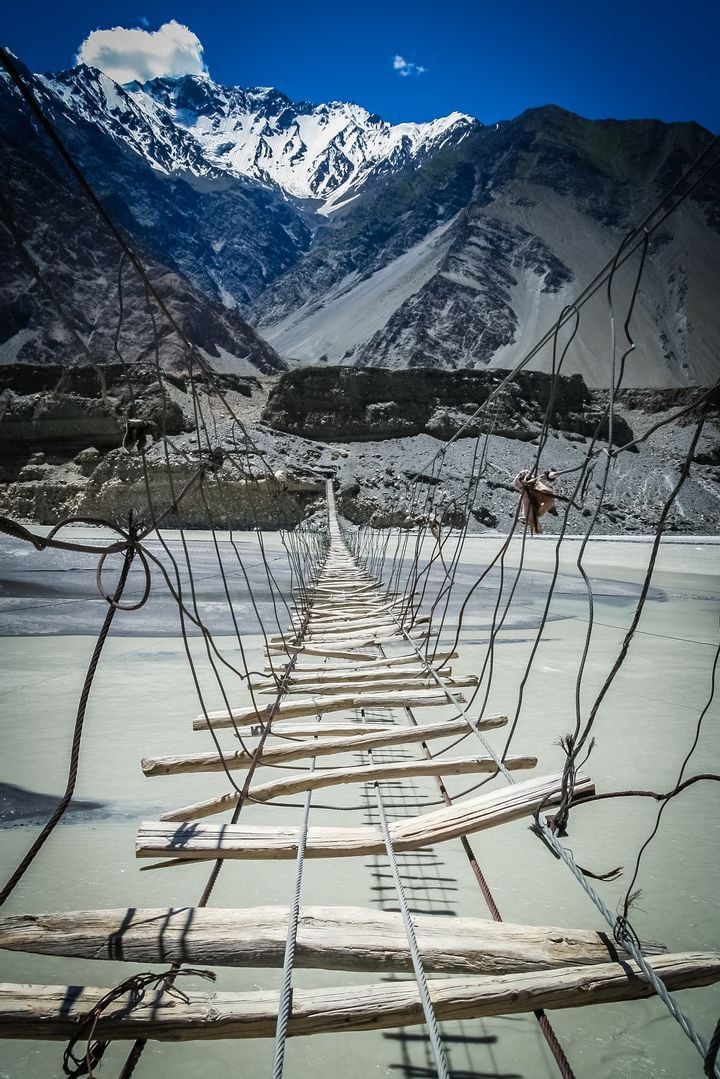
The Hussaini Hanging Bridge, dubbed “the most dangerous bridge in the world,” is the sole point of connection between Zarabad and the Hussaini Village over the Hunza River. It sits in Pakistan, and while its popularity isn’t very good for the locals, it’s a treat for any thrill-seeking tourist!
What is it that makes it dangerous? Well, it’s composed of pretty flimsy-looking rope and wood, poorly maintained, shakes when it’s windy and has huge gaps between each step. It looks like something you’d see in an Indiana Jones movie, ultimately making it so popular and Insta-worthy. With that said, only the bravest would consider crossing this.
Langkawi Sky Bridge – Malaysia
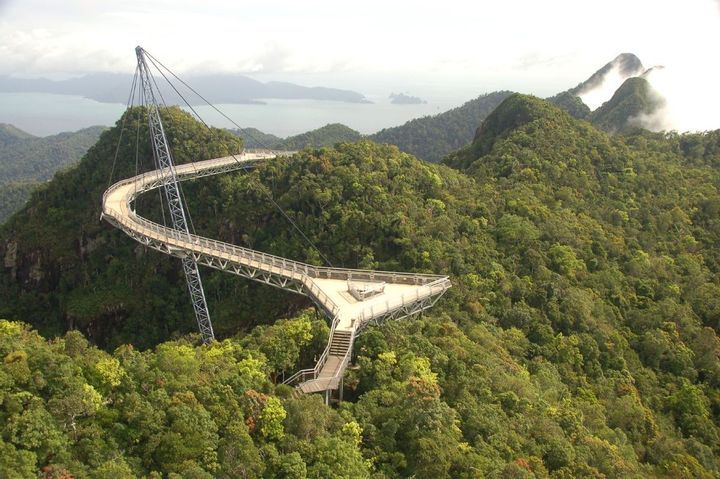
It’s a feat of engineering and one of Malaysia’s top tourist attractions. The Langwaki Sky Bridge sits on top of the mountains with a breathtaking view at each step, but it’s not for the faint of heart. If you’re afraid of heights, you may want to reconsider before buying a ticket. In case of injury, you may find yourself stranded in the middle of the bridge for hours before getting help.
Nonetheless, the Langwaki Sky Bridge is ultimately safe and receives thousands of tourists yearly. The materials that make up the structure were pre-fabricated and lifted to the top of the mountains by helicopter before assembling.
Seven Mile Bridge – Florida, United States
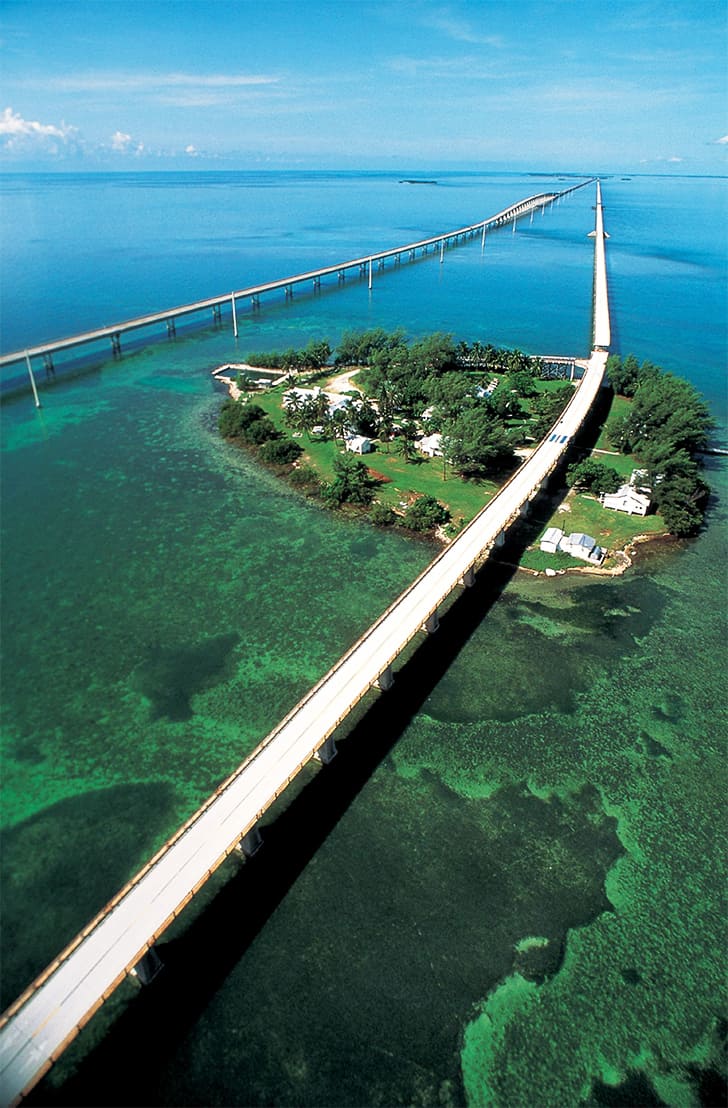
In Florida, there are two bridges connecting Knight’s Key to Little Duck Key: a modern one, open to traffic, and an older one, just for pedestrians. The latter was one of the world’s longest bridges at the time of its construction. Why is it dangerous? Mainly because it’s poorly prepared to deal with bad weather.
On a sunny day, though, the Seven Mile Bridge is perfect for an afternoon stroll. It offers a beautiful ocean view and access to some otherwise remote tiny islands. It has also featured in some Hollywood movies, including James Bond’s “License to Kill” and “2 Fast 2 Furious.”
Carrick-a-Rede Rope Bridge – Northern Ireland
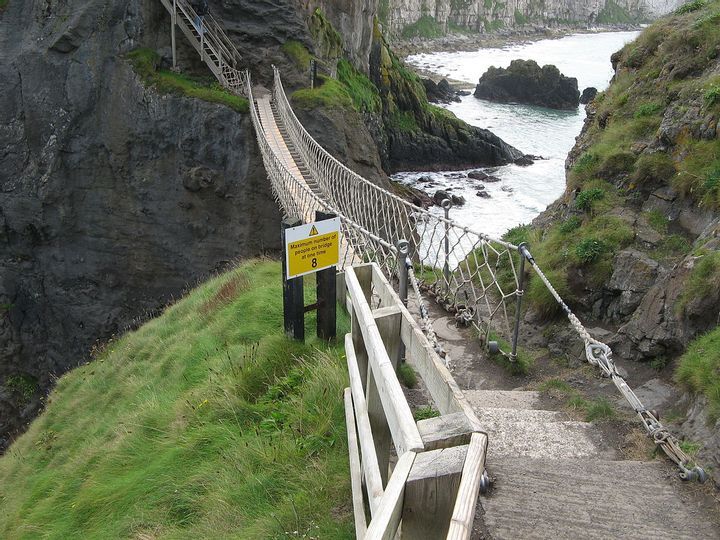
Sixty-six feet: that’s how long the Carrick-a-Rede Rope Bridge in Northern Ireland is. It doesn’t look like much, but this famous bridge makes for a huge tourist attraction and welcomes close to 500K people in a good year. It’s used to connect the mainland to the tiny island of Carrickarede, and it’s so popular you need to make a booking in advance before visiting.
Even though the bridge had work done twice in 2008 and 2017, it was first constructed in the 18th century by salmon fishers. Nowadays, it’s more famous for being a tourist site and is no longer used for fishing.
Deception Pass Bridge – Washington, United States
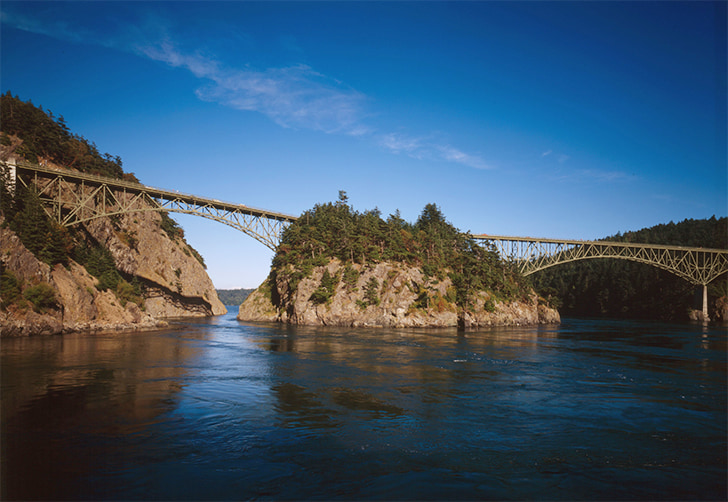
Constructed in 1934, the Deception Pass Bridge isn’t exactly dangerous in the usual sense. After all, it’s a well-built and well-maintained structure. However, it’s famous for being “the world’s scariest bridge” because of the mysterious fog that constantly keeps it shrouded.
According to some passersby, you can hardly see two steps ahead when crossing the bridge on a foggy day. During good weather, though, the Deception Pass Bridge offers a beautiful, scenic view of the Whidbey and Pass islands. Despite being a historic site, this terrifying bridge has seen plenty of tragedy, including many regrettable suicides (as many as 15 per year).
The Bridge of Immortals – China
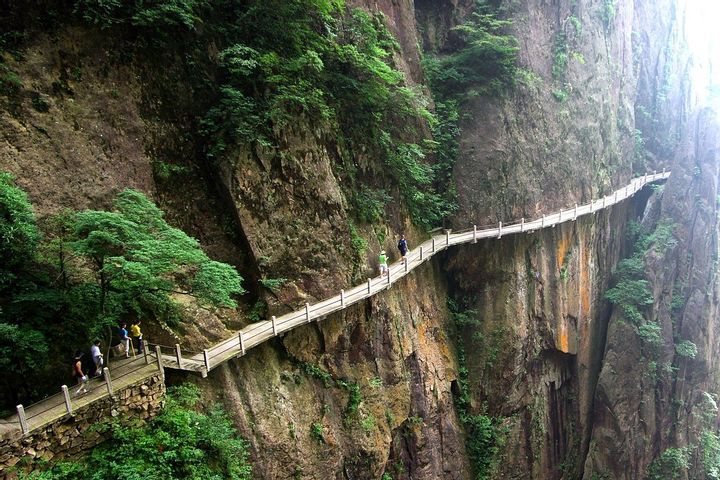
Officially known as the Fairy Walking Bridge, the Bridge of Immortals is a small pedestrian bridge located in the rocky mountains of Huangshan, China. Nowadays, the bridge makes for a popular tourist attraction and is reportedly safe for people of all ages. Its mythology, though, is what makes it so unique.
Before being renovated, the Bridge of Immortals was deemed to be incredibly dangerous and took the lives of countless adventurers. Small remnants of the old stone bridge can still be seen today, and the Buxian span, in particular, is often dubbed as “one of the most magical places on Earth.”
Hanging Bridge of Ghasa – Nepal
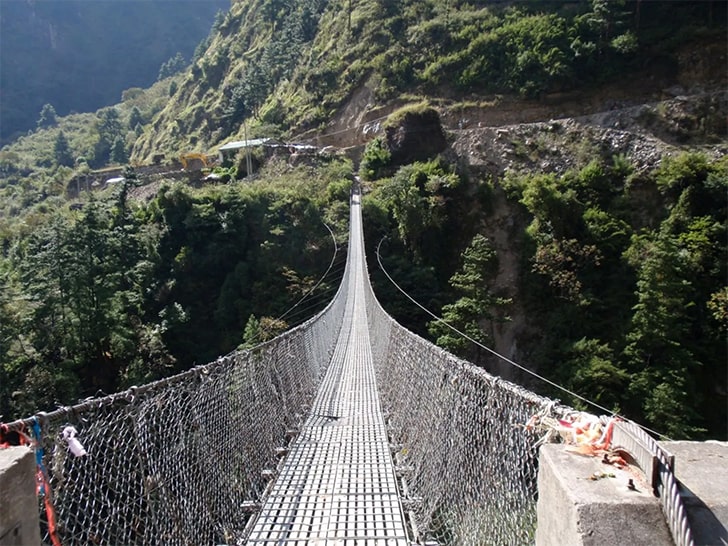
Located in Nepal, the Hanging Bridge of Ghasa was not built for humans but to improve the lives of the local farmers, who needed to move cattle around as quickly as possible. But while it was designed to be a point of passage for animals, Ghasa’s Hanging Bridge should make any human heart beat faster.
Its sheer height should be enough to attract any thrill-seeking tourist, but it is terrifying because it is mainly made out of rope. It was made for supporting large and heavy animals, so you should be safe while crossing—which doesn’t necessarily mean you won’t feel scared.
Storseisundet Bridge – Norway
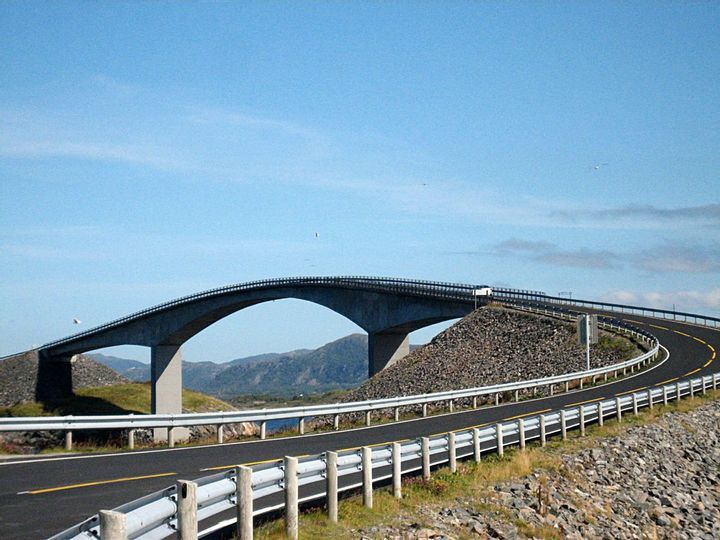
If crossing the Storseisundet Bridge today is scary enough, imagine building it! The poor guys tasked with making this one-of-a-kind bridge faced 12 hurricanes and still managed to complete the project. It was worth it, though: this spectacular bridge is now one of Norway’s best-known tourist attractions.
What is it that makes it so special? For one, there’s some violent weather around, including waves so high they lash the drivers. But the main thing is that, due to its many slopes, the Storseisundet Bridge seems to disappear right in front of you while crossing it. Hence the nickname “drunk bridge.”
Keshwa Chaca Bridge – Peru
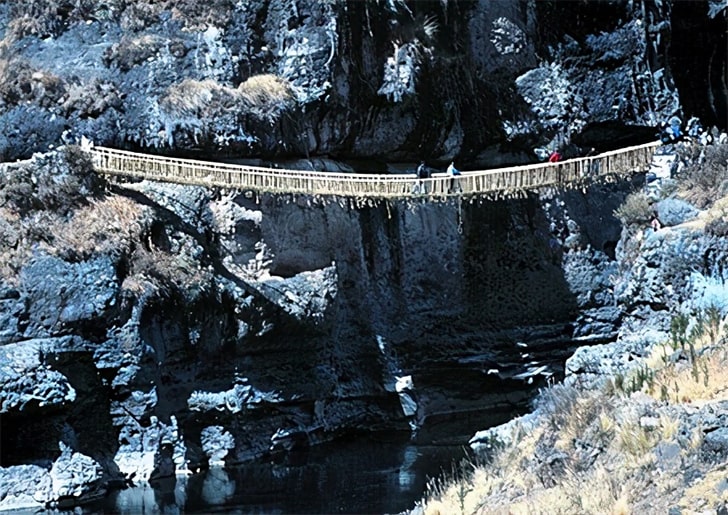
What comes to your mind when hearing the words “weaving a bridge”? Many centuries before bridges were made of concrete and steel, the Incas already had a vast network of rope bridges. The Keshwa Chaca Bridge in Peru is one of the few surviving examples of their craft, and it’s a must-visit for any outdoorsy adventurer.
The locals ensure that the Keshwa Chaca Bridge is well-maintained, but that doesn’t mean it’s safe. After all, it needs to be rebuilt at least once yearly because it deteriorates rapidly. Nonetheless, we couldn’t find any examples of severe tourist-related accidents at the site.
Eshima Ohashi Bridge – Japan
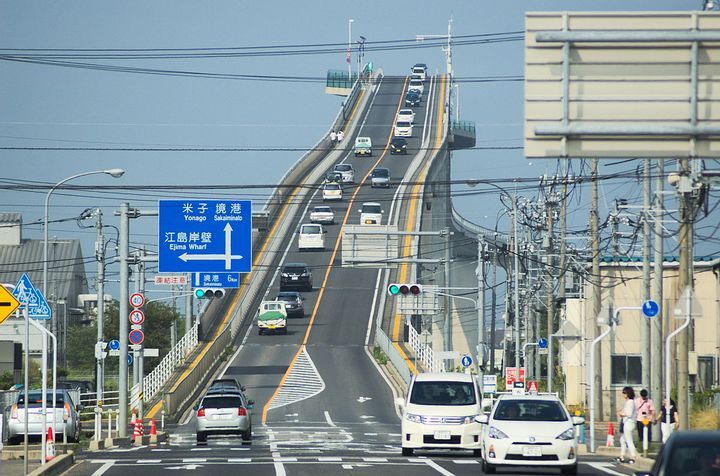
What’s dangerous is a matter of perception. Some things look extremely dangerous but are not, while others look safe and can kill you. Luckily, the Eshima Ohashi Bridge in Japan fits the first category. Arguably one of the country’s most recognizable bridges by far, people shared it all over the Internet due to its steep inclination.
The Eshima Ohashi Bridge looks like a rollercoaster but feels nothing like it. Its steepness was exaggerated by some talented photographers who found the best angle to make it look scary. In reality, it has a gradient of a little over 6%, and it’s perfectly safe.
Trift Bridge – Switzerland
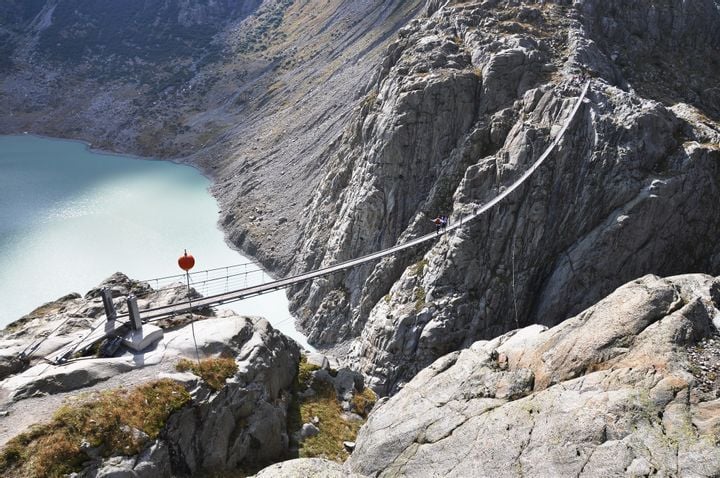
If you want to cross the Trift Bridge in Switzerland, you should probably start working out. It takes some endurance to get there. First, you need to take a cable car, then a gondola, and then walk uphill for over an hour. If that’s not an issue for you, you’ll experience the horror of crossing this 330-feet-high wonder of the Swiss Alps.
Switzerland is famously one of the world’s safest and most developed nations. However, not even that comforting thought makes the Trift Bridge look any less scary. It’s a must-visit for any thrill-seeking adventurer, especially for those into mountaineering.
Longjiang Suspension Bridge – China
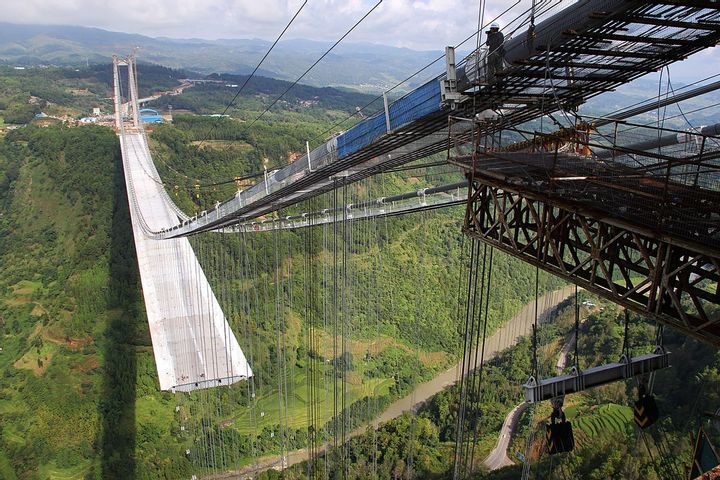
The Chinese are known for their brave and efficient construction workers, and the Longjiang Suspension Bridge is yet another example of their greatness. This now-complete engineering feat took just five years to build and is used to connect the cities of Tengchong and Baoshan.
A modern marvel, the Longjiang Suspension Bridge isn’t dangerous, so why did it make it on the list? Well, let’s just say that this beastly steel construction sits 920 feet above the river, making for one of the world’s highest bridges. If you’re afraid of heights, the mere idea of crossing this bridge should make you feel dizzy.
U Bein Bridge – Myanmar
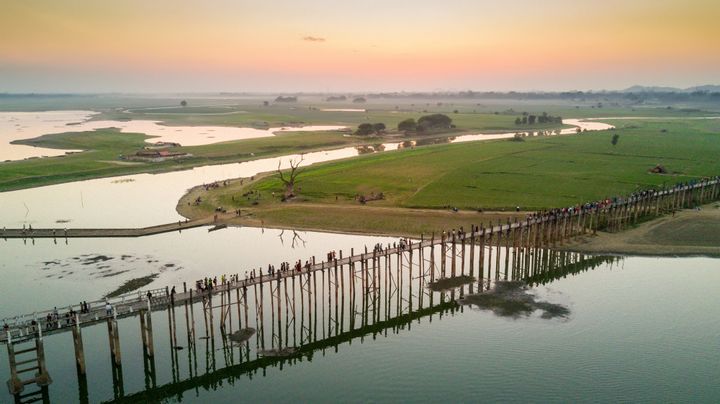
Crossing the Taungthaman Lake in Amarpura, Malaysia, the U Being Bridge is one of the world’s most unique bridges. It was constructed in 1851 and has stayed pretty much the same. Almost entirely made out of teakwood, a type of tropical hardwood, it’s one of Myanmar’s best-known tourist attractions.
The bridge’s appeal transformed the local economy; with so many tourists coming to the site, many residents started making a living by selling souvenirs. It’s relatively dangerous because, according to several sources, its 1,000-plus teakwood pillars are increasingly deteriorating as the years go by. Locals are now trying their best to preserve the structure.
Living Root Bridges – Meghalaya, India
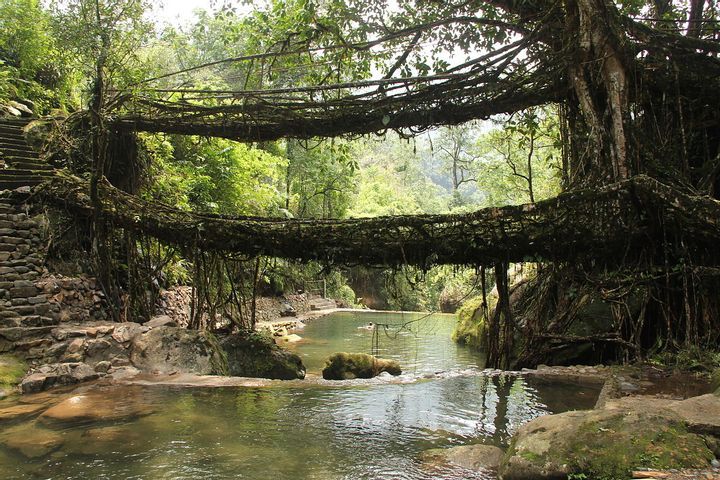
Why make a bridge when you can wait for Mother Nature to give you one? While it takes some intelligent human intervention to give way to a living root bridge, these unique formations are entirely composed of roots (hence the name “living”). They can be found in the region of Meghalaya, in northeastern India.
These distinctive structures result from working in harmony with nature, either by hand (by physically manipulating the shapes of roots) or with the help of bamboo scaffolding (which leads the roots in the right direction). Outside of India, one can find them in many islands of Indonesia.
Marienbruecke – Germany
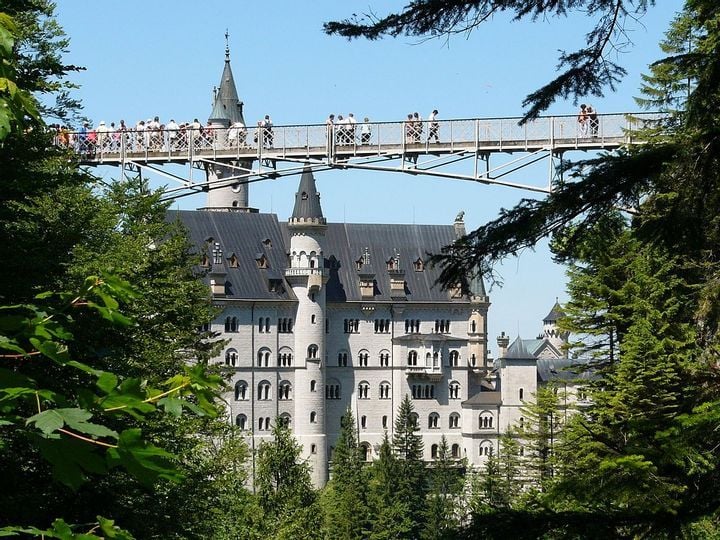
The beautiful Neuschwanstein Castle is one of Germany’s ultimate tourist attractions, and the Marienbrucke bridge offers a stunning view of the monument. If you want a postcard-like snap of the castle, there’s nothing quite like the view after paying for a ticket to cross the bridge. However, the site’s been closed since May 2021.
The danger of rockslide and the rigorous German winter forced the local authorities to suspend all activities on Marienbrucke, which has been closed for restoration works. Even though it looks like a substantial structure, the Marienbrucke bridge’s initial construction dates from 1845. It will reportedly re-open to the public sometime soon.
Slaters’ Bridge – England
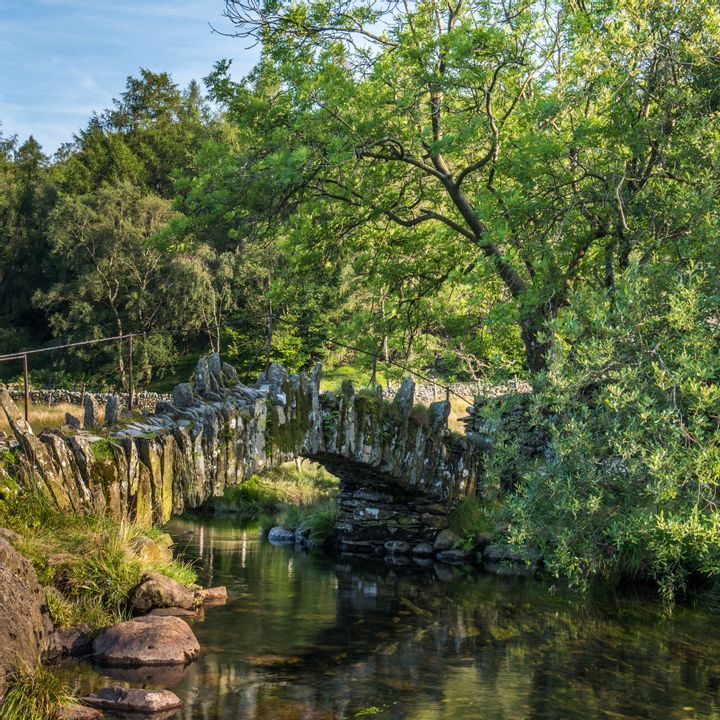
Considered a UNESCO World Heritage Site, the Slaters’ Bridge in England looks like something coming straight out of a Tolkien book. This wondrous bridge sits in the mountainous region of the Lake District and makes for a dreamy human-made building right in the middle of the forest.
If the Slaters’ Bridge hasn’t fallen by now, it probably never will. Presumably built by miners during the 17th century, this picturesque bridge may be easily mistaken for a much older Roman construction. Despite being very old, it’s mostly thought to be safe. When visiting, though, there’s a real risk you’ll never want to leave it.
Royal Gorge Bridge – Colorado, United States
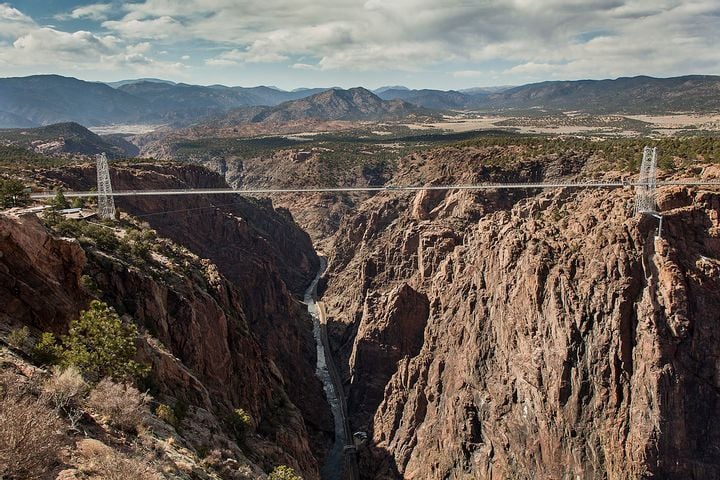
It is the highest bridge in the United States and sits between two mountains near Cañon City, Colorado. A whopping 955 feet above the Arkansas River, it was once the highest suspension bridge in the world before being surpassed by two modern Chinese bridges. Remarkably, it’s close to 100 years old, as it was inaugurated in 1929.
Unlike other bridges on the list, the Royal Gorge Bridge was meant to be a tourist attraction right from the very beginning. It was funded by the president of the Royal Gorge Bridge and Amusement Company and completed in a mere six months.
Root Bridges – India
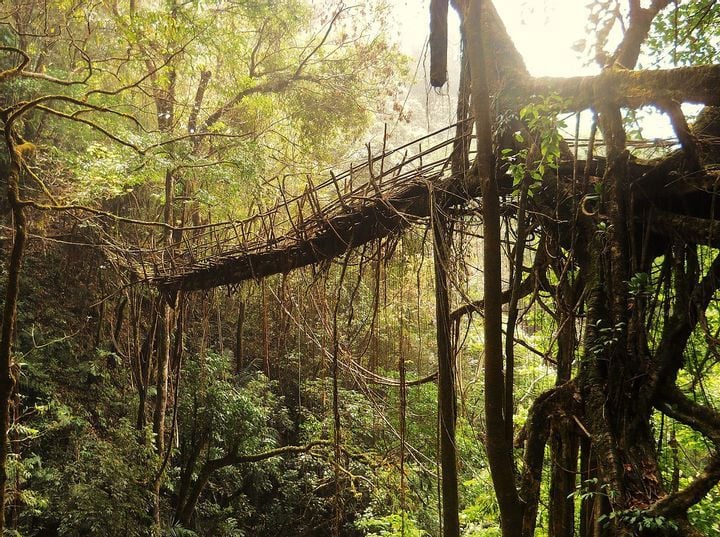
The Indian root bridges are so unique they deserve a second entry on the list. According to The Diplomat, these semi-natural constructions are listed to become UNESCO World Heritage Sites. There are compelling arguments for its greatness, including the culture-nature reciprocity they exhibit and the fact they’ve been a local feature for centuries.
Root bridges aren’t any more dangerous than any other bridge we’ve brought you today, but they’re as unique as it gets. There are steel, rope, and wood bridges, but these are the only ones in the world that are alive! If you ever find yourself in Northeastern India, you should visit these beauties.
Plank Road in the Sky – China
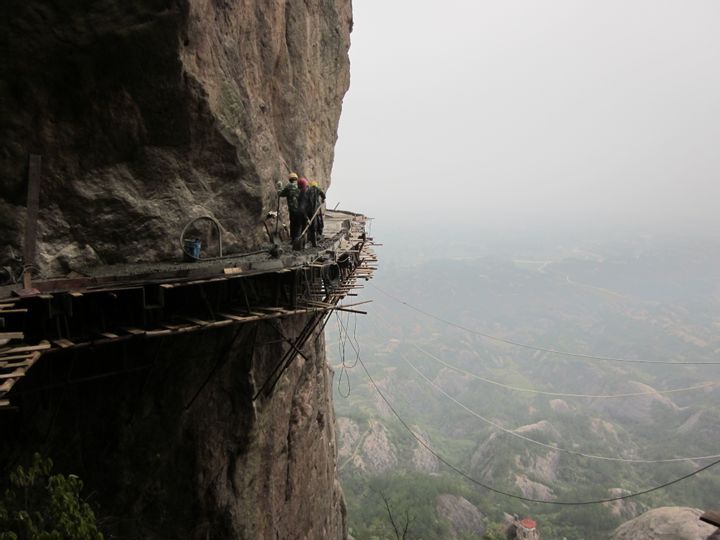
Described as the world’s most dangerous hike, the plank road in the sky is yet another super scary Chinese tourist attraction. It’s a small plank on top of a mountain with little to no protection. Unbelievably enough, it’s filled with thrill-seeking tourists pretty much every day.
While there are harnesses all over the hike, these are attached to the shoulders, not the hips (which makes them slightly unreliable, safety-wise). Just getting to the plank is a pretty daunting experience. Visiting is not recommended if you’re afraid of heights: after all, this anxiety-inducing attraction sits a whopping 7,000 feet above the ground.
Canopy Walkway – Ghana
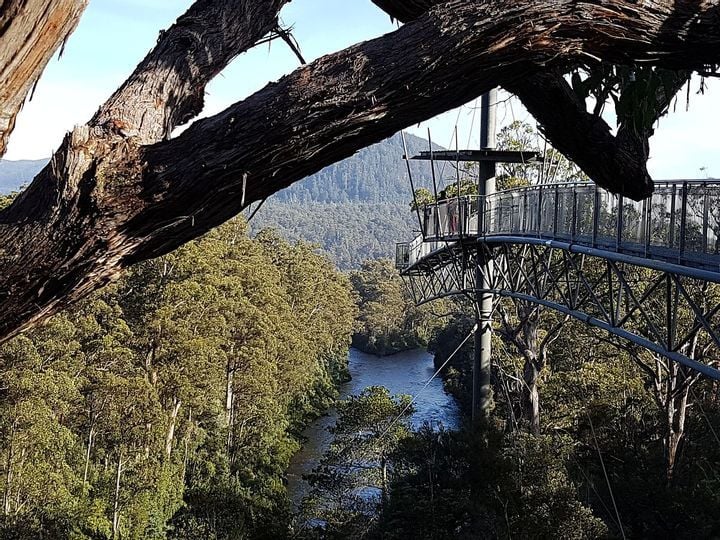
The Canopy Walkway in Ghana sits in the Kakum National Park and makes for one of the country’s most breathtaking attractions. Comprised of seven bridges sitting close to 100 meters above the ground, the Canopy Walkway was initially developed by a Canadian organization that wanted to trap parrots in the park.
For that reason, it’s fair to say that the Canopy Walkway is literally a trap! Nonetheless, many human adventurers opt to cross the walkway’s seven bridges every year for an unforgettable outdoor experience. In order to help attract more visitors and make the place safer, authorities installed protective nets on each of the bridges.
Moses Bridge – Netherlands
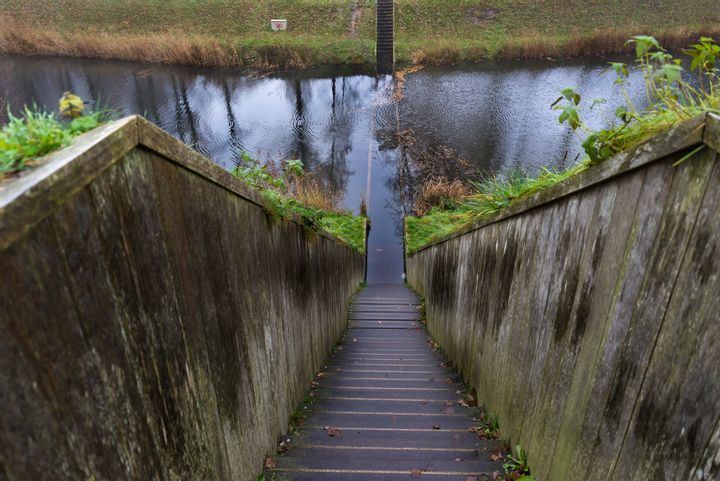
Have you ever seen a trench bridge? To cross the water surrounding the Fort de Roovere, Dutch architects came up with a bridge that smartly got the job done without ruining the surrounding landscape. It’s a bridge that goes below the water level and that, for that reason, gets easily flooded.
On a sunnier day, though, this one-of-a-kind trench bridge makes for a great cross. Because it divides the water into two, it was named the Moses Bridge. It’s perfectly safe whenever the pathway is accessible, but you may want to avoid crossing during the winter, especially if it’s raining.
Vitim River Bridge – Russia
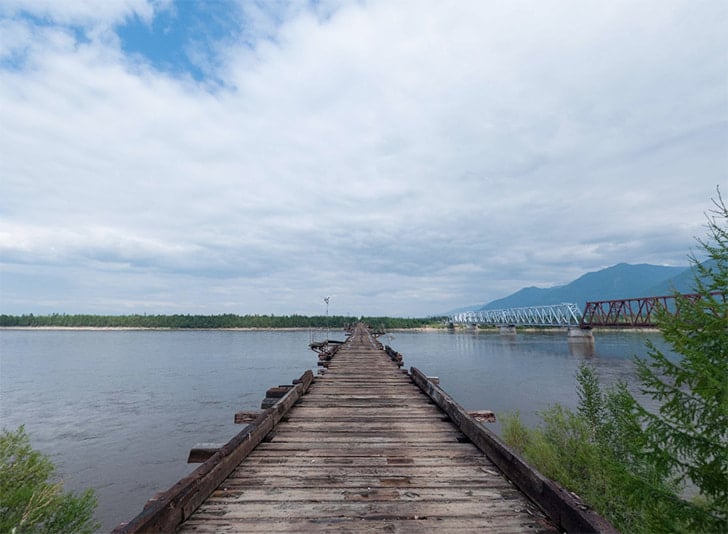
The Vitim River Bridge sits in the remote Russian region of Siberia, which isn’t nearly as well-funded as the more affluent, more cosmopolitan areas surrounding Moscow and Saint Petersburg. That may help to explain why many locals still rely on a sketchy, rotting, wooden bridge to cross the river.
Constructed in the ’80s, the Vitim River Bridge is in dire need of renovation, especially if you consider it’s crossed by vehicles daily. Naturally, the bridge also attracts many thrill-seeking adventurers. From where we stand, everything about it sounds like a disaster waiting to happen. It’s crazy that many locals cross it every day.
Puente de Ojuela – Mexico
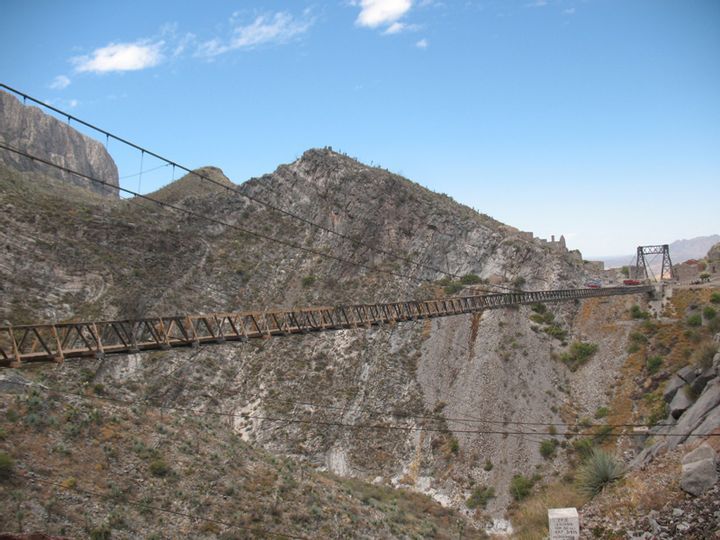
Ojuela used to be a small mining settlement in Mexico before becoming a ghost town. Nowadays, the place is known for its eerie atmosphere and attracts tourists who like to visit the world’s most bizarre and remote areas. If you’re into dangerous bridges, Ojuela is also worthy of a visit.
Out of all the infrastructure that used to serve the needs of the Ojuela miners, only the Puente de Ojuela survived. This bridge looks as stable as a house of cards, but it’s still used by pedestrians today. Curiously enough, it was designed by the famous Roebling brothers, best known for their design of the Brooklyn Bridge.
Sunshine Skyway Bridge – Florida, United States
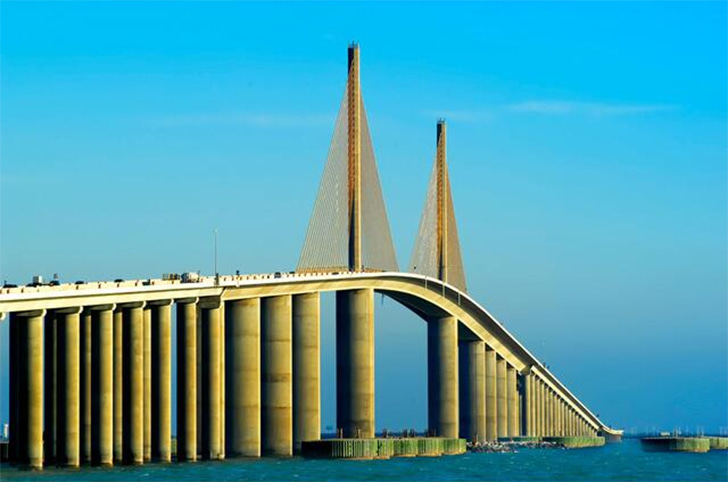
It’s one of Florida’s symbols and one of the most famous bridges in the United States. So, why is the Sunshine Skyway Bridge on the list? It all goes back to a tragic day in the early ’80s when a ship ran into one of the bridge’s piers and caused the regrettable deaths of 35 people.
The bridge has been rebuilt since, and local authorities have implemented new safety measures. Nowadays, there are no reasons to believe that crossing the Sunshine Skyway Bridge is particularly dangerous. This cable-stayed bridge is the point of connection between Terra Ceia and St. Petersburg in Pinellas County.
Sidu River Bridge – China
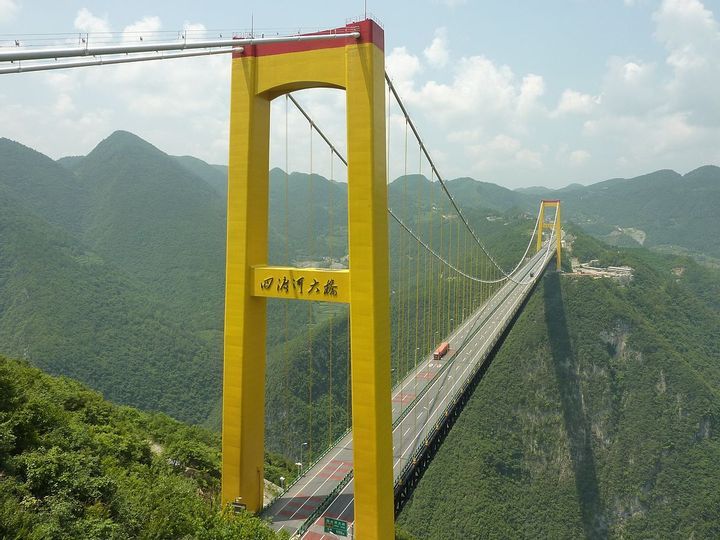
If there’s one thing the Chinese are obviously good at, that’s making mind-boggling bridges. Yet another world-famous suspension bridge in China, the Sidu River Bridge, is an engineering feat used to connect the mainland to the Hubei province. Its cost? A “mere” $100 million.
Safety isn’t an issue regarding the reliable Sidu River Bridge, but it’s so high and imponent that it still sends shivers down our spine. Crossing it by car is already scary, so can you imagine how terrifying it was to build the mammoth structure? Chinese construction workers are real heroes, and the Sidu River Bridge is yet another proof.
Iya Kazurabashi Bridge – Japan
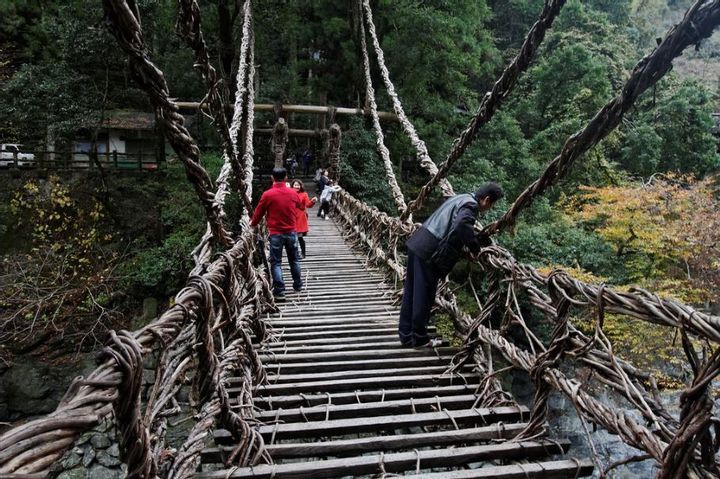
Japan’s Iya Valley is one of the country’s most beautiful natural sites, and that’s not a small feat. This scenic area is known for its mountains, dreamy small rivers, and, you guessed it, famous vine bridges. There used to be 13 historic bridges in the Iya Valley, but only three remain today. One of those is the famous Iya Kazurabashi Bridge.
What makes the Iya Kazurabashi Bridge dangerous is the fact that the wooden planks are very apart from one another. You need to be careful not to get your foot stuck in there! However, the surrounding landscape is so gorgeous even the most fearful tourist should visit this one.
Millau Viaduct – France
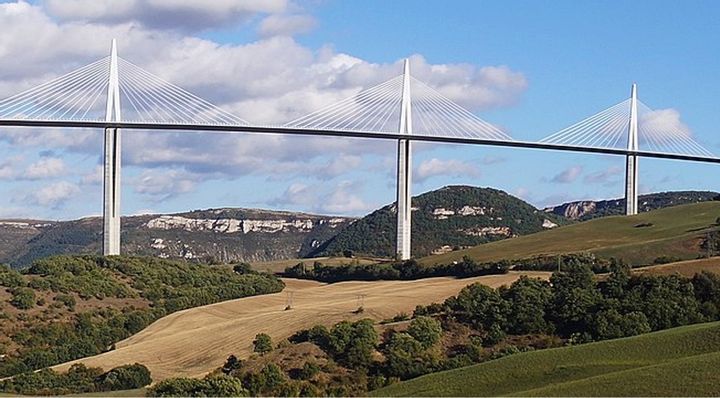
There’s nothing wrong with going over the Millau Viaduct in the summer, but there’s a good chance you won’t make the crossing successfully during the winter. Sudden heavy snowfalls are common in the region, meaning the Millau Viaduct can be closed to the public for days during the coldest months of the year.
Nonetheless, the Millau Viaduct is a beautiful, award-winning engineering feat with a breathtaking view of the Tarn valley. The whole area of southern France is worthy of a visit; there’s more to France than excellent cuisine and the vibrant city of Paris—the natural sites are as memorable.
Lake Pontchartrain Causeway – Louisiana, United States
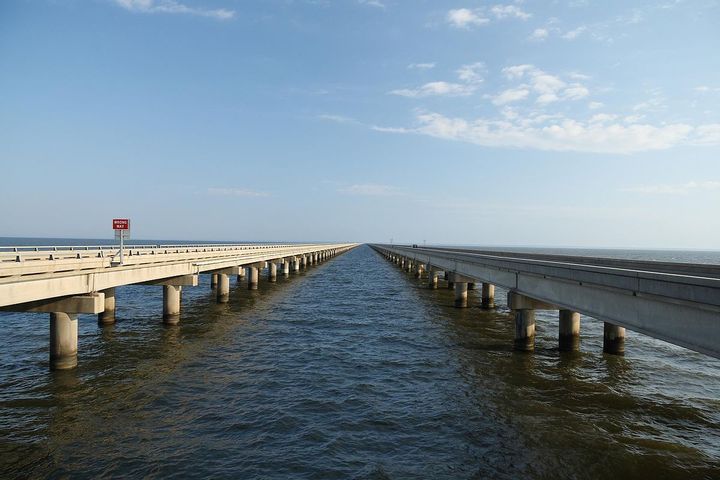
According to Morris Bart, close to 20 vehicles have gone over the rails at the Lake Pontchartrain Causeway since the mid-’90s. It may not sound like much, but it’s terrifying if you consider that this bridge is over 23 miles long and surrounded by nothing but water.
The Lake Pontchartrain Causeway connects the cities of Metairie and Mandeville and is an indispensable route for many Louisiana locals. Crossing the bridge is nice during the summer, but it can be very uncomfortable (not to mention dangerous) on a foggy day. When visibility is poor, there’s a speed limit of 35 miles per hour.
Capilano Suspension Bridge – Canada
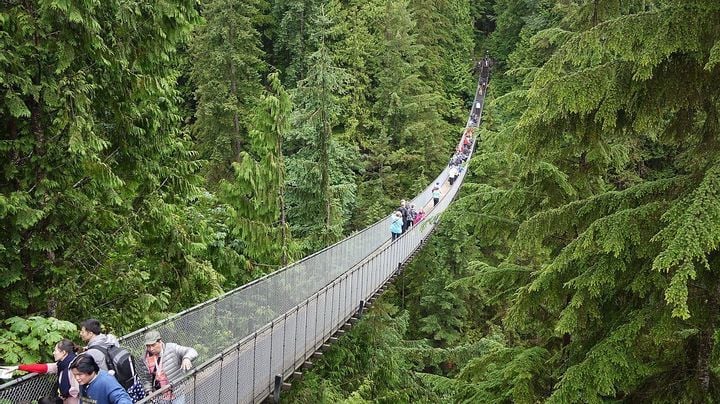
Canada is internationally known for its maple syrup and inviting population, but there’s no shortage of extreme experiences to find in the land of the moose. If you want to get your heart pounding, you should visit one of the country’s most famous (and dangerous) bridges: the Capilano Suspension Bridge.
One of the main attractions of Vancouver, this famous bridge is visited by approximately 800K people every year. They get to cross the Capilano river 230 feet above the ground while enjoying the great British Columbia rainforest. Remarkably, the bridge has been a local landmark since the 19th century, as it was inaugurated in 1889.
Suspension Glass Bridge – China
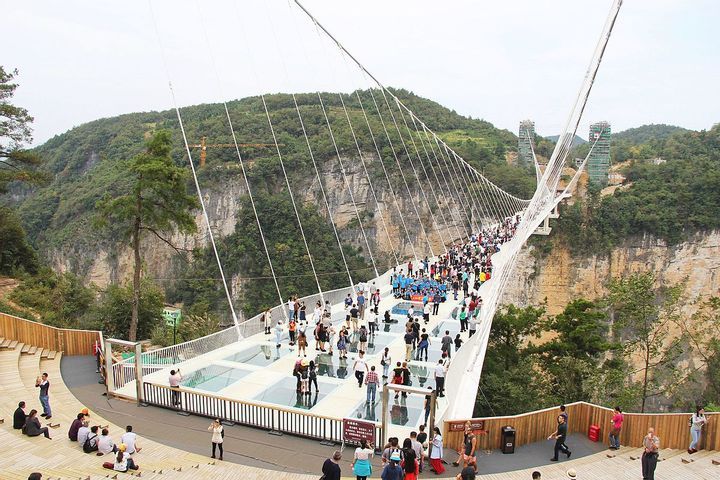
China might be on a mission to show the rest of the world how to build bridges right. The world’s second-largest economy is home to plenty of breathtaking bridges, but none is as scary as the Suspension Glass Bridge. After all, it’s not by accident that this anxiety-inducing bridge also goes by the name Brave Men’s Bridge.
What makes it so hard to cross because it’s covered in panels of glasses that allow tourists to look directly at the ground (which is over 1,000 feet below). The bridge is not appropriate for people who fear heights and sits at the gorgeous Shiniuzhai National Geological Park.
Mackinac Bridge – Michigan
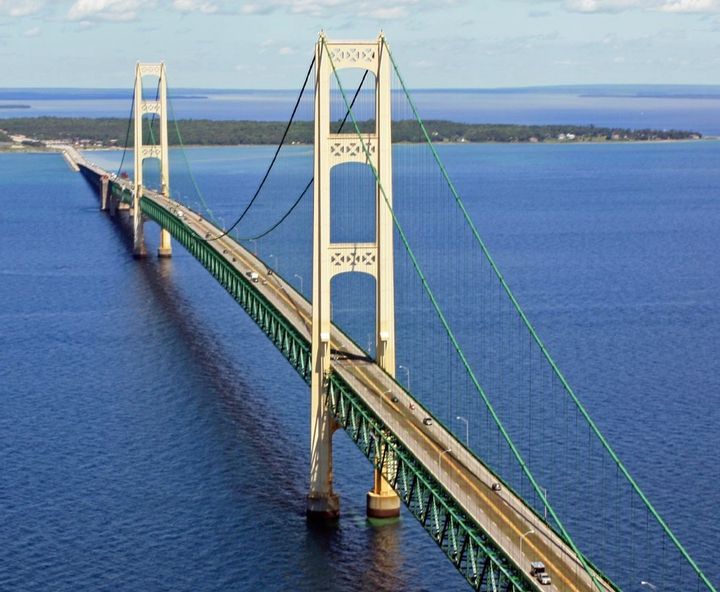
Michigan’s Mackinac Bridge is yet another bridge made in America that’s only scary and dangerous during wintertime. While crossing it during the summer is fine, it takes some guts to drive through Mackinac Bridge on a particularly windy, snowy, or foggy day. A 20th-century engineering feat, work on it was finally completed in 1957.
Stories of cars flying off during stormy weather should be enough to scare some tourists away. Nonetheless, the Mackinac Bridge is seen as a local attraction and hosts many visitors annually. Due to its steepness, there’s a registered case of a man dying from decompression sickness after crossing the bridge too fast.
Monkey Bridges – Vietnam
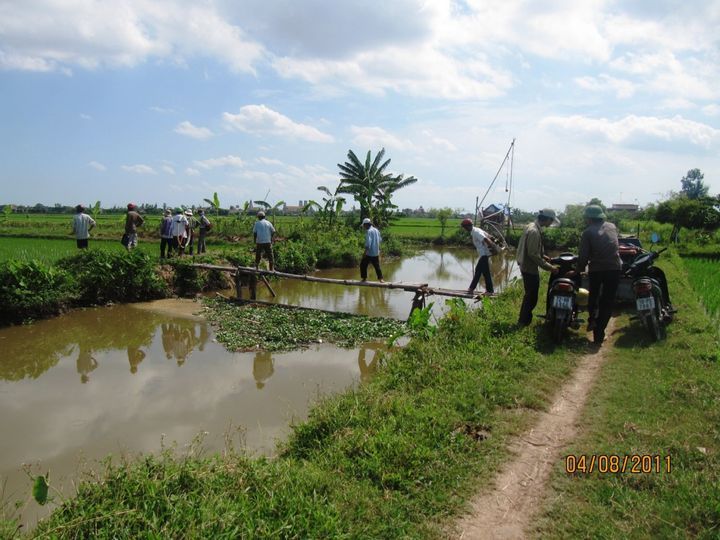
If you’re thirsty for an exotic adventure in southeast Asia, visiting the Mekong River in Vietnam is more than recommendable. In addition to being a terrific natural location, the Mekong Delta has some of the most interesting (and fragile) bridges you’ll find on this list.
Appropriately named monkey bridges, these simple wood constructions are all over the Mekong Delta. These bridges are so small that they’re not fatal; however, we can only guess hundreds of tourists have fallen while trying to cross them. Getting to the other side takes some balance, so don’t even try it if you’re feeling dizzy—you’ll end up wet!
Kawarau Bridge – New Zealand
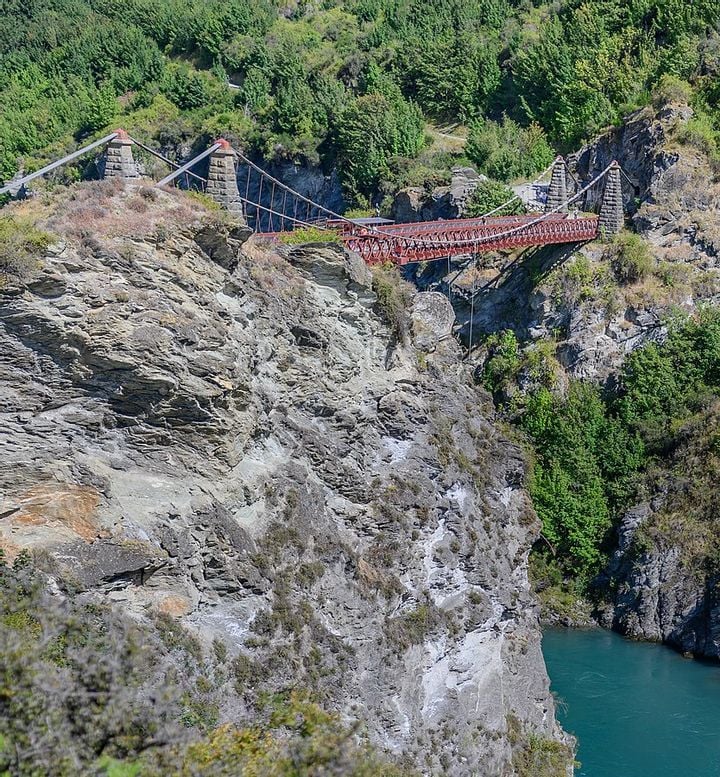
The Kawarau Bridge in New Zealand looks like a solid construction that stands 141 feet above the water. It has a unique look and is relatively high, but it doesn’t look that dangerous or scary. So, why are we even talking about the structure then? What makes the Kawarau Bridge exciting isn’t the bridge per se but what happens in the middle.
After all, the Kawarau Bridge is described as “the world’s first commercial bungee jumping site.” In other words, the thousands of tourists that visit the bridge are there for one thing: to test their bravery by doing some bungee jumping.
Rakotzbrücke Devil’s Bridge – Germany
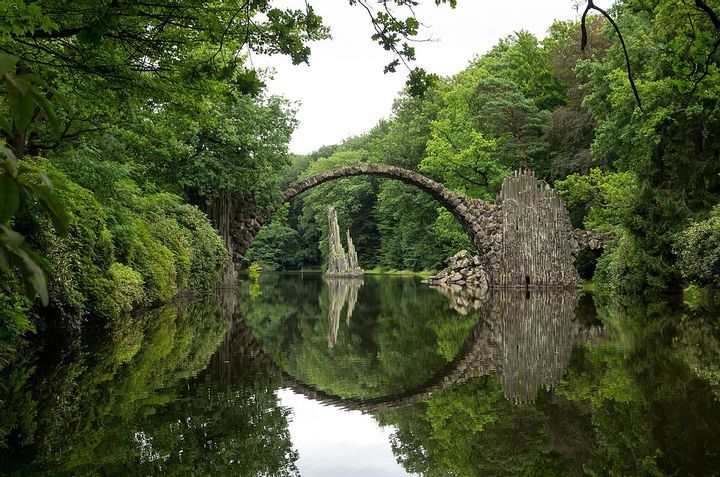
Bridges are scary because they can crumble, and you can fall off them. But the Rakotzbrücke Devil’s Bridge in Germany is terrifying for a more obscure reason. The clue is in the name, but its horror story-like shape is also telling… If you believe in the occult and don’t want to stumble upon a ghost, you may want to avoid this one!
From a skeptic’s point of view, though, there’s nothing devilish about it. Due to the reflection in the water, the bridge makes a perfectly round shape, and it’s a wonder to behold. We don’t know about you guys, but we would love to see it firsthand.
Thai–Lao Friendship Bridge – Thailand/Laos
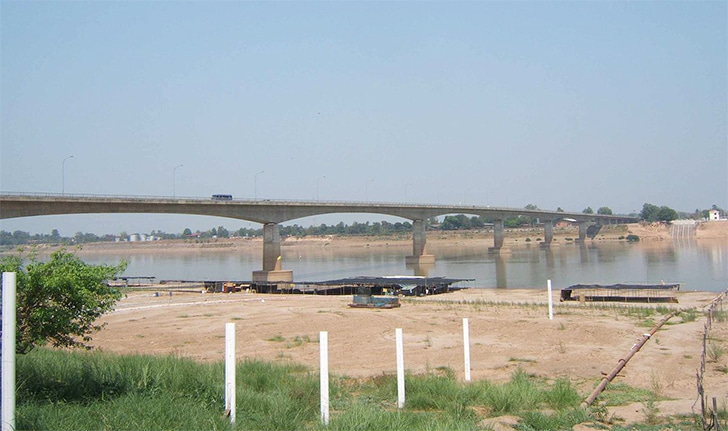
The Thai-Lao Friendship Bridge is named because it connects two neighboring countries: Thailand and Laos. However, the state of this dangerous-looking bridge shouldn’t be an indicator of the good relations between the nations. Although it may symbolize friendship, it certainly doesn’t inspire trust.
This bridge is essential for most of the local populace, many of whom cross it daily to work. However, the bridge’s structure is in dire need of renovation, and the rapid river below is also a constant threat to passing traffic. So, of course, it’s fair to wonder if there is a safer way to go from Thailand to Laos via road. Unfortunately, not yet.